

Starting a major home renovation in the Dallas-Fort Worth area brings excitement and plenty of questions about long-term protection. For homeowners investing in a remodel, sorting through warranty options can feel confusing, especially when terms like express warranties and implied warranties come into play. This guide breaks down the essentials of remodeling warranties, helping you understand how these agreements safeguard your project against future problems and what coverage details matter most before you sign.
Table of Contents
- Remodeling Warranties Defined and Debunked
- Types of Remodeling Warranties Offered
- What Remodeling Warranties Typically Cover
- Homeowner Rights and Contractor Duties Explained
- Common Pitfalls and How to Avoid Them
Key Takeaways
| Point | Details |
|---|---|
| Understand Warranty Types | Distinguish between express and implied warranties to know what protections are legally enforced during renovations. |
| Request Detailed Documentation | Always ask for a comprehensive written warranty that outlines coverage, exclusions, and repair processes before signing contracts. |
| Know Your Rights | Homeowners have the right to request repairs and detailed information, ensuring clarity in the warranty process. |
| Avoid Common Pitfalls | Be aware of vague documentation and time limitations to prevent disputes over warranty claims. |
Remodeling Warranties Defined and Debunked
Remodeling warranties represent critical legal protections that safeguard homeowners against potential defects and substandard work during renovation projects. Understanding these agreements requires distinguishing between different warranty types and comprehending their specific coverage parameters. Legally defined warranties establish clear expectations about materials, workmanship, and potential remedies if problems emerge during or after a home improvement project.
In the construction industry, warranties typically fall into two primary categories: express and implied. Express warranties are explicit promises made directly by contractors regarding specific performance standards, material quality, and expected outcomes. These written guarantees outline precise terms of work completion and potential repair responsibilities. Conversely, implied warranties represent legal protections automatically applied by law, ensuring that renovation work meets reasonable quality and functionality standards even if not explicitly documented.
The typical residential remodeling warranty covers materials and workmanship for a standard one-year period, as established by professional construction contract formats. Common warranty disputes often emerge from misunderstandings about partial repairs, scope of coverage, and interpretation of contractual language. Homeowners should carefully review warranty documentation, paying special attention to exclusions, limitations, and specific conditions that might void warranty protection.
Pro tip: Request a detailed, written warranty document from your contractor that explicitly outlines coverage terms, repair processes, and duration of protection before signing any renovation agreement.
Types of Remodeling Warranties Offered
Remodeling warranties serve as crucial protective mechanisms for homeowners, offering different levels of coverage and protection for various aspects of home renovation projects. Construction warranty structures typically encompass multiple categories designed to address specific potential issues that might arise during and after renovation work.
Professional contractors generally offer three primary warranty types. Workmanship warranties cover the quality of installation and labor, ensuring that the contractor’s work meets professional standards. Material warranties protect against manufacturer defects in products used during renovation, often provided directly by product manufacturers. Extended warranties represent comprehensive coverage options that can be purchased to provide additional protection beyond standard contractual periods, which typically last one to two years.
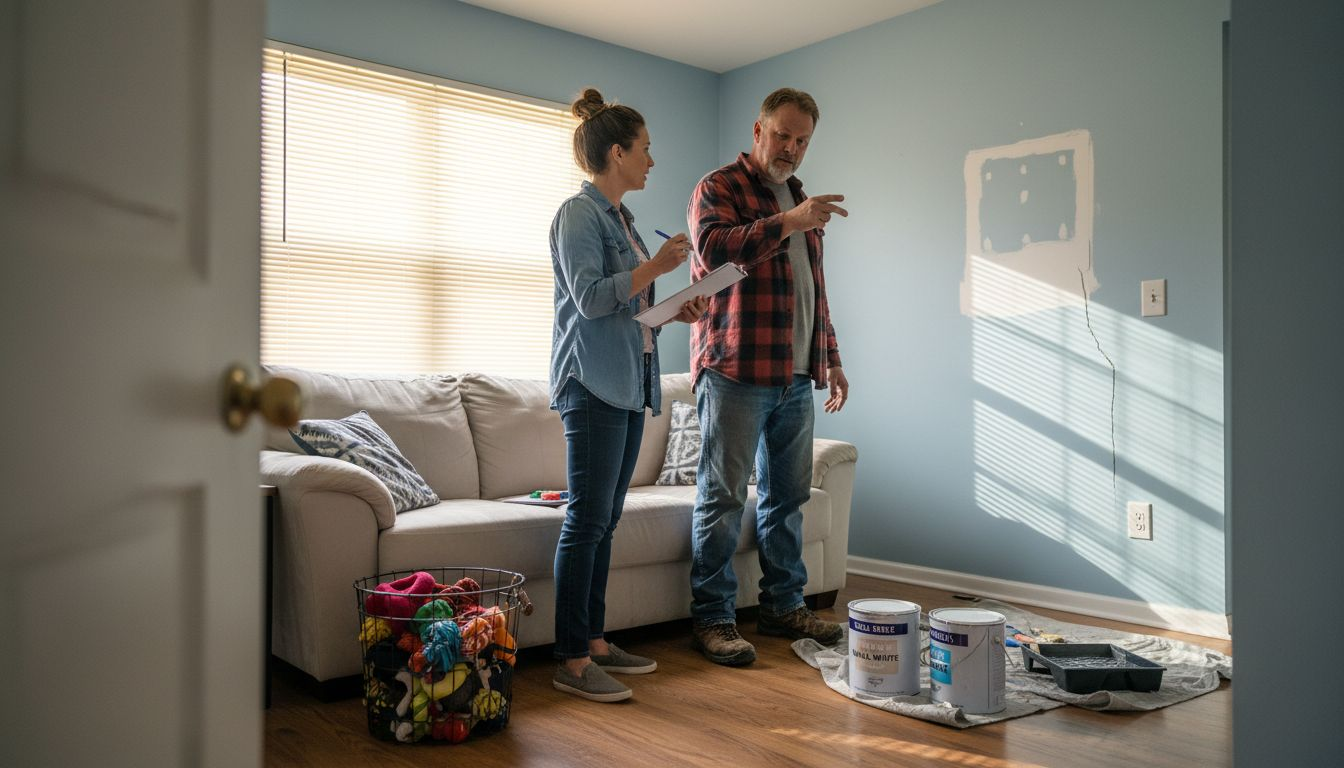
Warranty negotiation strategies play a critical role in determining the scope and effectiveness of remodeling warranties. Some warranties might cover full replacement of defective components, while others provide only partial repair or replacement. Homeowners should carefully examine warranty documentation to understand specific exclusions, limitations, and conditions that could potentially void warranty protection. Key areas to scrutinize include structural components, mechanical systems, finishes, and potential exceptions for normal wear and tear.
Pro tip: Always request a written, detailed breakdown of warranty coverage that specifies exact terms, duration, and what specific components are protected before finalizing any remodeling contract.
Here’s a summary comparing the main types of remodeling warranties:
| Warranty Type | Who Provides It | What It Covers | Typical Duration |
|---|---|---|---|
| Express Warranty | Contractor | Defined installation standards | Usually 1-2 years |
| Implied Warranty | Imposed by law | General quality and usability | Varies by state |
| Material Warranty | Manufacturer | Product manufacturing defects | Often multi-year terms |
| Extended Warranty | Contractor (add-on) | Broader or longer coverage | Up to several years |
What Remodeling Warranties Typically Cover
Homeowners investing in renovation projects need a comprehensive understanding of what remodeling warranties actually protect. Typical remodeling warranty coverage encompasses multiple critical aspects of home improvement work, focusing on safeguarding against potential defects and ensuring quality installation throughout the project.
Most remodeling warranties provide protection across three primary domains. Structural warranties cover fundamental building components, including foundational elements, load-bearing walls, and major structural systems that ensure the integrity of your home’s core construction. Mechanical warranties address installed systems like electrical wiring, plumbing, heating and cooling infrastructure, protecting homeowners against failures in critical home mechanicals. Installation warranties specifically protect against workmanship defects, ensuring that materials are correctly installed according to manufacturer specifications and professional industry standards.
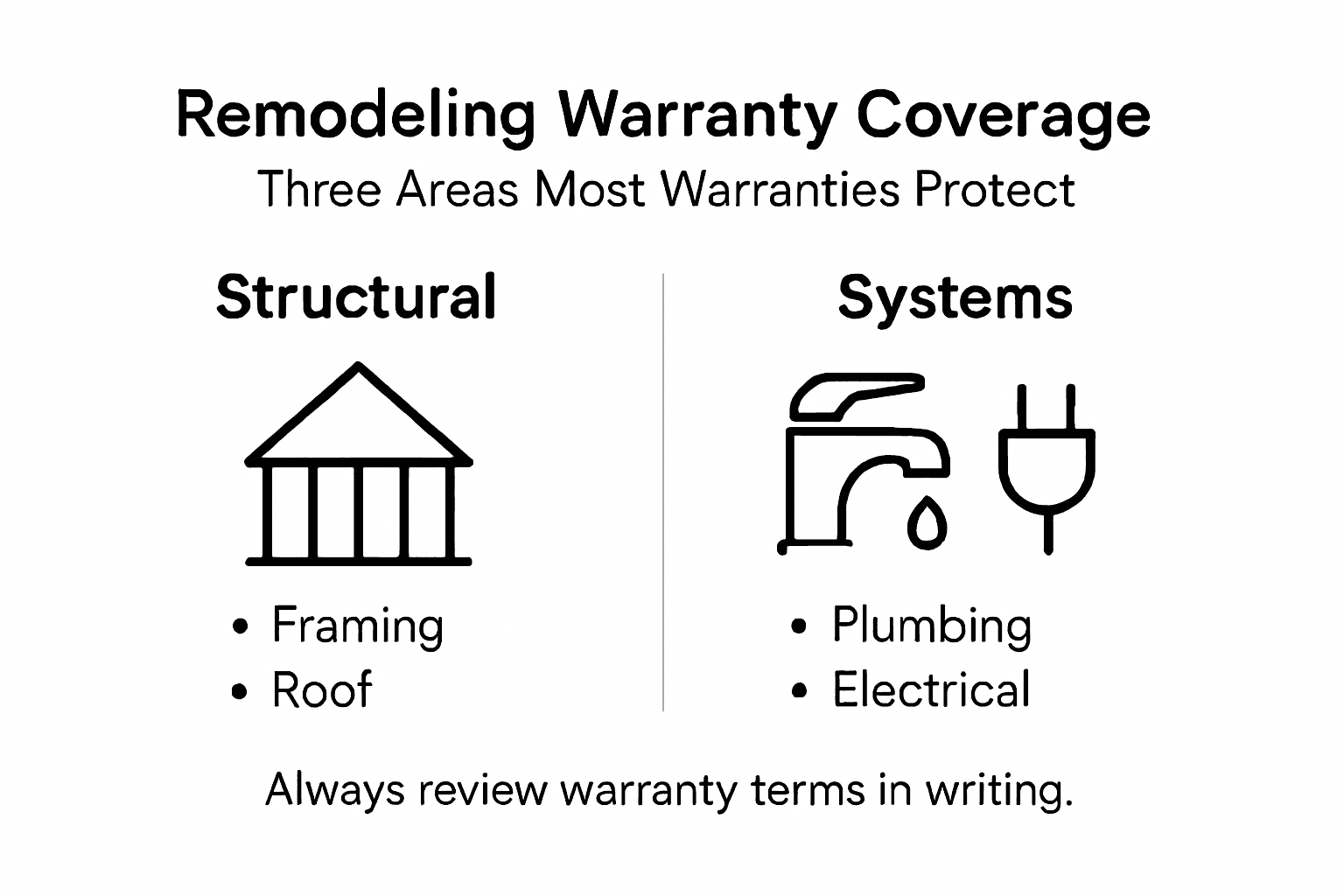
Warranty coverage typically includes specific protections and notable exclusions that homeowners must carefully understand. Standard warranties generally cover manufacturing defects, improper installation techniques, and material failures within a predetermined period, usually ranging from one to two years. However, most warranties explicitly exclude damage resulting from normal wear and tear, environmental factors, improper maintenance, or homeowner-induced modifications. Critical components often protected include roofing systems, window installations, flooring, built-in appliances, and major renovation structural elements.
Pro tip: Request a comprehensive written warranty document that explicitly details coverage limitations, exact duration, and specific components protected before signing any remodeling contract.
Homeowner Rights and Contractor Duties Explained
Navigating the complex landscape of remodeling warranties requires a clear understanding of the legal responsibilities and protections afforded to both homeowners and contractors. Warranty claim processes establish a critical framework that defines the expectations and obligations of each party during home renovation projects.
Homeowners possess several fundamental rights when it comes to warranty protection. Repair rights enable homeowners to request comprehensive correction of defects discovered within the warranty period, ensuring that substandard work or material failures are addressed professionally. Documentation rights require contractors to provide detailed warranty information, including specific coverage terms, duration, and exact procedures for filing claims. Inspection rights allow homeowners to request professional assessments of potential defects, giving them a mechanism to validate warranty claims and ensure proper resolution of construction issues.
Contractor warranty obligations encompass critical responsibilities that extend beyond initial project completion. Contractors must respond timely to warranty claims, provide professional repair or replacement services for covered defects, and maintain transparent communication throughout the resolution process. These duties include conducting thorough investigations of reported issues, proposing appropriate remedies, and executing repairs that meet or exceed original construction standards. When disputes arise, contractors are expected to negotiate in good faith, providing clear explanations and seeking mutually acceptable solutions that align with the original warranty agreement.
Pro tip: Maintain a comprehensive file of all warranty documentation, including original contracts, communication records, and photographic evidence of any potential defects to streamline the claims process.
Below is a table highlighting key homeowner rights and corresponding contractor duties during the warranty process:
| Homeowner Right | Contractor Duty | Benefit for Homeowner |
|---|---|---|
| Repair Request | Timely defect correction | Quick resolution of problems |
| Clear Documentation | Provide detailed warranty terms | Transparent coverage awareness |
| Professional Inspection | Offer objective assessments | Valid validation of claims |
| Good-Faith Negotiation | Fair dispute resolution | Stronger legal protection |
Common Pitfalls and How to Avoid Them
Remodeling warranties can quickly become complicated without proper understanding and preparation. Common warranty misunderstandings often stem from homeowners’ lack of knowledge about the specific protections and limitations inherent in their renovation contracts.
Several critical pitfalls can undermine warranty effectiveness. Vague documentation represents the first major risk, where unclear contract language creates potential disputes between homeowners and contractors. Homeowners frequently fail to understand that warranties typically exclude damage from normal wear and tear, external environmental factors, or improper maintenance. Timing misconceptions also create significant problems, with many homeowners assuming comprehensive coverage extends indefinitely, when most warranties actually provide protection for a limited one to two-year period. Record-keeping failures can similarly compromise warranty claims, as contractors require detailed documentation to validate and process repair requests.
Warranty contract ambiguities frequently lead to contentious situations where expectations between homeowners and contractors dramatically diverge. Specific areas of potential conflict include interpretations of what constitutes a legitimate warranty claim, the extent of required repairs, and the timeline for addressing reported issues. Proactive homeowners can mitigate these risks by requesting explicit written explanations of warranty terms, maintaining comprehensive photographic and written documentation of any potential defects, and maintaining open communication channels with their renovation contractors throughout the warranty period.
Pro tip: Create a dedicated digital folder containing your complete warranty documentation, including original contracts, communication records, and timestamped photographs of any potential issues to strengthen your claim process.
Protect Your Investment with Reliable Remodeling Warranties and Expert Craftsmanship
Renovations bring exciting transformations but can also raise concerns about workmanship quality and warranty coverage. This article highlights crucial challenges homeowners face like vague warranty terms, limited protection periods, and unclear contractor responsibilities. At Astrotech Construction, we understand those pain points and prioritize clear, comprehensive remodeling warranties that guarantee quality workmanship, material reliability, and timely repairs. Our professional team serving the Dallas – Fort Worth Metroplex stands behind every project with transparent warranty agreements that protect your home or business long after completion.
Don’t leave your renovation’s success to chance. Partner with a trusted company offering detailed warranty documentation and a proven track record of customer satisfaction. Visit Astrotech Construction to learn about our full home remodeling, kitchen and bathroom upgrades, and other services backed by strong warranty commitments. Take the first step toward peace of mind by scheduling your consultation today and ensure your investment is in expert hands.
Frequently Asked Questions
What is a remodeling warranty?
A remodeling warranty is a legal protection that ensures homeowners are safeguarded against defects and substandard work during renovation projects. It outlines expectations regarding materials and workmanship and specifies remedies if issues arise.
What types of remodeling warranties are available?
There are three primary types of remodeling warranties: workmanship warranties (covering the quality of installation and labor), material warranties (protecting against manufacturer defects), and extended warranties (providing broader or longer coverage beyond standard terms).
What do remodeling warranties typically cover?
Most remodeling warranties cover structural components, installed mechanical systems, and workmanship defects. Common protections include manufacturing defects and improper installation, but they often exclude damage from normal wear and tear or homeowner negligence.
What rights do homeowners have regarding remodeling warranties?
Homeowners have the right to request repairs for defects during the warranty period, receive clear documentation of warranty terms, and seek professional inspections for validating claims. Contractors are obligated to address these claims promptly and professionally.
Recommended
- What Is Renovation Insurance and Why It Matters – Astrotech Construction
- Importance of Quality Assurance in Remodeling Projects – Astrotech Construction
- Role of Permits in Remodeling: Complete Guide – Astrotech Construction
- 7 Key Advantages of Professional Remodeling for Homeowners – Astrotech Construction