
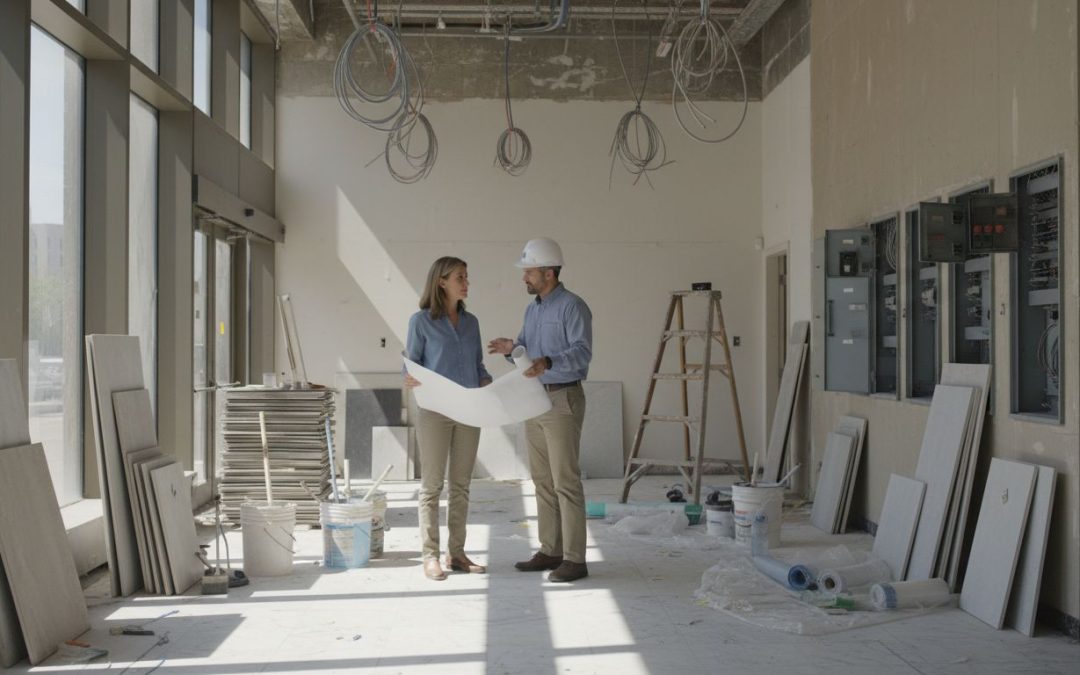
More than 70 percent of American commercial properties undergo some level of renovation each year, highlighting a growing focus on modernizing aging spaces. As business competition intensifies across the United States, building owners realize that a dated, inefficient property can hold back growth and tenant appeal. Understanding what truly defines commercial property renovation helps American businesses and investors unlock new value, maximize returns, and stay ahead in a shifting market.
Table of Contents
- Commercial Property Renovation Defined
- Types of Renovations and Their Benefits
- How Renovation Impacts Property Value
- Legal Codes and Compliance Requirements
- Costs, Risks, and Return on Investment
Key Takeaways
| Point | Details |
|---|---|
| Importance of Commercial Property Renovation | Renovation enhances functionality, aesthetic appeal, and market value while addressing maintenance and safety needs. |
| Types of Renovations | Structural, mechanical, aesthetic, technological, and sustainability renovations each provide specific improvements that impact property value. |
| Impact on Market Value | Strategic renovations can increase property valuation by 10-20%, attracting higher-quality tenants and enabling premium pricing. |
| Legal Compliance | Adhering to building codes and safety regulations during renovations protects occupant safety and minimizes liability risks. |
Commercial Property Renovation Defined
Commercial property renovation is a strategic process of improving, repairing, and upgrading existing commercial buildings to enhance their functionality, aesthetic appeal, and overall market value. Renovation involves systematic improvements that restore or transform spaces while maintaining core structural integrity.
At its core, commercial renovation encompasses a wide range of interventions from minor repairs to comprehensive structural upgrades. This might include modernizing mechanical systems, restoring historical architectural features, addressing maintenance backlogs, or completely reimagining interior and exterior spaces. The National Association of Industrial and Office Properties defines renovation as a critical process that goes beyond simple repairs, focusing on strategic improvements that extend a property’s useful life and economic potential.
The goals of commercial property renovation are multifaceted. Business owners typically pursue renovation to:
- Improve workspace functionality
- Upgrade technological infrastructure
- Meet current safety and building code standards
- Enhance property market value
- Create more attractive and efficient environments for employees and customers
Successful commercial renovations require careful planning, professional expertise, and a comprehensive understanding of both architectural possibilities and business objectives. By strategically investing in property improvements, commercial property owners can transform outdated spaces into modern, competitive assets that drive business growth and attract top talent.
Types of Renovations and Their Benefits
Commercial property renovations encompass a diverse range of approaches, each targeting specific improvements and strategic objectives. These renovation types can significantly transform a property’s functionality, energy efficiency, and overall value. One critical category is the deep energy retrofit, which represents a comprehensive whole-building approach designed to reduce on-site energy consumption by 50% or more while simultaneously enhancing property performance.
The primary types of commercial property renovations include:
- Structural Renovations: Major modifications addressing fundamental building systems, load-bearing elements, and foundational integrity
- Mechanical System Upgrades: Replacing or modernizing HVAC, electrical, and plumbing infrastructure
- Aesthetic Renovations: Enhancing visual appeal through interior design, exterior facades, and workspace layouts
- Technological Infrastructure Renovations: Updating technological capabilities, network systems, and digital connectivity
- Sustainability Renovations: Implementing green technologies, energy-efficient systems, and environmentally conscious design strategies
Each renovation type offers distinct advantages. Structural renovations can extend a building’s lifespan and improve safety, while mechanical system upgrades can dramatically reduce operational costs. Aesthetic renovations enhance workplace attractiveness, potentially improving employee productivity and client impressions. Technological infrastructure updates ensure businesses remain competitive in an increasingly digital landscape.
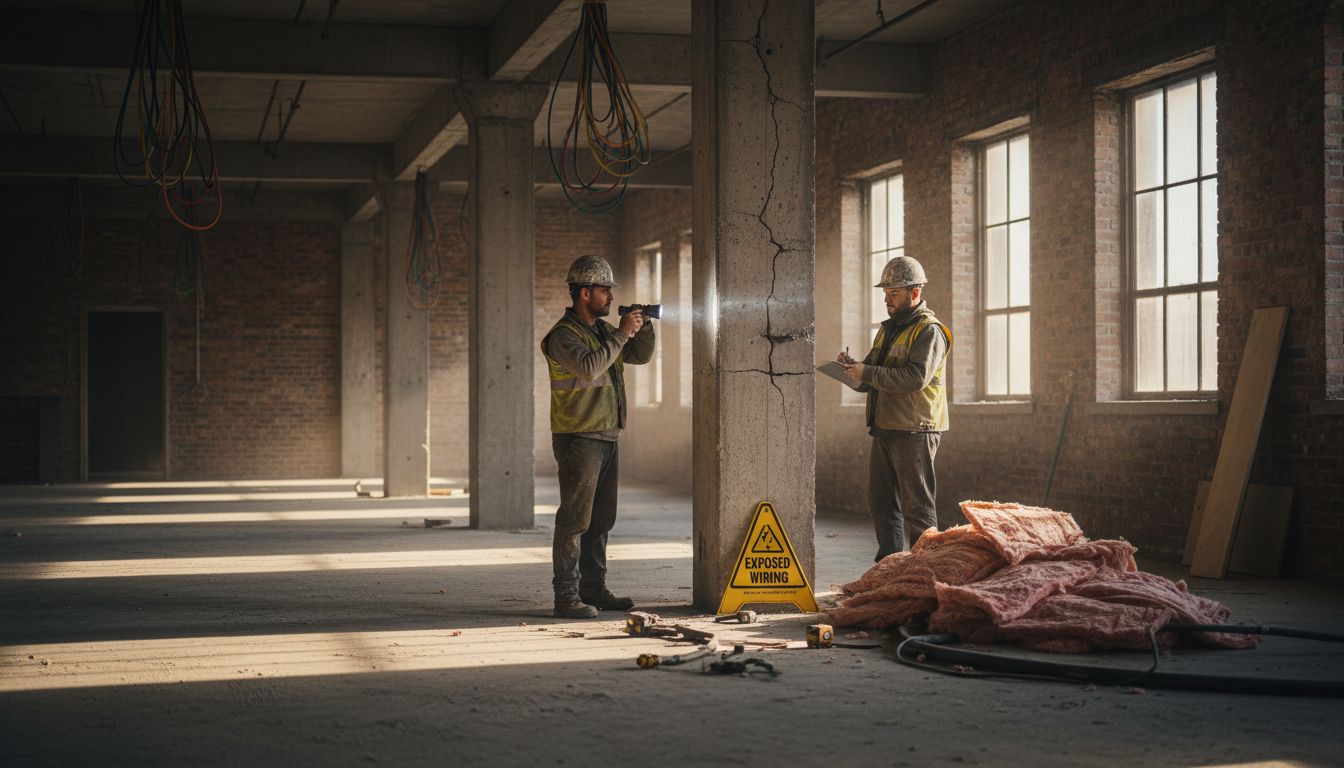
Strategic renovation isn’t just about immediate improvements—it’s an investment in long-term property value and organizational success. By carefully selecting and implementing appropriate renovation strategies, commercial property owners can create adaptable, efficient spaces that meet current operational needs while positioning themselves for future growth and market relevance.
How Renovation Impacts Property Value
Commercial property renovations represent a strategic investment that directly influences market value and long-term financial performance. Refurbishing commercial spaces can dramatically maximize asset value, creating opportunities for increased rental rates and more attractive investment potential.
The impact on property value stems from multiple critical factors:
- Improved Functionality: Modernized spaces attract higher-quality tenants
- Energy Efficiency: Reduced operational costs make properties more financially appealing
- Aesthetic Enhancements: Updated design increases marketability
- Technological Infrastructure: Modern amenities command premium pricing
- Structural Integrity: Well-maintained buildings demonstrate long-term value
Renovation strategies directly influence market perception and financial returns. Modernized infrastructure and aesthetic improvements significantly increase a property’s market value, making them more attractive to potential buyers and tenants. Professional renovations can potentially increase property valuation by 10-20%, depending on the scope and quality of improvements.
Ultimately, strategic renovations transform commercial properties from mere physical spaces into dynamic, competitive assets. By investing intelligently in targeted improvements, property owners can create environments that not only meet current market demands but also anticipate future economic trends, ensuring sustained financial growth and enhanced market positioning.
Legal Codes and Compliance Requirements
Navigating the complex landscape of legal codes and compliance requirements is a critical aspect of commercial property renovation. Building codes and safety regulations continuously evolve, making regular updates essential for maintaining legal standards and protecting occupant safety.
Key compliance areas for commercial renovations include:
- Accessibility Standards: Americans with Disabilities Act (ADA) requirements
- Fire Safety Regulations: Updated fire suppression and emergency exit protocols
- Electrical Systems: Current electrical code standards
- Structural Integrity: Building load and seismic compliance
- Environmental Regulations: Energy efficiency and sustainability requirements
Old buildings often harbor hidden risks like outdated wiring or inadequate ventilation, which can create significant legal and safety challenges. Comprehensive renovations provide an opportunity to systematically address these potential vulnerabilities, ensuring that commercial properties meet contemporary legal standards and minimize potential liability risks.
Successful compliance requires a proactive approach that combines thorough professional assessment, detailed documentation, and strategic renovation planning. Property owners must work closely with licensed architects, engineers, and contractors who understand local building codes and can navigate the complex regulatory landscape. By prioritizing legal compliance during renovation, businesses can create safer, more sustainable environments while protecting themselves from potential financial and legal consequences of outdated infrastructure.
Costs, Risks, and Return on Investment
Commercial property renovations represent a complex financial strategy that requires careful analysis of potential costs, inherent risks, and expected returns. Initial investment can range significantly, typically from $50 to $250 per square foot, depending on the renovation’s scope, building condition, and specific improvement goals.
Key financial considerations include:
- Direct Renovation Costs: Materials, labor, design, and permitting expenses
- Indirect Costs: Potential business interruption, temporary relocation
- Long-term Savings: Reduced operational and maintenance expenses
- Potential Revenue Increases: Higher rental rates, improved tenant attraction
- Tax Implications: Potential depreciation benefits and investment credits
Improving energy efficiency through strategic renovations can generate substantial overhead cost savings, attracting higher-quality tenants and reducing long-term operational expenses. Energy-efficient upgrades like advanced lighting systems, improved insulation, and smart building technologies can potentially reduce energy consumption by 20-30%, translating into meaningful financial returns.
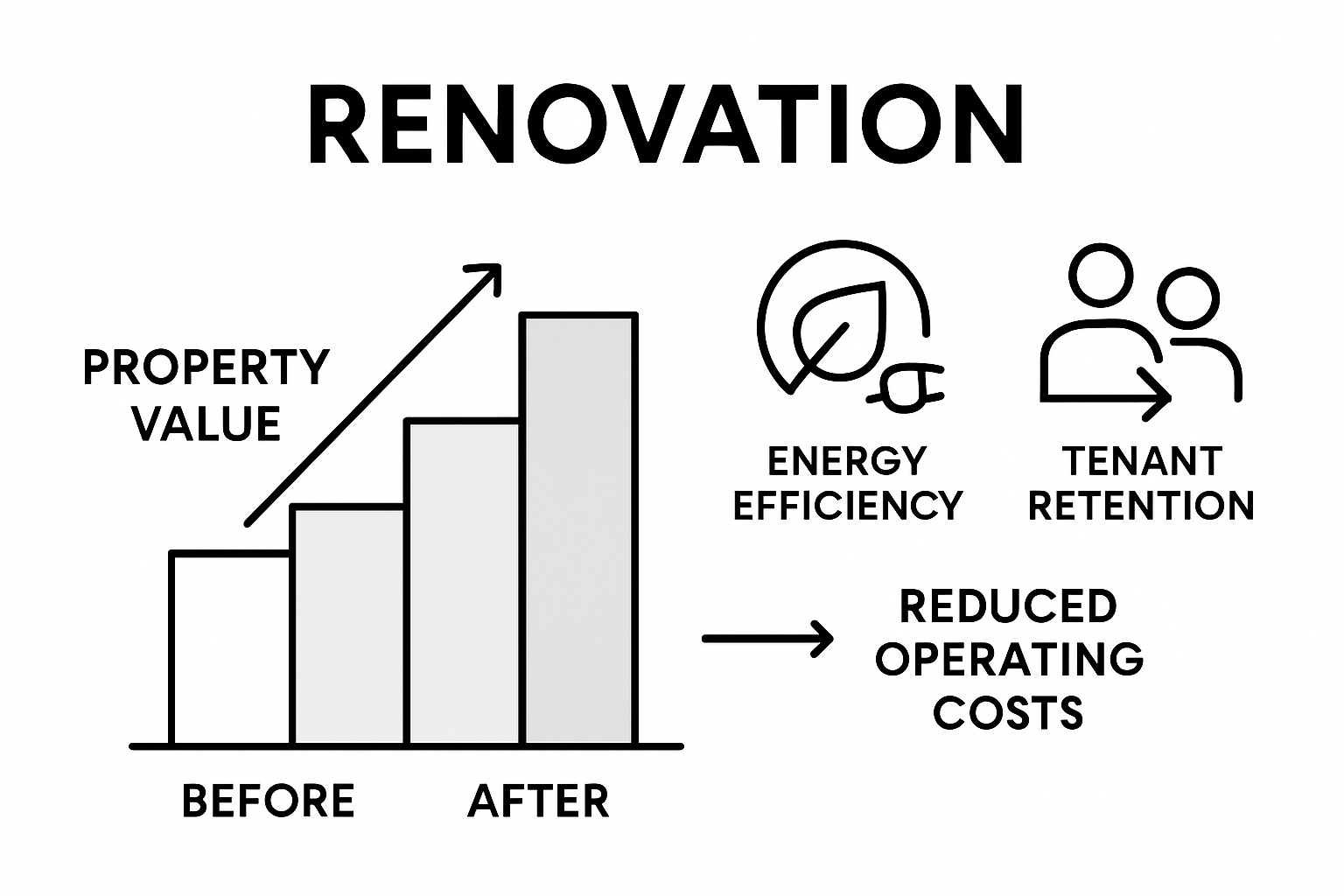
Successful renovation investments require thorough due diligence, comprehensive financial modeling, and a strategic approach to risk management. Property owners must balance immediate renovation expenses against projected long-term value appreciation, considering factors like market trends, building condition, and potential tenant demand. By conducting careful cost-benefit analyses and working with experienced professionals, commercial property owners can transform renovation from a potential financial risk into a powerful wealth-building strategy.
Elevate Your Commercial Property Value with Expert Renovation Solutions
Commercial property renovation is more than just updating your building it is a strategic move to boost market value enhance functionality and ensure compliance with evolving legal codes. Many business owners face challenges like outdated mechanical systems energy inefficiencies and aesthetic shortcomings that can reduce tenant appeal and profitability. With solutions like comprehensive structural upgrades mechanical system modernizations and energy-efficient deep retrofits you can transform your space into a modern productive environment that attracts top tenants and increases long-term value.
At Astrotech Construction we understand the importance of aligning renovation goals with your business objectives. Our professional team in the Dallas Fort Worth Metroplex specializes in commercial renovation projects that address critical pain points such as safety compliance workplace efficiency and technology infrastructure improvements. Through our proven process and commitment to quality we help you avoid costly risks while maximizing your return on investment.
Discover how Astrotech Construction can turn your commercial renovation plans into reality.
Begin your journey toward a more valuable and successful property today.
Ready to upgrade your commercial space with strategic renovations that boost value and success Visit Astrotech Construction now to schedule a consultation and explore how our expert services can meet your specific needs. Don’t wait to transform outdated spaces into thriving business assets. Learn more about our full range of renovation solutions at Astrotech Construction and take the first step toward lasting property enhancement.
Frequently Asked Questions
What is commercial property renovation?
Commercial property renovation is the process of improving, repairing, and upgrading existing commercial buildings to enhance their functionality, aesthetic appeal, and market value while maintaining structural integrity.
What are the benefits of renovating commercial property?
Renovating commercial property can improve workspace functionality, upgrade technology infrastructure, meet safety standards, enhance market value, and create attractive environments for employees and customers.
How does renovation impact the value of commercial properties?
Renovation can dramatically increase property value by improving functionality, energy efficiency, aesthetic appeal, and technological infrastructure, potentially raising market pricing and attracting higher-quality tenants or buyers.
What are some common costs associated with commercial property renovations?
Costs can range from $50 to $250 per square foot and include direct costs like materials and labor, indirect costs such as potential business interruptions, and long-term savings from reduced operational expenses.
Recommended
- Commercial Renovation Explained: Essential Guide for 2025 – Astrotech Construction
- Why Remodel Commercial Spaces: Complete Guide – Astrotech Construction
- 7 Steps to an Effective Commercial Renovation Checklist – Astrotech Construction
- 7 Inspiring Commercial Renovation Examples for DFW Owners – Astrotech Construction