

Every year, thousands of American homeowners face costly setbacks because of misunderstandings about contractor licensing. When vital details slip through the cracks, property investments and personal finances are left exposed. Demystifying what contractor licenses really mean—and debunking popular myths—empowers American families to confidently choose reputable professionals, avoid legal trouble, and protect their homes from unexpected risks. Discover how facts about licensing can safeguard your most valuable asset.
Table of Contents
- Contractor Licensing Explained And Common Myths
- Types Of Contractor Licenses In Texas Construction
- How Licensing Protects Property Owners And Clients
- Legal Standards And Qualification Processes
- Risks Of Unlicensed Contractors And Cost Implications
Key Takeaways
| Point | Details |
|---|---|
| Understanding Licensing Importance | Contractor licensing safeguards homeowners by ensuring minimum standards and legal protections are met. It is vital to verify a contractor’s license status before hiring. |
| Types of Licenses in Texas | There are various contractor classifications in Texas, including residential and commercial categories, each with specific operational parameters. Homeowners must understand these classifications to hire appropriate professionals. |
| Risks of Unlicensed Contractors | Hiring unlicensed contractors can lead to significant financial and legal liabilities, including personal responsibility for damages and loss of property value. Always confirm a contractor’s licensing and insurance before starting a project. |
| Ongoing Compliance and Protection | Licensed contractors must adhere to strict standards and ongoing education, providing homeowners with layers of protection against substandard work and legal complications. Regular verification of licensing documentation is recommended. |
Contractor Licensing Explained and Common Myths
Contractor licensing represents a critical safeguard for homeowners seeking quality construction and renovation services. Despite its importance, numerous misconceptions persist about what licensing actually means and how it protects property owners. Common legal myths about contractor credentials can potentially expose homeowners to significant financial and legal risks.
Understanding licensing requirements goes far beyond simply checking a box. Each state maintains specific regulatory standards that define what work contractors can legally perform. Contrary to popular belief, not all licenses are created equal. License classifications determine the specific types of construction projects a contractor may undertake, ranging from residential remodeling to specialized commercial work. Some contractors might hold licenses that permit work in certain domains while explicitly prohibiting others.
Several persistent myths can mislead homeowners and put their investments at risk. Many assume that a contractor’s license automatically guarantees high-quality workmanship or complete legal protection. Detailed analysis of contracting regulations reveals this is far from accurate. A license primarily confirms that a professional has met minimum professional standards and legal requirements, but it does not serve as an absolute warranty of exceptional performance.
Pro Tip – License Verification: Always independently verify a contractor’s current license status through your state’s official licensing board website, checking both active standing and specific permitted work categories before signing any project agreements.
Key considerations when evaluating contractor licensing include:
- Confirming current license validity
- Checking specific work category permissions
- Verifying insurance and bonding status
- Understanding scope of legal protections
By demystifying contractor licensing, homeowners can make more informed decisions and protect their property investments from potential legal and financial complications.
Types of Contractor Licenses in Texas Construction
Understanding the landscape of contractor licensing in Texas requires careful navigation through complex regulatory requirements. Contractor licensing requirements vary significantly across different municipalities, with no single statewide licensing system governing all construction professionals. This decentralized approach means homeowners must be particularly diligent in verifying credentials for any construction project.

Contractor Classifications in Texas typically fall into several key categories, each with distinct operational parameters. Residential contractors focus on home-based projects, while commercial contractors handle larger-scale building and renovation work. Specialized licenses exist for electrical, plumbing, HVAC, and other trade-specific services. Some contractors may hold multiple classifications, enabling them to perform more comprehensive construction and renovation services.
Local jurisdictions in Texas often impose unique registration and permit requirements that go beyond basic licensing. Cities like Dallas, Houston, and Austin maintain their own specific regulations, which can include mandatory registration, proof of insurance, and specialized certifications. Contractors must demonstrate technical competence, financial stability, and compliance with local building codes to obtain and maintain their professional credentials.
Key Licensing Categories include:
To clarify the varied contractor license types and their focus areas in Texas, see the summary below:
| License Category | Allowed Project Types | Typical Holder |
|---|---|---|
| Residential Building Contractor | Single-family home renovations | Home remodelers |
| Commercial Construction Professional | Office or retail build-outs | Large construction firms |
| Specialty Trade Contractor | Plumbing, electrical, HVAC | Licensed tradespeople |
| Remodeling & Renovation Specialist | Kitchen, bath updates | General remodelers |
- Residential Building Contractors
- Commercial Construction Professionals
- Specialty Trade Contractors
- Electrical and Mechanical Systems Experts
- Remodeling and Renovation Specialists
Pro Tip – License Verification: Always request and independently verify a contractor’s current license number through the local municipal building department, ensuring they are authorized to perform the specific type of work your project requires.
By understanding these nuanced licensing structures, homeowners can make informed decisions and protect themselves from potential legal and financial risks associated with unauthorized or improperly licensed construction work.
How Licensing Protects Property Owners and Clients
Contractor licensing mechanisms represent a critical legal safeguard that protects property owners from potential financial and professional risks. These licensing requirements establish a comprehensive framework of accountability, ensuring that contractors meet specific professional standards before being permitted to work on residential or commercial projects. By mandating rigorous qualification processes, licensing authorities create a protective barrier between property owners and unqualified or potentially unethical construction professionals.
Legal Protections embedded within licensing systems extend far beyond simple registration. Contractors must demonstrate technical competence, maintain appropriate insurance coverage, and comply with strict industry regulations. This multilayered approach provides homeowners with multiple lines of defense. If a licensed contractor fails to perform according to established standards, property owners have formal recourse through regulatory bodies, professional associations, and legal channels that unlicensed contractors cannot offer.
The comprehensive nature of contractor licensing involves several key protective mechanisms. These include mandatory background checks, verification of professional credentials, proof of financial stability, and ongoing compliance with evolving building codes and safety regulations. Professional licensing standards ensure that contractors maintain current knowledge of industry best practices, technological advancements, and safety protocols, ultimately minimizing risks for property owners.
Key Protective Elements of Licensing Include:
- Mandatory Professional Credentials
- Background and Criminal History Checks
- Proof of Financial Stability
- Required Insurance Coverage
- Ongoing Professional Education
- Compliance with Building Codes
- Formal Complaint Resolution Mechanisms
Pro Tip – Comprehensive Protection: Always request and verify a contractor’s complete licensing documentation, including insurance certificates and professional references, before initiating any construction or renovation project.
By understanding and leveraging these licensing protections, property owners can significantly reduce their vulnerability to substandard work, financial losses, and potential legal complications associated with unqualified or unethical construction professionals.
Legal Standards and Qualification Processes
Contractor licensing application processes represent a complex and rigorous system designed to ensure only qualified professionals enter the construction industry. These comprehensive standards encompass multiple layers of evaluation, including technical knowledge, financial stability, professional experience, and ethical conduct. Aspiring contractors must navigate a multifaceted qualification framework that goes well beyond simple registration, demanding substantial proof of competence and professional integrity.
Qualification Requirements typically involve several critical components. Candidates must pass extensive written examinations testing technical knowledge, construction methods, safety protocols, and local building codes. Financial documentation plays a crucial role, with regulators requiring proof of fiscal responsibility through detailed financial statements, evidence of business assets, and demonstrated capacity to handle significant construction projects. Background checks thoroughly examine an applicant’s professional history, looking for any patterns of misconduct or previous regulatory violations that might compromise client safety.
The legal standards governing contractor licensing are intentionally stringent, creating multiple barriers to entry that protect both consumers and legitimate professionals. Beyond initial qualification, licensed contractors must maintain ongoing compliance through regular recertification, continuing education requirements, and periodic professional audits. These processes ensure that contractors remain current with evolving industry technologies, safety standards, and regulatory changes. Failure to meet these stringent requirements can result in license suspension, substantial financial penalties, or complete disqualification from practicing in the construction industry.
Key Qualification Elements Include:
- Comprehensive Written Examinations
- Detailed Financial Documentation
- Extensive Background Investigations
- Proof of Professional Experience
- Safety and Technical Competency Verification
- Ongoing Professional Education
- Ethical Conduct Standards
Pro Tip – Professional Preparation: Invest significant time in comprehensive exam preparation, maintain meticulous financial records, and develop a robust professional portfolio demonstrating your technical expertise and ethical standards.
By establishing such rigorous legal standards, licensing authorities create a professional environment that prioritizes consumer protection, technical excellence, and maintaining the highest levels of integrity within the construction industry.
Risks of Unlicensed Contractors and Cost Implications
Unlicensed contractor risks represent a significant financial and legal minefield for unsuspecting property owners. These unqualified professionals can create substantial monetary exposure through substandard work, potential legal complications, and complete project failures. Homeowners who choose unlicensed contractors essentially gamble with their property’s integrity, potentially facing exponentially higher costs than any initial savings they might have anticipated.
Financial Vulnerabilities extend far beyond immediate project expenses. Unlicensed contractors frequently lack proper insurance coverage, meaning homeowners become personally liable for workplace injuries, property damage, and potential structural defects. Texas contractor licensing regulations specifically outline severe penalties for engaging unqualified professionals, including substantial fines and potential legal actions that can dramatically outweigh any perceived short-term financial benefits.
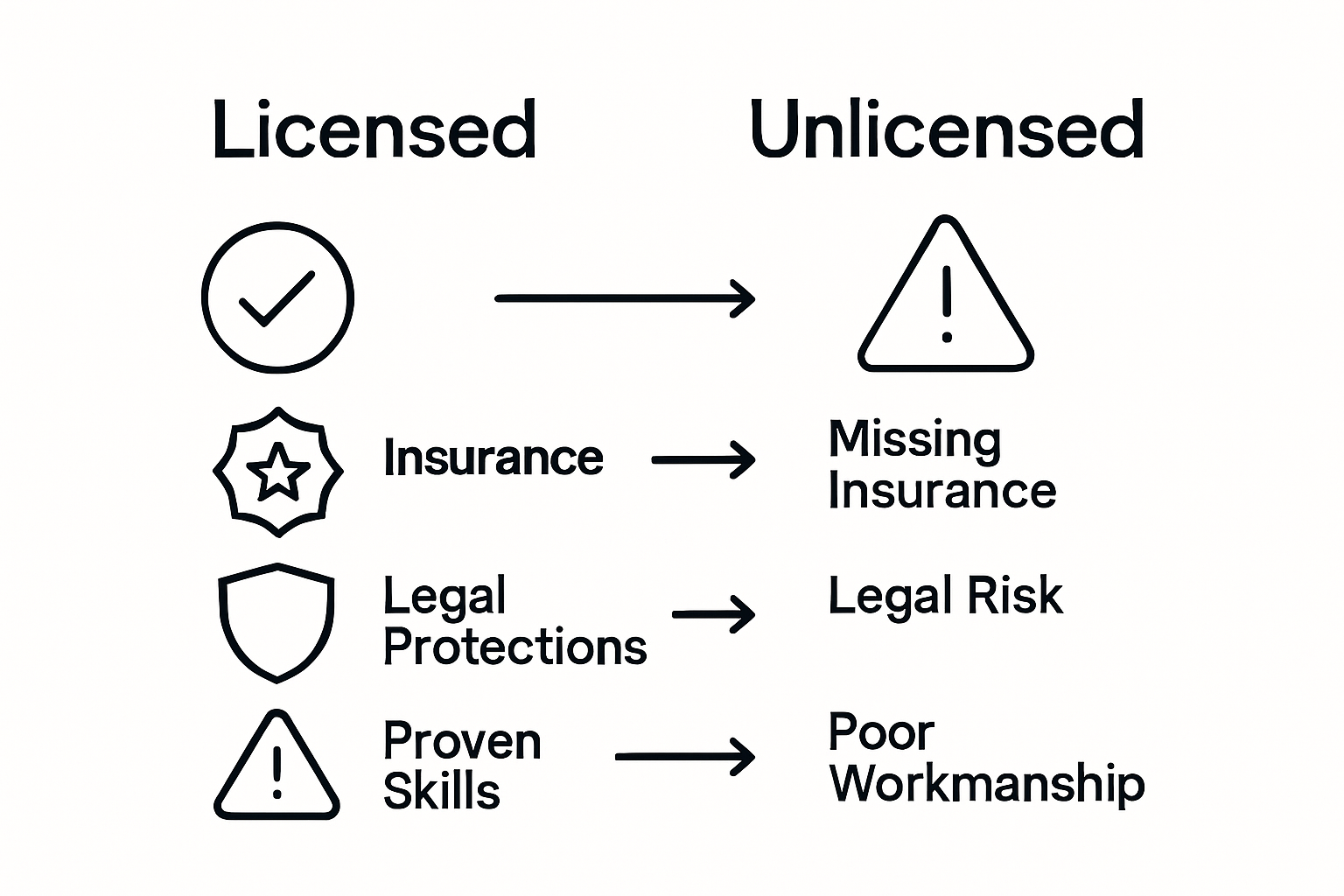
The comprehensive risks associated with unlicensed contractors encompass multiple critical areas. These include potential code violations, inadequate workmanship, voided warranties, and complete project abandonment. Insurance companies routinely reject claims involving unlicensed contractors, leaving homeowners financially responsible for repairs, replacements, and potential structural damage. Professional licensed contractors carry comprehensive insurance and bonding that protects homeowners throughout the construction or renovation process.
Key Financial and Legal Risks Include:
Here is a breakdown of the consequences when hiring licensed versus unlicensed contractors:
| Aspect | Licensed Contractor | Unlicensed Contractor |
|---|---|---|
| Legal Protections | Formal recourse if disputes arise | Limited or no recourse |
| Insurance Coverage | Comprehensive liability and bonding | Often uninsured, owner at risk |
| Code Compliance | Regular inspections, permits secured | High risk of violations |
| Financial Risks | Clear contract, reduced liability | Potential for full project loss |
- Potential Full Project Reconstruction Costs
- Personal Liability for Workplace Injuries
- Voided Home Insurance Coverage
- Potential Legal Prosecution
- Code Violation Penalties
- Inability to Obtain Proper Permits
- Loss of Property Value
Pro Tip – Risk Mitigation: Always request and independently verify a contractor’s current license number, insurance documentation, and professional references before initiating any construction project.
By understanding these substantial risks, homeowners can make informed decisions that protect their financial investments and ensure high-quality, legally compliant construction work.
Protect Your Home with Trusted Licensed Contractors
Understanding the crucial role of contractor licensing helps protect your investment from unlicensed professionals who can put your property and finances at risk. If you are a homeowner or business owner in the Dallas – Fort Worth Metroplex seeking professional construction or remodeling services, partnering with licensed experts is essential to ensure legal compliance, quality workmanship, and peace of mind. Key concerns such as verifying current license validity, insured coverage, and authorized work scope are exactly the standards AstroTech Construction upholds to safeguard your property.
Choosing our team means you benefit from years of experience, comprehensive service offerings including full home remodeling, kitchen and bathroom upgrades, roof replacement, and storm damage repair—all backed by proper licensing and local code compliance. Do not risk costly repairs or legal issues caused by unlicensed contractors. Take control today.

Request a consultation now to explore how licensed, trusted professionals can deliver your next project with quality assurance and unmatched service. Visit AstroTech Construction to learn more or contact us directly. Your property deserves the protection that a licensed contractor provides.
Frequently Asked Questions
What is the importance of contractor licensing for homeowners?
Contractor licensing is crucial for homeowners as it ensures that contractors have met specific professional standards and legal requirements. This licensing serves as a safeguard against unqualified or unethical professionals, protecting homeowners from financial and legal risks.
How can I verify a contractor’s license status?
Homeowners should independently verify a contractor’s current license status through their state’s official licensing board website. This verification process confirms that the license is active and checks the specific work categories the contractor is permitted to perform.
What are the risks of hiring unlicensed contractors?
Hiring unlicensed contractors poses significant risks, including inadequate workmanship, personal liability for injuries or damages, and potential legal complications. Homeowners may face higher costs due to project failures and lack of insurance coverage that typically accompanies licensed contractors.
What should I look for in a contractor’s license?
When evaluating a contractor’s license, homeowners should confirm its current validity, check the specific work category permissions, verify insurance and bonding status, and understand the scope of legal protections that accompany the license.
Recommended
- Complete Guide to the Role of Contractors – Astrotech Construction
- 8 Essential Questions to Ask Contractors Before Hiring – Astrotech Construction
- Why Hire Local Contractors for DFW Projects – Astrotech Construction
- Role of General Contractor in Renovation Projects – Astrotech Construction
- Impact of Knotweed on Insurance: Complete Guide UK