
Most American homeowners are surprised to learn that over 40 percent of construction disputes stem from hiring unlicensed or underqualified contractors. Understanding what separates a licensed professional from an unlicensed worker is the key to protecting your investment and peace of mind. This guide clears up common misconceptions about contractor licensing, explains the real credentials that matter, and shows you how to spot red flags before problems arise.
Table of Contents
- Licensed Contractors Defined And Common Myths
- Texas Contractor Licensing: Rules And Requirements
- How Licensed Contractors Protect Homeowners
- Risks Of Unlicensed Contractors And Hidden Costs
- Comparing Licensed Vs. Unlicensed Services
Key Takeaways
| Point | Details |
|---|---|
| Importance of Verification | Always verify a contractor’s license and insurance status before starting any project to avoid legal and financial risks. |
| Difference in Protection | Licensed contractors provide legal protection and accountability, whereas unlicensed contractors can expose homeowners to significant liabilities. |
| Insight on Requirements | In Texas, licensed contractors must meet specific state requirements, ensuring they have the necessary skills and are compliant with regulations. |
| Financial Implications of Unlicensed Work | Hiring unlicensed contractors can lead to unexpected costs, including fines, poor workmanship, and potential insurance issues. |
Licensed Contractors Defined and Common Myths
A licensed contractor represents a professional who has met specific legal requirements and obtained official certification to perform construction, renovation, or repair work within a designated jurisdiction. This professional credential goes far beyond a simple business registration, involving rigorous verification of skills, knowledge, and professional standards.
Many homeowners misunderstand contractor licensing, believing it’s merely a bureaucratic formality. However, common misconceptions about worker classification can lead to significant risks, particularly when determining a contractor’s legal status and professional capabilities. The U.S. Department of Labor emphasizes that licensing is not just about paperwork but about ensuring competence, accountability, and consumer protection.
Contrary to popular belief, not all contractors are automatically licensed or equally qualified. Some key myths include the assumption that a business card or website indicates professional legitimacy. Verifying a contractor’s credentials is crucial to avoiding potential financial and legal complications. Proper licensing typically involves:
- Passing comprehensive trade examinations
- Demonstrating technical expertise
- Maintaining current insurance and bonding
- Adhering to local and state regulatory standards
- Completing continuing education requirements
Pro Tip: Credential Check: Always request and independently verify a contractor’s license number through your local licensing board before signing any agreements or starting project work.
Texas Contractor Licensing: Rules and Requirements
In Texas, contractor licensing represents a comprehensive regulatory framework designed to protect homeowners and ensure professional standards across construction and renovation industries. The Texas Department of Licensing and Regulation (TDLR) establishes rigorous guidelines for contractor qualifications, setting clear expectations for professional conduct and technical competence.
Contractor licensing in Texas involves multiple critical requirements that go beyond simple registration. Professionals must demonstrate technical expertise, maintain appropriate insurance coverage, and comply with state-specific regulations. For specialized trades like electrical work, contractors must meet additional stringent standards. Texas regulations mandate specific compliance measures, including prominent business license display on professional vehicles, which helps consumers quickly verify a contractor’s credentials.
The licensing process in Texas typically encompasses several key components:
The following table summarizes the essential requirements for contractor licensing in Texas:
| Requirement | Why It Matters | Verification Source |
|---|---|---|
| State Examination Passed | Confirms technical competency | TDLR Website |
| Liability Insurance Maintained | Protects homeowner against losses | Insurance Certificate, TDLR |
| Business Documentation Filed | Verifies operation legitimacy | State Licensing Agency |
| Continuing Education Completed | Ensures up-to-date skills | Course Certificate, License Record |
- Passing comprehensive state-administered examinations
- Providing proof of professional liability insurance
- Submitting detailed business documentation
- Demonstrating minimum years of verified work experience
- Completing mandatory continuing education credits
- Maintaining a clean professional disciplinary record
Pro Tip: License Verification: Always cross-reference a contractor’s license number directly with the Texas Department of Licensing and Regulation’s online database to confirm current status and potential disciplinary actions.
How Licensed Contractors Protect Homeowners
Licensed contractors serve as critical guardians of homeowner interests, providing a comprehensive shield against potential financial and structural risks associated with home improvement projects. The Texas Department of Licensing and Regulation emphasizes the importance of licensed professionals in maintaining rigorous safety and compliance standards, ensuring that homeowners receive high-quality, legally compliant work.
The protection offered by licensed contractors extends far beyond basic construction skills. These professionals provide multiple layers of security through comprehensive insurance coverage, legally binding contracts, and adherence to state-mandated quality benchmarks. According to the Governor’s Small Business Handbook, licensed contractors significantly reduce the risk of substandard work and associated financial complications, giving homeowners peace of mind throughout their renovation or repair projects.
Key protective mechanisms provided by licensed contractors include:
- Mandatory professional liability insurance
- Compliance with current building codes and regulations
- Legally enforceable work contracts
- Transparent pricing and scope of work documentation
- Professional error and omission coverage
- Access to warranty and repair guarantees
Pro Tip: Background Investigation: Always request and independently verify a contractor’s license number, insurance documentation, and professional references before initiating any home improvement project.
Risks of Unlicensed Contractors and Hidden Costs
Unlicensed contractors represent a significant financial and legal minefield for unsuspecting homeowners, exposing them to substantial risks that far outweigh potential short-term cost savings. Texas regulations outline multiple serious consequences associated with hiring contractors who lack proper licensing, including potential financial penalties and extensive legal vulnerabilities that can dramatically impact a homeowner’s financial stability.
The financial risks extend beyond immediate project complications. Engaging unlicensed contractors can lead to devastating legal consequences, including potential lawsuit exposure and complete denial of insurance claims. These professionals often lack the necessary insurance coverage, meaning homeowners could be personally liable for workplace injuries, property damage, or substandard work that requires expensive corrections.
Specific risks of hiring unlicensed contractors include:
- Potential voiding of homeowner’s insurance coverage
- No legal recourse for poor workmanship
- Increased likelihood of code violations
- Personal liability for workplace accidents
- Inability to obtain necessary permits
- Potential property value reduction
- Higher long-term repair and remediation costs
- Exposure to uninsured financial risks
Pro Tip: Risk Assessment: Always request and independently verify a contractor’s current license status, insurance documentation, and professional references before signing any agreements or allowing work to commence.
Comparing Licensed vs. Unlicensed Services
Licensed contractors represent a professional standard of service that goes far beyond simple paperwork, offering homeowners comprehensive protection and quality assurance. Detailed comparisons of contractor services reveal significant differences in legal compliance, technical expertise, and consumer protection, highlighting the critical importance of choosing a properly credentialed professional for home improvement projects.
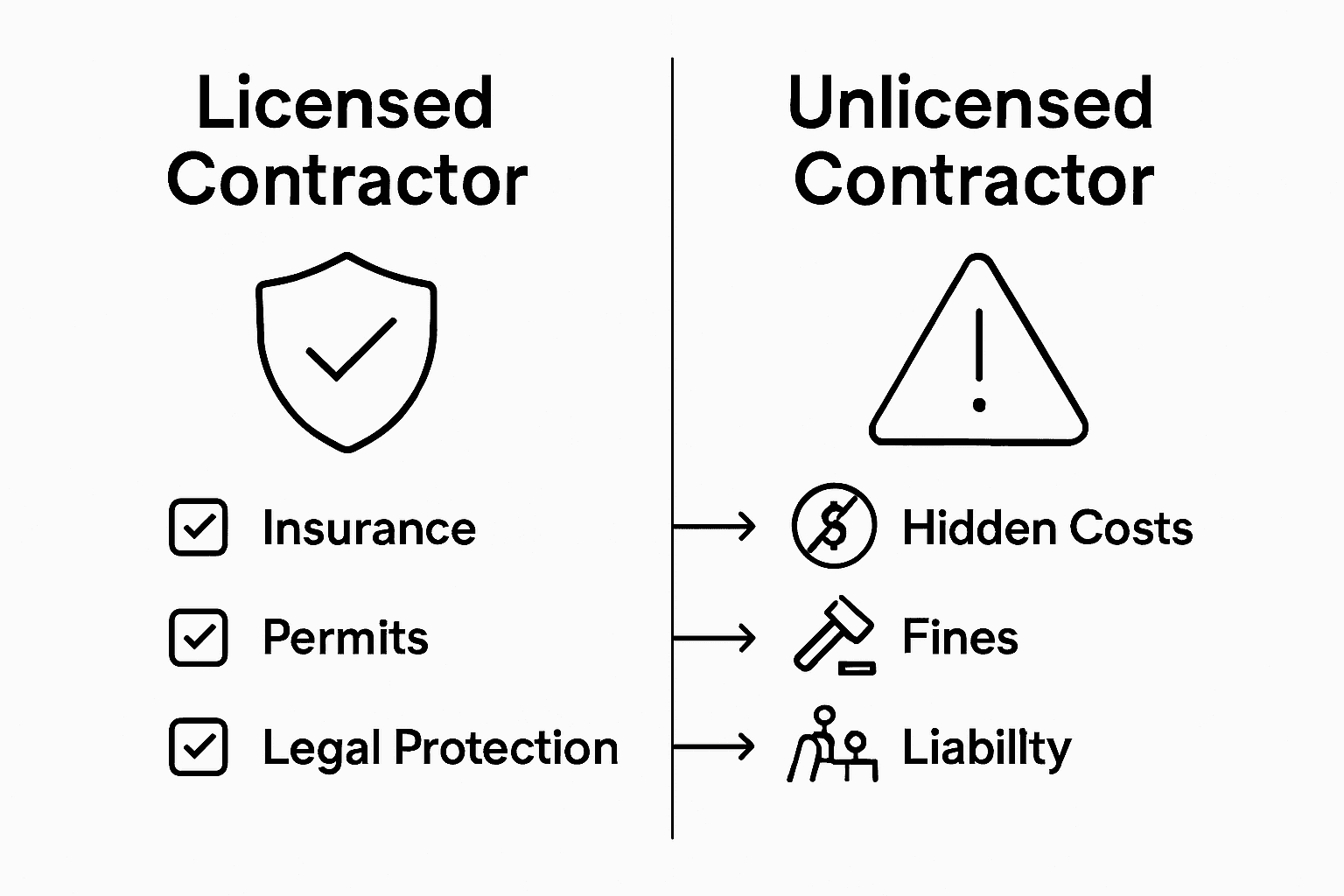
Professional licensing standards create a fundamental distinction between qualified and unqualified service providers, encompassing multiple dimensions of project management and technical competence. Licensed contractors must demonstrate rigorous technical knowledge, maintain ongoing education, carry comprehensive insurance, and adhere to strict industry regulations that protect homeowners from potential financial and structural risks.
Key differences between licensed and unlicensed services include:
Here’s a quick comparison of how licensed and unlicensed contractors impact homeowners:
| Aspect | Licensed Contractor Impact | Unlicensed Contractor Impact |
|---|---|---|
| Legal Protection | Access to legal and financial recourse | High risk of unresolved disputes |
| Insurance Coverage | Projects covered by liability insurance | Homeowner often bears all liability |
| Work Quality Assurance | Work meets state inspection standards | Higher risk of code violations |
| Financial Risk | Costs are predictable and protected | Unexpected expenses likely |
- Legal accountability and recourse
- Comprehensive insurance coverage
- Verified technical expertise
- Compliance with current building codes
- Professional continuing education requirements
- Transparent pricing and contract standards
- Access to professional dispute resolution mechanisms
- Ability to pull necessary permits
- Guaranteed quality of workmanship
- Protection against substandard repairs
Pro Tip: Credential Verification: Request and independently confirm a contractor’s current license status, professional certifications, and insurance documentation before initiating any home improvement project.
Ensure Your Next Project Is Handled by Trusted Licensed Professionals
When planning a significant renovation or repair, the risks of hiring unlicensed contractors can be overwhelming. From financial liability to poor workmanship and possible legal issues, the stakes are high. This article highlights how licensed contractors provide essential protections such as verified credentials, professional liability insurance, and compliance with Texas regulations — all critical to safeguarding your investment and peace of mind.
At Astrotech Construction, we understand these challenges and are committed to delivering licensed, dependable, and expert construction and remodeling services throughout the Dallas – Fort Worth Metroplex. Whether you are considering full home remodeling, roof replacement, or storm damage repair, our licensed team ensures your project meets all state requirements and quality standards. Benefit from our years of experience and customer-focused values to avoid hidden costs and risks associated with unlicensed work.
Ready to protect your home and investment with a licensed professional?

Explore how our licensed contractors can bring your vision to life safely and reliably. Visit Astrotech Construction today to schedule your consultation and take the first step toward a quality renovation you can trust.
Frequently Asked Questions
Why should I hire a licensed contractor for my home project?
Hiring a licensed contractor ensures that you are working with a professional who has met specific legal requirements, demonstrating competence and adherence to industry standards. This provides protection against potential financial and structural risks associated with home improvement projects.
What are the risks of hiring an unlicensed contractor?
Hiring unlicensed contractors can lead to significant financial and legal risks, including possible voiding of homeowner’s insurance, lack of legal recourse for poor workmanship, and exposure to costs from accidents or violations that you may be liable for.
How can I verify a contractor’s licensing status?
You can verify a contractor’s licensing status by checking their license number through your local or state licensing board’s online database. This allows you to confirm their current status and any disciplinary actions that may have been taken.
What protections do licensed contractors provide for homeowners?
Licensed contractors offer multiple protections, including mandatory professional liability insurance, legally binding contracts, compliance with building codes, and access to warranties and repair guarantees. These protections help ensure quality workmanship and safeguard your investment.
Recommended
- Role of Contractor Licensing – Protecting Homeowners’ Interests – Astrotech Construction
- Complete Guide to the Role of Contractors – Astrotech Construction
- Why Hire Local Contractors for DFW Projects – Astrotech Construction
- 8 Essential Questions to Ask Contractors Before Hiring – Astrotech Construction
- Roofers Public Adjusters And Profit – Insurance Public Adjusters USA