

Over $100 billion is spent annually on commercial property renovations across American cities, but only projects with strong planning deliver real returns. For Dallas-Fort Worth property owners and managers, every renovation decision shapes tenant satisfaction and long-term asset value. This guide breaks down key steps for assessing property needs, securing approvals, and coordinating successful transformations that set your American commercial property apart in a competitive local market.
Table of Contents
- Step 1: Define Project Goals And Assess Property Needs
- Step 2: Set Budgets And Secure Necessary Approvals
- Step 3: Hire Qualified Contractors And Review Proposals
- Step 4: Coordinate Logistics And Oversee Site Work
- Step 5: Verify Quality And Finalize The Renovation
Quick Summary
| Key Insight | Explanation |
|---|---|
| 1. Clearly Define Project Goals | Establish specific renovation objectives that align with property needs and business strategies for successful outcomes. |
| 2. Create a Realistic Budget | Develop a comprehensive budget that includes all costs, including a contingency fund to address unexpected expenses. |
| 3. Hire Qualified Contractors | Select contractors based on detailed criteria, ensuring they have relevant experience and a solid track record for your project. |
| 4. Coordinate Logistics Effectively | Implement structured management protocols to oversee workflow, maintain quality, and facilitate communication among all project participants. |
| 5. Verify Quality Before Finalization | Conduct thorough inspections to ensure all work meets specifications and obtain necessary documentation for a successful project closure. |
Step 1: Define project goals and assess property needs
Successful commercial renovations start with crystal clear project goals and a comprehensive understanding of your property’s current conditions and potential. Your initial planning phase sets the trajectory for transforming a commercial space into a high-value asset that meets both immediate needs and long-term strategic objectives.
Begin by conducting a thorough property assessment using comprehensive project evaluation techniques. This process involves systematically documenting the existing property’s physical condition, identifying functional limitations, and understanding potential improvements that could enhance tenant experience or operational efficiency. Professional property assessments typically include detailed evaluations of structural integrity, mechanical systems, electrical infrastructure, and spatial layout. Commercial property owners should collaborate with experienced architects and construction professionals who can provide nuanced insights into potential renovation opportunities.
Critical elements in defining project goals include understanding financial constraints, anticipated return on investment, and alignment with broader business strategies. Consider factors such as tenant preferences, market trends, energy efficiency requirements, and potential technology integrations that could modernize the space. Your goals should balance immediate functional improvements with long-term property value enhancement.
Pro tip: Invest in a professional property condition assessment before finalizing renovation plans to uncover hidden opportunities and potential challenges that might not be immediately apparent.
Step 2: Set budgets and secure necessary approvals
Setting a realistic budget and obtaining the required approvals are critical milestones in any commercial renovation project. This step transforms your conceptual plans into actionable strategies that align financial resources with project objectives while ensuring full legal and regulatory compliance.
Begin by developing a comprehensive budget that accounts for all potential expenses. Construction management strategies recommend creating detailed cost projections that include direct construction expenses, contingency funds, professional fees, permit costs, and potential unexpected modifications. Work closely with financial advisors and construction professionals to create a nuanced budget that balances your project goals with fiscal constraints. Commercial renovation budgets typically allocate approximately 10-20% for contingency expenses to address unforeseen challenges.
Securing necessary approvals involves navigating a complex landscape of municipal regulations, zoning requirements, and stakeholder permissions. This process requires meticulously documenting your renovation plans, submitting detailed permit applications, and engaging with local building authorities. Some jurisdictions may require multiple layers of approval including architectural review boards, city planning commissions, and historic preservation committees. Each approval stage demands comprehensive documentation demonstrating how your renovation meets safety standards, building codes, and local development guidelines.
Pro tip: Schedule preliminary consultations with local permit offices and consider hiring an expediter who specializes in navigating bureaucratic approval processes to streamline your renovation timeline.
Step 3: Hire qualified contractors and review proposals
Hiring the right contractors is a critical decision that can make or break your commercial renovation project. This step requires a strategic approach to identifying, evaluating, and selecting professionals who can transform your vision into reality while delivering exceptional value and quality.
Begin by developing a comprehensive set of proposal evaluation criteria that go beyond simple cost comparisons. Look for contractors with proven experience in commercial renovations similar to your project scope, verifiable references, strong safety records, and demonstrated financial stability. Create a detailed request for proposal (RFP) that outlines your project specifications, performance expectations, timeline, and budgetary constraints. When reviewing proposals, assess not just the bottom line, but the contractor’s technical capabilities, project management approach, and potential to deliver long term value.

The proposal review process should involve a systematic scoring method that objectively compares potential contractors. Examine each proposal’s detailed breakdown of costs, proposed timeline, material specifications, and risk management strategies. Pay close attention to how each contractor addresses potential challenges, demonstrates innovation, and shows a comprehensive understanding of your specific renovation goals. Consider conducting interviews or site visits with top candidates to gain deeper insights into their working style, communication approach, and technical expertise.
Pro tip: Request comprehensive portfolios and conduct thorough background checks on potential contractors, including verifying licenses, insurance coverage, and past project performance to mitigate risks and ensure quality.
Step 4: Coordinate logistics and oversee site work
Successful commercial renovation projects demand meticulous logistics coordination and proactive site work oversight. Your role as a property owner is to ensure smooth operations, maintain high quality standards, and manage the complex interactions between multiple contractors and project elements.
Implement comprehensive site management protocols that establish clear communication channels and define explicit responsibilities for each project participant. Create a detailed project management dashboard that tracks daily progress, monitors resource allocation, and identifies potential bottlenecks before they impact your renovation timeline. Regular onsite meetings with primary contractors should be scheduled to review progress, discuss challenges, and ensure all work adheres to the original project specifications and quality standards.
Developing a robust risk management strategy is crucial during site coordination. This involves conducting periodic safety inspections, verifying that all contractors comply with local building codes and safety regulations, and maintaining comprehensive documentation of every stage of the renovation process. Pay special attention to potential disruptions to existing business operations, implementing strategies to minimize downtime and maintain a professional environment throughout the renovation.
Pro tip: Utilize cloud based project management software to create real time visibility into site work progress, allowing instant communication and documentation of all renovation activities.
The table below compares traditional and modern approaches to renovation project management:
| Approach | Communication Style | Technology Use | Risk Management |
|---|---|---|---|
| Traditional | Mostly face-to-face meetings | Paper documents, basic tools | Reactive, issue-based |
| Modern | Real-time, digital platforms | Cloud software, dashboards | Proactive, data-driven |
Step 5: Verify quality and finalize the renovation
The final phase of your commercial renovation project requires meticulous attention to detail and a systematic approach to quality verification. This critical stage ensures that all work meets your original project specifications and delivers the transformative results you envisioned.
Implement comprehensive quality verification protocols that include detailed inspection checklists covering every aspect of the renovation. Conduct thorough walkthroughs with your primary contractors, carefully examining workmanship, material quality, functional performance, and aesthetic outcomes. Create a structured documentation process that records each inspection point, noting any discrepancies or areas requiring additional attention. Pay special focus to critical elements such as structural integrity, electrical and mechanical systems, finish quality, and compliance with local building codes and safety regulations.
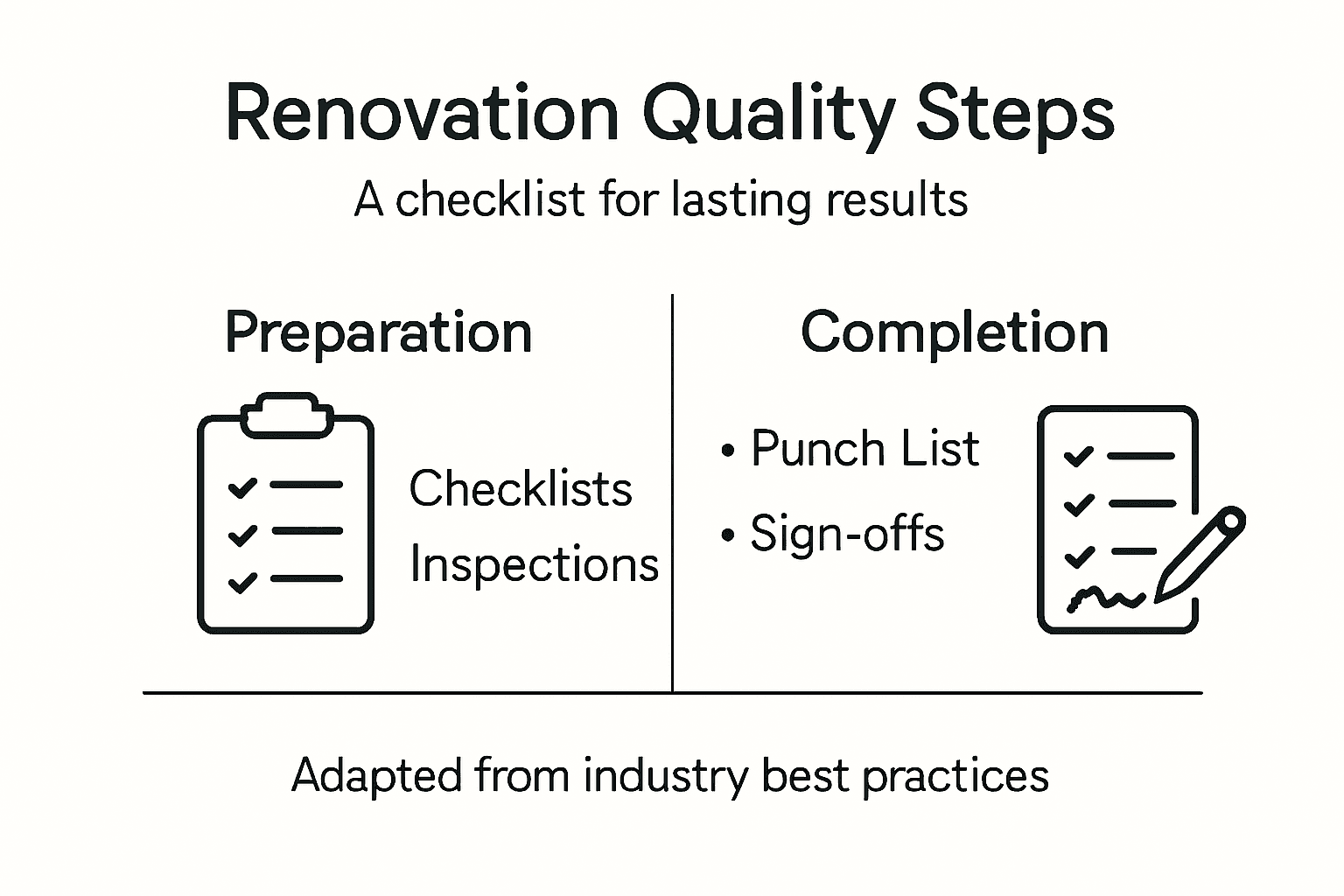
Finalizing the renovation involves more than visual inspection. Verify that all contractual obligations have been met, all necessary permits have been closed out, and comprehensive documentation has been compiled. Request detailed as built drawings, warranty information, maintenance guidelines, and performance certifications from your contractors. Schedule a comprehensive final walkthrough with all key stakeholders to ensure complete satisfaction and address any remaining concerns before making final payment and officially closing the project.
Pro tip: Maintain a detailed punch list throughout the project and resolve minor issues incrementally to prevent last minute complications during final project completion.
Here’s a summary of key considerations for each major step in a commercial renovation project:
| Step | Main Focus | Essential Actions | Key Outcome |
|---|---|---|---|
| Define Goals | Assess property, set objectives | Property evaluation, stakeholder input | Clear project vision |
| Set Budgets & Approvals | Financial planning, legal compliance | Budgeting, permit submissions | Project readiness |
| Hire Contractors | Select skilled professionals | RFP, vetting, negotiation | Reliable project team |
| Coordinate Logistics | Manage workflow and schedules | Site meetings, progress tracking | Smooth execution |
| Quality & Finalize | Inspection and verification | Punch lists, documentation | Satisfactory project closure |
Plan Your Commercial Renovation with Confidence and Lasting Value
Planning commercial renovations involves overcoming complex challenges like setting clear project goals, managing realistic budgets, securing approvals, and hiring trusted contractors. The stress of coordinating site logistics and ensuring top quality can feel overwhelming. If you want to avoid costly delays and hidden pitfalls while maximizing your property’s long-term value, professional assistance tailored to your specific needs is essential.
At Astrotech Construction, we understand these critical steps and partner with property owners in the Dallas – Fort Worth Metroplex to deliver dependable commercial renovation solutions. From initial budget planning and permits to hands-on site coordination and final quality verification, our team handles every phase with expertise and transparent communication. Our commitment to customer satisfaction and quality assurance transforms your renovation vision into a lasting asset.
Explore how we bring your project goals to life and schedule a consultation today. Taking action now ensures your commercial property renovation runs smoothly and unlocks its full potential.
Frequently Asked Questions
What are the first steps in planning commercial renovations for lasting value?
Start by defining clear project goals and assessing your property’s current condition. Conduct a thorough evaluation and identify potential improvements that align with tenant needs and market trends.
How do I set a realistic budget for commercial renovation projects?
Develop a comprehensive budget that includes all potential expenses, such as construction costs, contingency funds, and permits. Aim to allocate about 10-20% of your total budget for unforeseen expenses to ensure financial flexibility.
What should I consider when hiring contractors for my renovation?
Look for contractors with proven experience in similar commercial renovations and strong references. Create a detailed request for proposals (RFP) and evaluate contractors based on their technical capabilities, project management approach, and cost breakdown.
How can I ensure quality during the renovation process?
Implement comprehensive quality verification protocols that include detailed inspection checklists and regular walkthroughs with your contractors. Document every inspection point to address discrepancies immediately, ensuring the final output meets your specifications.
What are the key elements to include in my final project walkthrough?
Ensure that you verify all contractual obligations have been met, permits are closed out, and documentation is compiled. Conduct a final walkthrough with all stakeholders to confirm satisfaction before making the final payment and closing the project.
How can I proactively manage risks during renovations?
Develop a robust risk management strategy that includes regular safety inspections and compliance checks with local building codes. Maintain a project management dashboard to track daily progress and identify potential bottlenecks before they escalate.
Recommended
- Why Renovate Commercial Property: Boost Value and Success – Astrotech Construction
- 7 Steps to an Effective Commercial Renovation Checklist – Astrotech Construction
- Commercial Renovation Explained: Essential Guide for 2025 – Astrotech Construction
- Why Remodel Commercial Spaces: Complete Guide – Astrotech Construction