Storms in North Texas leave behind more than just broken shingles and scattered debris. For Dallas-Fort Worth homeowners, the path to recovery depends on knowing the difference between insurance restoration and standard construction. If your property has suffered water, fire, or wind damage, understanding how restoration experts return homes to their pre-loss condition can help you avoid costly missteps, making sure every repair is covered and every detail is documented.
Table of Contents
- Defining Insurance Restoration And Misconceptions
- Types Of Insurance Restoration Services
- Step-By-Step Restoration Process Explained
- Legal Requirements And Claims Procedures
- Key Risks, Costs, And Contractor Responsibilities
Key Takeaways
| Point | Details |
|---|---|
| Understanding Restoration | Insurance restoration differs from traditional construction, focusing on returning properties to their pre-loss condition following damage events. |
| Types of Damage Services | Key restoration services include water damage, fire and smoke recovery, mold remediation, and storm damage restoration. |
| Claim Process Awareness | Homeowners must navigate a structured insurance claim process, involving detailed damage assessments and thorough documentation. |
| Legal Compliance | Adhering to legal requirements and documentation standards is essential for effective insurance restoration and claim success. |
Defining Insurance Restoration and Misconceptions
Insurance restoration represents a specialized process of repairing and recovering properties damaged by unexpected events like storms, floods, or fire. Unlike traditional construction, restoration focuses on returning structures to their pre-loss condition through targeted remediation techniques.
The restoration industry involves several critical activities that differentiate it from standard construction:
- Rapid response and assessment of property damage
- Water extraction and moisture mitigation
- Cleaning and sanitization of affected areas
- Structural drying and dehumidification
- Smoke and odor removal
- Temporary property stabilization
Understanding the nuanced differences between restoration and new construction is essential. Restoration contractors specialize in returning a property to its original state, while construction professionals typically focus on building new structures or performing major renovations.
Here’s a quick comparison of restoration, reconstruction, and renovation services:
| Service Type | Main Focus | Typical Scenario |
|---|---|---|
| Restoration | Return to pre-loss state | Storm or fire damage |
| Reconstruction | Rebuild from the ground up | Major structural failure |
| Renovation | Modernize or upgrade | Aging properties |
Common misconceptions about insurance restoration can create significant challenges for homeowners:
- Restoration is NOT the same as complete reconstruction
- Insurance coverage varies depending on specific policy terms
- Not all damage types are automatically covered
- Professional assessment is crucial for accurate restoration planning
Insurance restoration requires specialized skills and precise understanding of both property damage and insurance claim processes.
Pro tip: Always document property damage thoroughly with photographs and detailed written descriptions before beginning any restoration work.
Types of Insurance Restoration Services
Insurance restoration services encompass a comprehensive range of specialized damage repair techniques designed to return properties to their pre-loss condition. Restoration services address multiple types of property damage through targeted, professional interventions.
The primary types of insurance restoration services include:
-
Water Damage Restoration
- Emergency water extraction
- Moisture detection and assessment
- Structural drying and dehumidification
- Mold prevention treatments
-
Fire and Smoke Damage Restoration
- Debris removal and cleaning
- Smoke odor elimination
- Structural cleaning and sanitization
- Content restoration and salvage
-
Mold Remediation Services
- Comprehensive mold inspection
- Containment and removal procedures
- Air quality testing
- Preventative treatment solutions
-
Storm Damage Restoration
- Roof and exterior damage repair
- Wind and hail damage assessment
- Structural reinforcement
- Emergency tarping and protection
Understanding the nuances of different restoration services is crucial for homeowners navigating insurance claims. Specialized restoration contractors work closely with insurance providers to document damage, develop comprehensive repair strategies, and ensure thorough property recovery.
Insurance restoration services require precision, technical expertise, and a systematic approach to effectively manage complex property damage scenarios.
Some restoration services also extend to less common scenarios, such as volcanic eruption damage cleanup, which involves specialized techniques for removing ash, mitigating fire damage, and addressing secondary impacts.

Pro tip: Always photograph and document property damage extensively before cleanup to support your insurance claim and restoration process.
Step-by-Step Restoration Process Explained
The insurance restoration process is a structured approach designed to return damaged properties to their original condition efficiently and effectively. Insurance claim procedures require systematic documentation and careful navigation through multiple complex stages.
The comprehensive restoration process typically involves the following critical steps:
-
Initial Damage Assessment
- Immediate property inspection
- Documenting extent of damage
- Photographing affected areas
- Creating detailed damage reports
-
Insurance Claim Initiation
- Notifying insurance provider
- Submitting initial claim documentation
- Scheduling professional adjuster evaluation
- Providing proof of property ownership
-
Damage Evaluation and Estimation
- Professional adjuster site inspection
- Comprehensive damage assessment
- Generating detailed repair cost estimates
- Reviewing policy coverage specifics
-
Restoration Planning
- Developing targeted repair strategy
- Identifying necessary restoration techniques
- Selecting qualified restoration professionals
- Establishing project timeline
-
Restoration Execution
- Implementing repair procedures
- Addressing structural and cosmetic damages
- Conducting ongoing quality inspections
- Ensuring compliance with insurance requirements
Understanding the intricate interactions between homeowners, insurance providers, and restoration professionals is crucial for successful property recovery. Restoration contractors play a pivotal role in bridging communication gaps and ensuring comprehensive damage repair.
Effective insurance restoration demands meticulous documentation, clear communication, and a strategic approach to property damage recovery.
Some restoration scenarios involve complex contractor interactions with insurance adjusters, requiring specialized negotiation skills and deep understanding of claim processes.
Pro tip: Maintain a comprehensive digital and physical file of all damage documentation, communications, and estimates throughout the restoration process.
Legal Requirements and Claims Procedures
Insurance restoration involves complex legal frameworks that protect both homeowners and insurance providers. Legal claim practices mandate specific procedural requirements to ensure fair and transparent property damage resolution.
Key legal requirements for insurance restoration claims include:
-
Documentation Standards
- Detailed damage documentation
- Comprehensive photographic evidence
- Accurate cost estimation
- Adherence to local building codes
-
Claim Filing Regulations
- Timely claim submission
- Compliance with policy deadlines
- Precise claim preparation
- Transparent communication
-
Policyholder Rights
- Independent damage assessment
- Dispute resolution mechanisms
- Fair claim evaluation
- Protection against claim denial
-
Adjuster Interaction Guidelines
- Professional damage estimation
- Objective property assessment
- Transparent cost breakdowns
- Equitable settlement negotiations
The legal landscape surrounding insurance restoration is intricate. Insurance claim regulations vary significantly by jurisdiction, requiring homeowners to understand their specific state’s guidelines and protections.
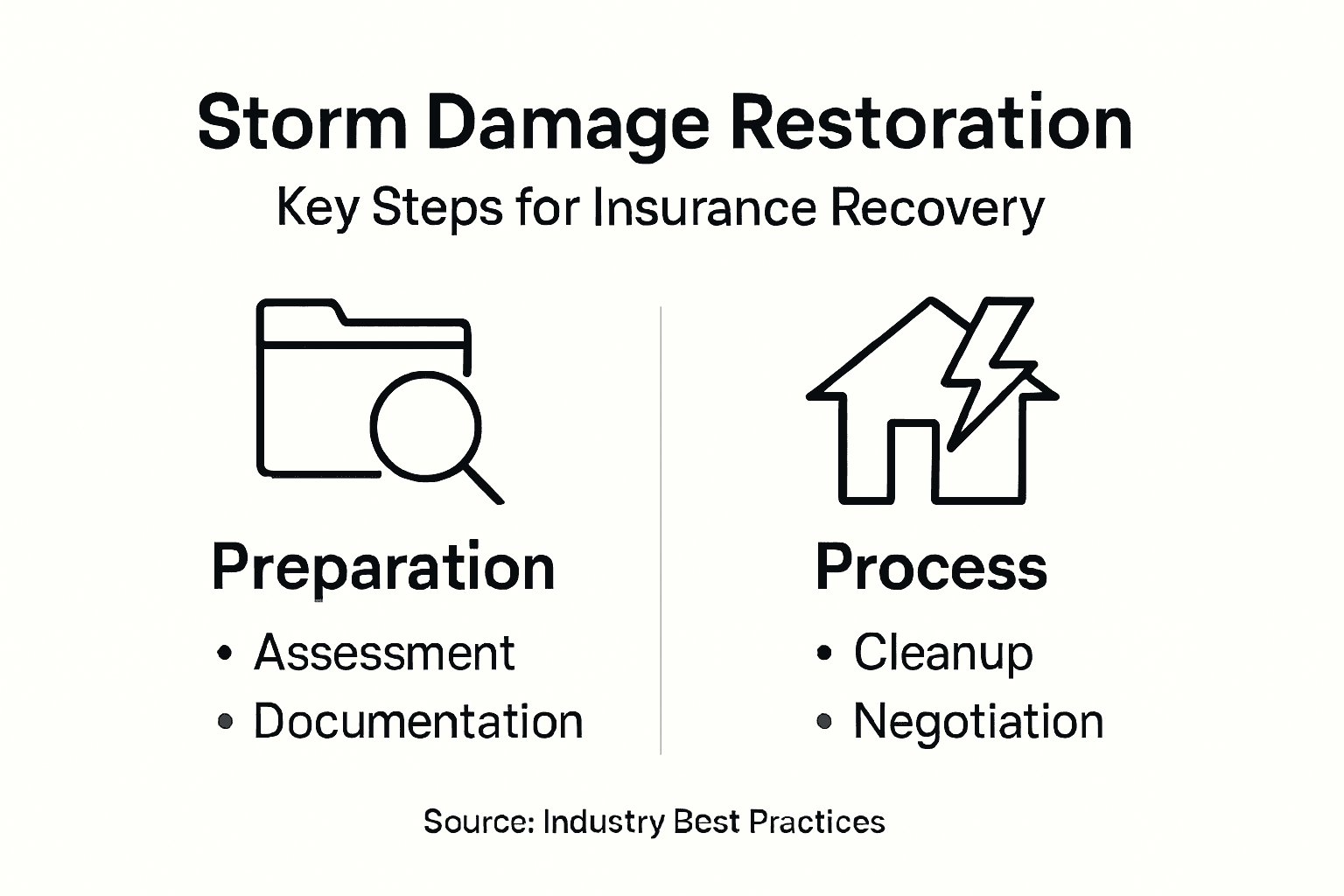
Use this table to quickly reference essential legal and regulatory considerations for insurance restoration claims:
| Requirement Area | Key Consideration | Example Impact |
|---|---|---|
| Documentation | Detailed reports needed | Faster claim resolution |
| Filing Deadlines | Adhere to set timelines | Avoid claim denial |
| Policyholder Rights | Independent assessments allowed | Dispute unfair decisions |
| Compliance | Meet local building codes | Pass inspections |
Fair insurance practices demand prompt, transparent, and equitable handling of property damage claims.
Accurate claim documentation is crucial for navigating potential disputes and ensuring successful restoration outcomes. Understanding these legal nuances can significantly impact the claims process and ultimate property recovery.
Pro tip: Request and retain copies of all documentation, estimates, and communications throughout the insurance restoration claim process.
Key Risks, Costs, and Contractor Responsibilities
Insurance restoration involves complex financial and operational challenges that require careful management and strategic planning. Contractors face significant risks during insurance claim processes that can dramatically impact project success and profitability.
Key risks and responsibilities for restoration contractors include:
-
Financial Risks
- Payment delays from insurers
- Potential claim payment denials
- Underestimated damage scopes
- Fluctuating material costs
-
Documentation Responsibilities
- Comprehensive damage assessment
- Detailed cost estimation
- Thorough photographic evidence
- Precise work documentation
-
Compliance Obligations
- Adherence to building codes
- Meeting insurance policy requirements
- Professional licensing standards
- Regulatory safety protocols
-
Communication Expectations
- Transparent client interactions
- Clear adjuster negotiations
- Consistent project updates
- Proactive problem resolution
Cost management represents a critical aspect of insurance restoration projects. Restoration cost factors can vary widely depending on damage complexity, material prices, and local market conditions.
Successful insurance restoration demands meticulous attention to financial, legal, and technical details throughout the entire recovery process.
Accurate contractor estimates are crucial for navigating potential disputes and ensuring fair compensation for restoration work.
Pro tip: Develop a comprehensive risk management strategy that includes detailed documentation, clear communication protocols, and flexible cost estimation techniques.
Restore Your Property with Trusted Experts After Storm Damage
Storm damage recovery is complex and requires precise restoration to bring your property back to its original condition. The challenges of navigating insurance restoration, understanding detailed documentation requirements, and managing timely repairs can be overwhelming. At Astrotech Construction, we specialize in helping homeowners and business owners throughout the Dallas – Fort Worth Metroplex overcome these pain points with skilled storm damage repair and full property restoration services. Our team understands critical steps like accurate damage assessment and clear communication with insurance providers to ensure your claim and restoration process is smooth and successful.
Key benefits of choosing Astrotech Construction include:
- Dedicated professionals with deep knowledge of insurance restoration terminology and processes
- Comprehensive storm damage repair including roof replacement, siding, gutters, and structural fixes
- Commitment to quality assurance and transparent project updates for your peace of mind
Ready to transform your damaged property into a safe and beautiful space without delay
Take control of your storm damage recovery today with experts who prioritize your home and business needs. Visit Astrotech Construction to explore our comprehensive restoration services, see examples of our work, and start your consultation. Don’t wait while damage worsens. Schedule your free project inquiry now and experience the difference of working with trusted restoration professionals.
Frequently Asked Questions
What is insurance restoration?
Insurance restoration is the specialized process of repairing and recovering properties that have been damaged by unexpected events such as storms, flooding, or fire. It focuses on returning structures to their pre-loss condition through various remediation techniques.
How does the insurance restoration process work?
The insurance restoration process typically involves several steps: initial damage assessment, insurance claim initiation, damage evaluation and estimation, restoration planning, and finally, restoration execution. Each step is critical to ensure effective recovery and compliance with insurance requirements.
What types of damage can be repaired through insurance restoration?
Insurance restoration can address various types of damage, including water damage, fire and smoke damage, mold remediation, and storm damage. Each type requires specialized restoration techniques tailored to the specific issues presented.
What legal requirements must be followed during the restoration claim process?
Legal requirements for restoration claims include maintaining detailed documentation of damage, submitting claims promptly according to policy deadlines, understanding policyholder rights, and ensuring compliance with local building codes throughout the restoration process.
Recommended
- Why Renovate After Damage: Safety, Value, and Recovery – Astrotech Construction
- Storm Damage Repair Colleyville Southlake Trophy Club Bedford TX
- Bathroom Remodeling After Storm: Restore and Upgrade Fast – Astrotech Construction
- Step-by-Step Guide to Emergency Home Repairs for Homeowners – Astrotech Construction