
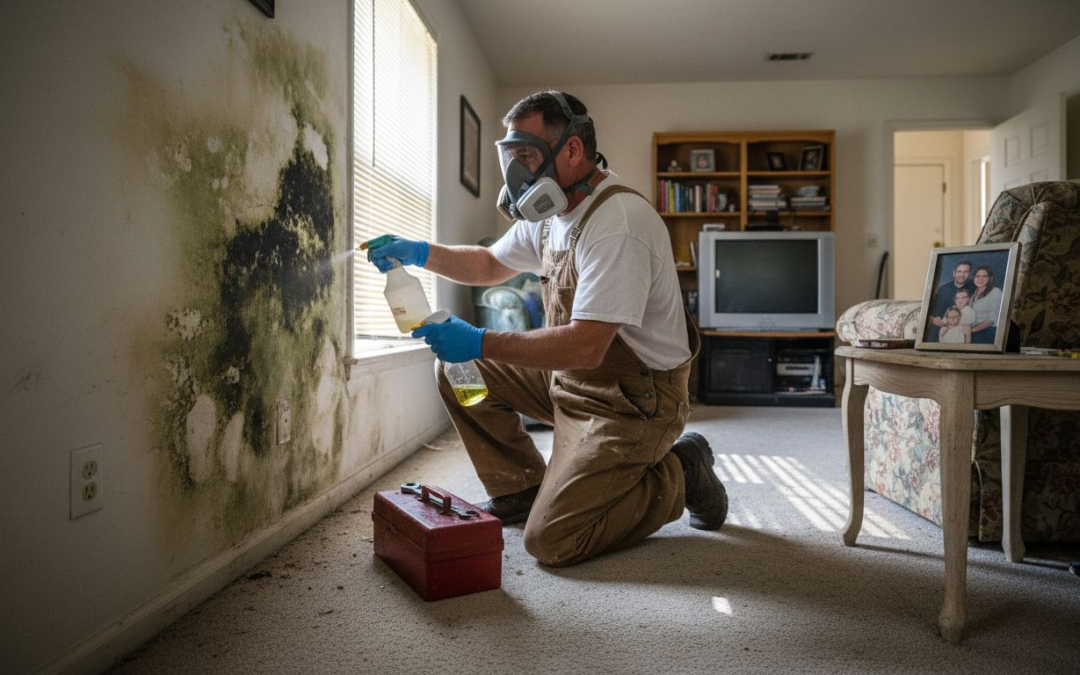
Mold can show up suddenly in Dallas-Fort Worth homes, turning clean spaces into sources of discomfort and concern. Addressing mold goes far beyond surface cleaning—true remediation means tackling both the visible growth and the underlying moisture that allows mold to thrive. This matters because incomplete removal increases health risks and guarantees the problem returns. Discover how professional services use inspection, containment, and restoration to provide lasting protection and a truly healthy home environment.
Table of Contents
- Defining Mold Remediation And Common Myths
- Types Of Mold Issues In Homes
- Professional Mold Remediation Steps Explained
- Risks, Costs, And Choosing A Specialist
- DIY Vs. Professional Remediation—What To Know
Key Takeaways
| Point | Details |
|---|---|
| Mold Remediation Is Comprehensive | It involves inspection, containment, removal, moisture resolution, and restoration to prevent regrowth. Professional expertise is crucial for long-term mold control. |
| Common Myths Can Be Misleading | Beliefs like using bleach for permanent mold removal or that mold only grows in basements endanger health and safety. Understanding the facts helps in effective mold management. |
| Health Risks Are Significant | Mold exposure can trigger serious allergic reactions and respiratory issues, especially in vulnerable populations like children and the elderly. Prompt action is necessary to mitigate these risks. |
| Professional Assistance Is Essential | DIY attempts can be ineffective and may worsen mold problems. Engaging qualified specialists ensures thorough remediation and a substantial reduction in future risks. |
Defining Mold Remediation and Common Myths
Mold remediation goes way beyond simply wiping down a surface with bleach. It’s the complete process of identifying, containing, removing, and cleaning mold growth from your home while addressing the root cause: moisture.
This distinction matters because incomplete mold treatment leaves you vulnerable to regrowth. True remediation requires professional intervention to ensure your home stays mold-free long-term.
What Mold Remediation Actually Involves
A legitimate remediation process includes these critical steps:
- Thorough inspection to locate all visible and hidden mold colonies throughout your home
- Containment protocols that prevent spores from spreading to unaffected areas during removal
- Complete removal of contaminated materials and surfaces
- Moisture problem resolution by identifying and fixing water leaks or humidity issues
- Restoration to return your home to its pre-contamination condition
Without addressing the underlying moisture problem, mold returns within weeks or months. That’s why professionals spend significant time identifying why the mold appeared in the first place.
Mold control is primarily about moisture control—fixing water problems promptly prevents mold from ever establishing itself.
Myths That Put Your Health at Risk
Dallas homeowners often believe certain mold removal myths. Here’s what you need to know:
Myth 1: Bleach kills mold permanently. Bleach removes surface mold but doesn’t penetrate porous materials like drywall or wood. Mold roots remain, and the problem returns.
Myth 2: Mold only grows in basements. Bathrooms, kitchens, attics, and crawl spaces are equally vulnerable—anywhere moisture accumulates.
Myth 3: You can handle large mold problems alone. Disturbing extensive mold colonies releases thousands of spores into your air, potentially worsening respiratory issues for your family.
Myth 4: Painting over mold solves the problem. Paint doesn’t stop mold growth. Mold feeds on paint and continues spreading underneath the surface.
Mold exposure triggers allergic reactions and respiratory symptoms in sensitive individuals. Children, elderly family members, and people with asthma face particular risk.
Why Professional Remediation Matters in North Texas
The Dallas-Fort Worth climate creates perfect conditions for mold growth. Summer humidity, occasional water damage from storms, and aging home structures combine to make mold a common problem in our region.
Professionals have specialized equipment and training to identify moisture sources you’d miss. They understand local building codes and can recommend lasting solutions tailored to your specific situation.
Pro tip: Document any water stains, discoloration, or musty odors with photos and dates before calling for remediation—this information helps professionals identify moisture patterns your home has experienced.
Types of Mold Issues in Homes
Not all mold is created equal. Your home could host dozens of different mold species, each with varying appearances and health risks. Understanding what you’re dealing with helps you recognize problems early and take appropriate action.
The moisture level in your home and the materials available determine which types of mold thrive. A damp bathroom creates different conditions than a flood-damaged basement, and each environment attracts specific species.
Common Mold Species Found in Dallas Homes
Over 1,000 mold types exist indoors, but a handful appear most frequently in North Texas homes. Identifying these common culprits helps you understand what professionals are looking for during inspections.
The most frequent indoor molds include:
- Cladosporium appears as dark green or brown spots, typically in damp areas and on fabrics
- Penicillium shows as blue or green fuzzy growth, often found in water-damaged materials
- Aspergillus ranges from white to yellow to dark brown, commonly colonizing HVAC systems and insulation
- Stachybotrys (black mold) appears dark and slimy, develops in severely damp conditions, and produces toxins
Each species has different growth patterns. Indoor molds commonly found in homes vary based on moisture availability and the materials they feed on, such as drywall, wood, and insulation.
Here’s a summary of common mold species and their key distinctions:
| Mold Species | Usual Appearance | Preferred Home Locations | Main Health Concerns |
|---|---|---|---|
| Cladosporium | Dark green or brown spots | Damp fabrics, bathrooms | Allergic reactions |
| Penicillium | Blue or green fuzzy growth | Water-damaged materials | Asthma, sinus infections |
| Aspergillus | White to yellow to brown | HVAC systems, insulation | Respiratory problems |
| Stachybotrys | Black, slimy texture | Severely wet drywall/wood | Mycotoxin exposure |
Where Mold Hides in Your Home
Mold doesn’t announce itself. It thrives in hidden spaces where moisture persists undetected.
High-risk areas in Dallas homes include:
- Bathrooms with poor ventilation or plumbing leaks
- Basements and crawl spaces during humid seasons
- Attics damaged by roof leaks or inadequate ventilation
- Under kitchen sinks where pipe condensation accumulates
- Around air conditioning units and ductwork
- Interior walls affected by exterior water intrusion
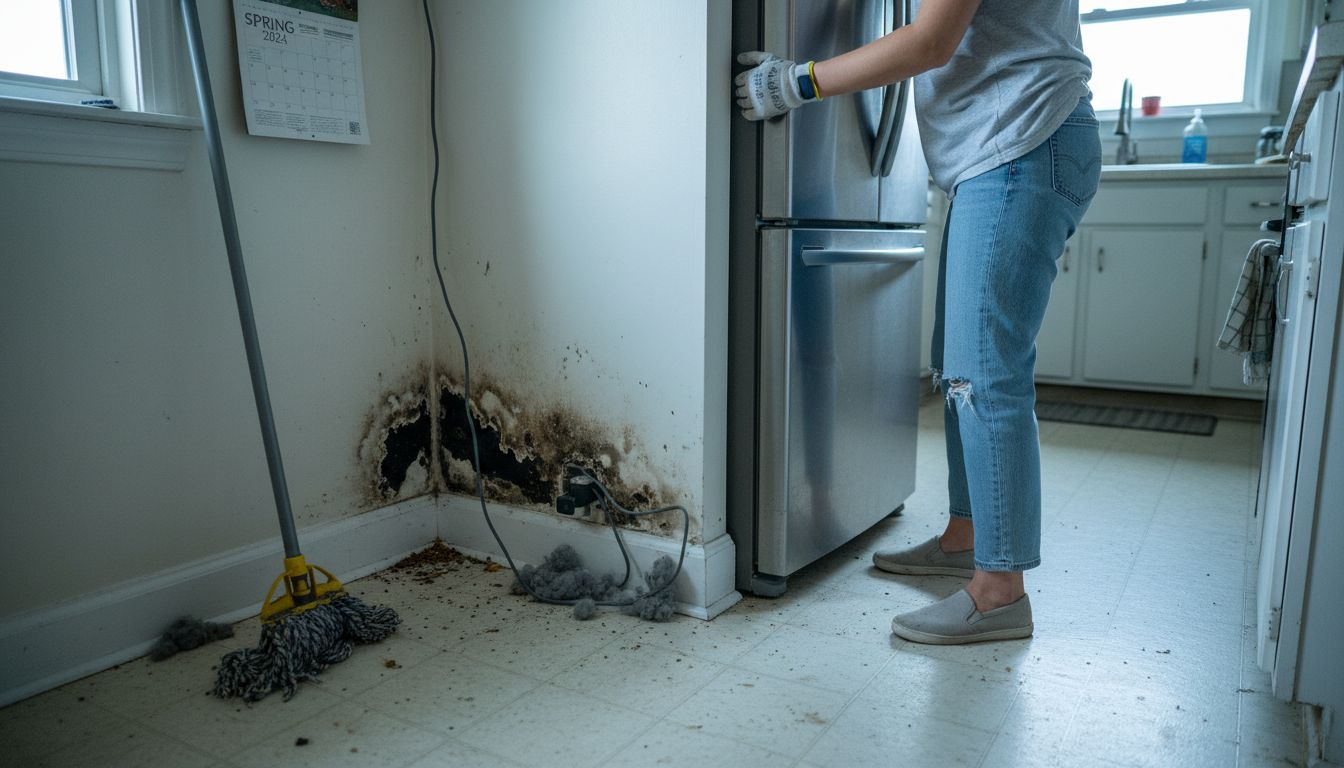
Wall cavities and behind appliances are particularly dangerous because mold grows unnoticed for months. By the time you spot visible growth, the problem has already spread significantly.
Health Risks Vary by Mold Type
Different mold species pose different threats. Some trigger allergic reactions while others produce toxins that affect respiratory function.
Mold exposure can provoke allergic reactions, asthma attacks, or respiratory issues, especially for sensitive individuals and those with existing respiratory conditions.
Children, elderly family members, and people with compromised immune systems face heightened vulnerability. Even seemingly minor mold exposure can cause symptoms ranging from sneezing and congestion to serious breathing problems.
Black mold (Stachybotrys) produces mycotoxins that are particularly concerning. These toxic compounds affect the nervous system and respiratory tract with prolonged exposure.
Pro tip: If you notice musty odors in your home, don’t wait for visible mold to appear—call a professional immediately, as smell often indicates mold growth hidden behind walls or in crawl spaces.
Professional Mold Remediation Steps Explained
Professional mold remediation follows a structured, methodical approach that differs drastically from DIY attempts. Each step builds on the previous one to ensure complete removal and lasting protection against regrowth.
Understanding these steps helps you know what to expect when professionals arrive at your home and why the process takes time and investment.
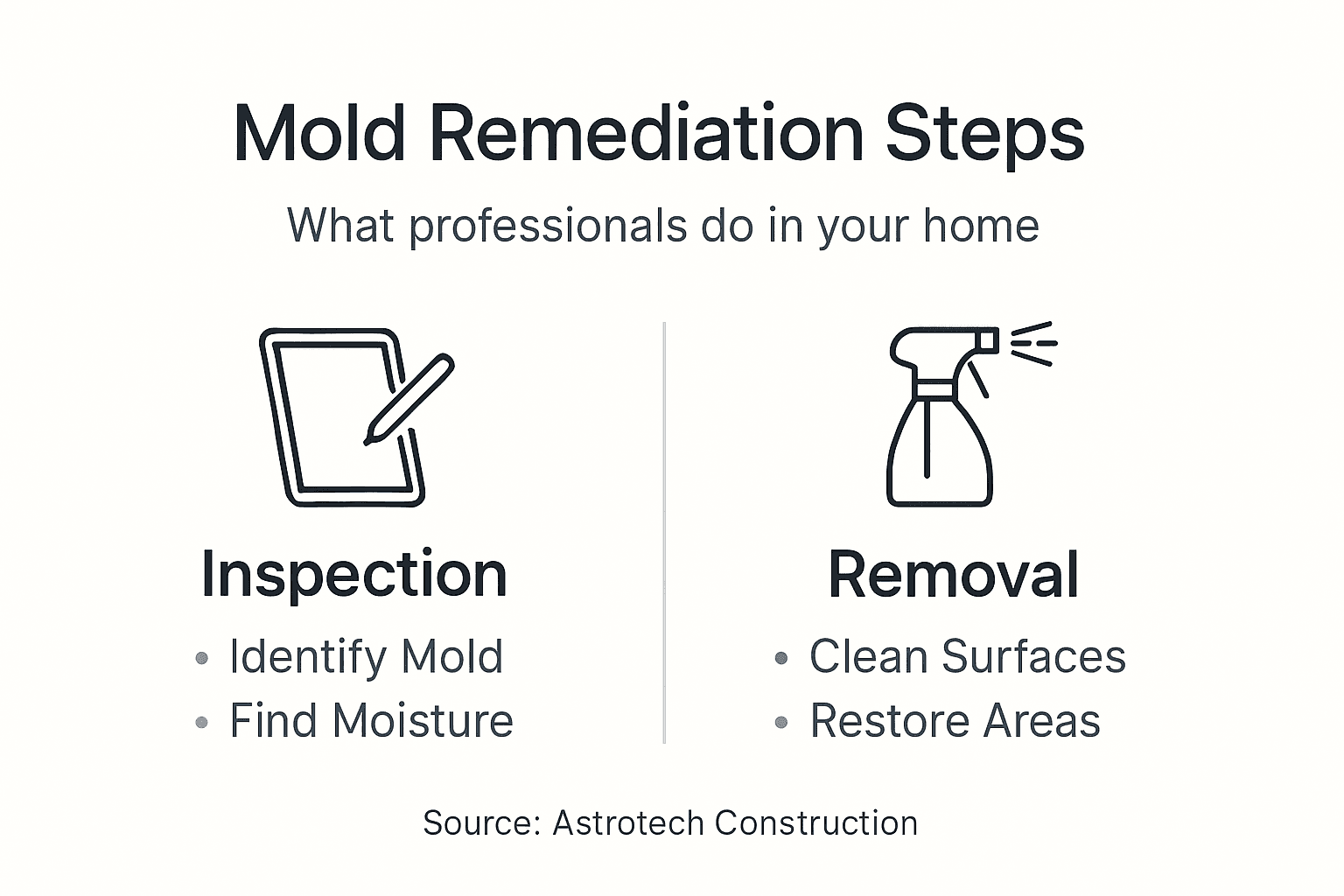
Step 1: Inspection and Assessment
Professionals begin by thoroughly investigating your home to understand the full scope of contamination. This isn’t a quick walk-through—it’s a detailed examination.
Inspection focuses on:
- Locating all visible mold colonies, no matter how small
- Identifying hidden mold behind walls, in crawl spaces, and within HVAC systems
- Determining mold species present to understand health risks
- Finding moisture sources causing the problem (leaks, condensation, poor ventilation)
- Assessing material damage to determine what can be salvaged
Professionals use moisture meters and thermal imaging to detect water problems invisible to the naked eye. They document findings with photos and detailed notes for your records.
Step 2: Containment Protocol
Before removing anything, professionals seal off affected areas to prevent spores from spreading throughout your home. This containment step protects uncontaminated spaces and your family.
Containment involves:
- Sealing doorways with plastic sheeting and negative air pressure systems
- Creating physical barriers that prevent spore migration
- Using HEPA-filter air scrubbers to capture airborne particles
- Establishing entry and exit protocols for workers
Skipping this step allows mold spores to contaminate adjacent rooms and your HVAC system, making the problem exponentially worse.
Step 3: Removal and Cleaning
Professional mold remediation procedures involve carefully removing contaminated materials and thoroughly cleaning all surfaces. Materials beyond cleaning—such as heavily damaged drywall or insulation—are disposed of properly.
This phase includes:
- Removing moldy drywall, flooring, or insulation that cannot be salvaged
- HEPA vacuuming and wet-wiping all surfaces in containment areas
- Applying antimicrobial treatments to cleaned surfaces
- Disposing of contaminated materials according to local regulations
Complete mold removal requires treating root causes and removing all contaminated materials to prevent regrowth within weeks.
Step 4: Restoration and Testing
After remediation, professionals restore affected areas to their original condition. This includes replacing removed drywall, insulation, flooring, and paint.
The process concludes with air quality testing to verify the environment is safe for re-occupancy. Testing confirms mold spore levels have returned to normal indoor levels.
Restoration ensures your home is not only mold-free but also restored to full functionality and comfort.
Pro tip: Request written documentation of all remediation work, including mold species identified, materials removed, and post-remediation air quality test results—this protects your home warranty and provides proof of professional treatment for insurance purposes.
Risks, Costs, and Choosing a Specialist
Mold problems don’t resolve themselves. Delaying action amplifies health risks and exponentially increases remediation costs. Understanding what’s at stake helps you prioritize getting professional help quickly.
The longer mold grows, the more your home suffers and the deeper your pockets get hit.
Health Risks From Mold Exposure
Mold isn’t just an aesthetic problem—it’s a health threat. Prolonged exposure triggers serious medical consequences, particularly for vulnerable household members.
Exposure to mold can cause allergic reactions, respiratory problems, and exacerbate asthma, making effective remediation necessary. Symptoms range from minor to severe depending on mold type and exposure duration.
Common health effects include:
- Persistent sneezing, coughing, and nasal congestion
- Watery or itchy eyes
- Throat irritation and wheezing
- Asthma attacks in people with existing conditions
- Chronic respiratory issues with prolonged exposure
- Immune system complications in immunocompromised individuals
Children and elderly family members face heightened vulnerability. Black mold (Stachybotrys) produces mycotoxins that affect neurological function with prolonged exposure.
Remediation Costs Explained
Mold remediation costs vary dramatically based on contamination extent. Small problems caught early cost significantly less than widespread infestations.
Typical cost factors include:
- Inspection and assessment: $500–$1,500 for professional evaluation
- Containment setup: $1,000–$5,000 depending on affected area size
- Removal and cleaning: $2,000–$25,000+ based on materials requiring replacement
- Restoration: $3,000–$15,000+ for drywall, insulation, and flooring replacement
- Post-remediation testing: $500–$1,500 for air quality verification
Early intervention prevents exponential cost increases—addressing a 50-square-foot mold colony costs a fraction of treating 500 square feet of contamination.
Insurance may cover remediation if mold resulted from covered water damage. Review your policy and document everything for claims.
Choosing a Qualified Mold Specialist
Not all contractors handle mold remediation competently. Hiring the wrong specialist leaves you with incomplete treatment and recurring problems.
Verify these credentials before hiring:
- Proper licensing and certification in mold remediation and water damage restoration
- IICRC certification (Institute of Inspection, Cleaning and Restoration Certification)
- Insurance coverage including general liability and workers’ compensation
- References from recent Dallas-area projects with verifiable results
- Written estimates detailing scope, timeline, and post-remediation verification plans
- Adherence to industry standards and local building codes
A qualified specialist understands health impacts and follows established remediation protocols. They explain the process clearly and provide documentation of all work completed.
When choosing between contractors, experience matters more than price. The cheapest option often means incomplete remediation and regrowth within months.
Pro tip: Ask potential specialists for references from homeowners whose projects were completed within the past year, and request copies of their post-remediation air quality test results to verify they meet industry standards.
DIY vs. Professional Remediation—What to Know
The idea of handling mold yourself might seem cost-effective, but reality tells a different story. Knowing when DIY works and when you absolutely need professionals protects your health and your wallet.
Most homeowners underestimate mold problems and overestimate their ability to solve them safely.
When DIY Mold Cleaning Might Work
Small, visible mold problems in low-risk areas can sometimes be handled yourself. But even then, strict conditions must be met.
Small mold problems less than 10 square feet can often be handled with DIY cleaning, using appropriate protective equipment and cleaning materials. This applies only to surface mold on non-porous materials where water damage isn’t the cause.
DIY cleaning is appropriate only when:
- Mold covers less than 10 square feet (roughly a 3-by-3 foot area)
- The mold is visible and accessible
- There’s no water damage or flooding involved
- The mold isn’t caused by contaminated water
- You have proper safety equipment (respirator, gloves, goggles)
Even meeting all these conditions requires careful technique. Most homeowners skip essential steps like controlling spore spread during cleanup.
Compare DIY and professional remediation to understand the best approach for your situation:
| Aspect | DIY Mold Cleaning | Professional Remediation |
|---|---|---|
| Area Size Limit | Under 10 square feet | Any size, including widespread mold |
| Safety Equipment Needed | Basic (mask, gloves) | Industrial-grade PPE and gear |
| Hidden Mold Treatment | Generally ineffective | Specialized detection/removal |
| Likelihood of Regrowth | High without expertise | Low if professionally completed |
| Documentation Provided | None | Detailed reports and lab results |
Why Professional Remediation Matters for Larger Problems
Anything beyond minor surface mold demands professional intervention. Mold hides behind walls, in crawl spaces, and within HVAC systems where DIY approaches can’t reach.
Professional remediation is necessary for:
- Mold covering more than 10 square feet
- Hidden or suspected mold growth
- Mold caused by flooding or contaminated water
- Mold in HVAC systems or ductwork
- Problems in basements or crawl spaces
- Allergic or respiratory symptoms appearing in your household
Professionals perform comprehensive assessments, containment, removal, cleaning, and testing. They ensure mold is fully removed and address moisture sources to prevent recurrence.
Improper DIY remediation actually spreads mold spores throughout your home, making the problem significantly worse and more costly to fix professionally later.
The Real Cost of DIY Mistakes
Many Dallas homeowners attempt DIY remediation only to call professionals months later when mold returns. That initial savings disappears when you pay for professional remediation twice.
Common DIY mistakes include:
- Failing to address underlying moisture problems
- Missing hidden mold colonies
- Spreading spores to uncontaminated areas
- Using ineffective cleaning methods
- Not wearing proper respiratory protection
- Disturbing mold without containment protocols
When comparing costs, factor in the expense of failed attempts. Professional remediation the first time prevents costly regrowth and additional damage.
Pro tip: If you’ve already attempted DIY mold cleaning and notice the problem returning or spreading, document your initial efforts with photos and inform the professional—this helps them identify areas you may have missed and prevents re-contamination.
Safeguard Your Dallas Home with Expert Mold Remediation and Home Restoration
Mold growth can silently damage your home and threaten your family’s health, especially in the Dallas – Fort Worth area where humidity and moisture problems are common. Understanding that mold remediation requires thorough inspection, moisture control, and professional removal can save you from costly repairs and persistent health risks. When mold invades your living spaces, addressing the problem quickly and comprehensively is essential to protect your investment and ensure lasting comfort.
At Astrotech Construction, we specialize in not only mold remediation but also full home restoration and remodeling services tailored to your needs. Our experienced team helps identify hidden moisture issues, safely remove contaminated materials, and restore your home to its original condition with quality craftsmanship. Whether you need expert repairs after storm damage or want to upgrade your kitchen or bathroom following remediation, we provide trusted solutions that prevent mold recurrence and enhance your living environment.
Don’t let mold problems compromise your home’s safety or your family’s health any longer. Visit Astrotech Construction now to schedule a consultation and take the first step toward a healthier, mold-free home. Our commitment to quality service and comprehensive renovation ensures your property remains comfortable and secure well into the future.
Frequently Asked Questions
What is mold remediation?
Mold remediation is the process of identifying, containing, removing, and cleaning mold growth from your home while addressing the underlying cause, typically moisture.
Why is professional mold remediation important?
Professional mold remediation ensures that mold is completely removed, prevents regrowth, and resolves moisture issues effectively, providing a healthier living environment.
Can I use bleach to kill mold?
No, bleach only kills surface mold and does not penetrate porous materials. Therefore, it doesn’t eliminate the problem entirely and can lead to regrowth.
What are the common health risks associated with mold exposure?
Mold exposure can trigger allergic reactions, respiratory issues, and asthma attacks, particularly in sensitive individuals, children, and the elderly.
Recommended
- What Is Sustainable Remodeling and Why It Matters – Astrotech Construction
- What Is Commercial Remodeling and Why It Matters – Astrotech Construction
- What Is Renovation Insurance and Why It Matters – Astrotech Construction
- Why Renovate After Damage: Safety, Value, and Recovery – Astrotech Construction
- Remedial Waterproofing: Complete Guide for Property Owners