

Over 80 percent of american homeowners admit that remodeling projects quickly become more complicated than expected. Defining a clear remodeling scope is not just paperwork, it’s the difference between smooth progress and stressful setbacks. A well-structured scope sets expectations, reduces costly surprises, and offers both contractors and clients a shared vision. This guide explains why a detailed blueprint matters for any american renovation and breaks down the crucial steps to get your project started right.
Table of Contents
- Defining Remodeling Scope In Construction
- Types Of Remodeling Scopes And Examples
- Key Elements Included In A Remodeling Scope
- Determining Scope: Steps And Documentation
- Common Scope Pitfalls And How To Avoid Them
Key Takeaways
| Point | Details |
|---|---|
| Defining Remodeling Scope | A comprehensive remodeling scope outlines the project’s purpose, requirements, and deliverables, serving as a roadmap for both clients and contractors. |
| Importance of Communication | Effective communication is essential for clearly defining project parameters and avoiding misunderstandings that can lead to budget or timeline issues. |
| Types of Remodeling | Remodeling scopes can vary widely, encompassing cosmetic, structural, functional, energy efficiency, and adaptive changes, each requiring tailored planning. |
| Avoiding Common Pitfalls | To prevent scope-related issues, it’s important to establish clear boundaries, maintain detailed documentation, and ensure realistic budget alignment throughout the project. |
Defining Remodeling Scope in Construction
A remodeling scope represents the comprehensive blueprint that outlines every critical detail of a construction project, determining its boundaries, expectations, and ultimate success. According to Project Delivery Manual, this written summary must articulate the project’s precise purpose, intended results, physical construction requirements, and expected deliverables.
In the context of construction and renovation, defining a remodeling scope goes far beyond simple planning. East Stroudsburg University specifies that remodeling involves strategic construction work within existing spaces, which might include modifying layouts, reconfiguring electrical and plumbing systems, or adjusting architectural elements like egress points. This definition underscores the complexity inherent in transforming an existing space.
The remodeling scope serves multiple critical functions for both contractors and clients. It acts as a legally binding roadmap that:
- Establishes clear project boundaries
- Defines specific work requirements
- Identifies potential challenges and constraints
- Provides a framework for budget and timeline management
- Creates accountability for all project stakeholders
Successful scope definition requires meticulous attention to detail, open communication, and a strategic approach that balances client vision with practical construction realities. When done correctly, a well-defined remodeling scope becomes the foundation for a smooth, successful renovation project. How to Estimate Remodeling Costs can provide additional insights into translating your project scope into precise financial planning.
Types of Remodeling Scopes and Examples
Remodeling projects encompass a wide range of complexity and scale, each with unique characteristics and objectives. PMC Research defines renovation as a strategic process of replacing or repairing outdated building components while maintaining the original structure’s fundamental function. Understanding these variations helps homeowners and contractors align project goals with realistic expectations.
Generally, remodeling scopes can be categorized into several primary types:
- Cosmetic Remodeling: Surface-level updates like painting, replacing fixtures, or updating minor design elements
- Structural Remodeling: Significant changes involving wall removal, foundation modifications, or architectural redesigns
- Functional Remodeling: Reconfiguring spaces to improve layout, efficiency, or usage potential
- Energy Efficiency Remodeling: Upgrades targeting improved insulation, window replacements, or mechanical system improvements
- Adaptive Remodeling: Modifications to accommodate changing lifestyle needs or accessibility requirements
Each remodeling type presents unique challenges and opportunities.
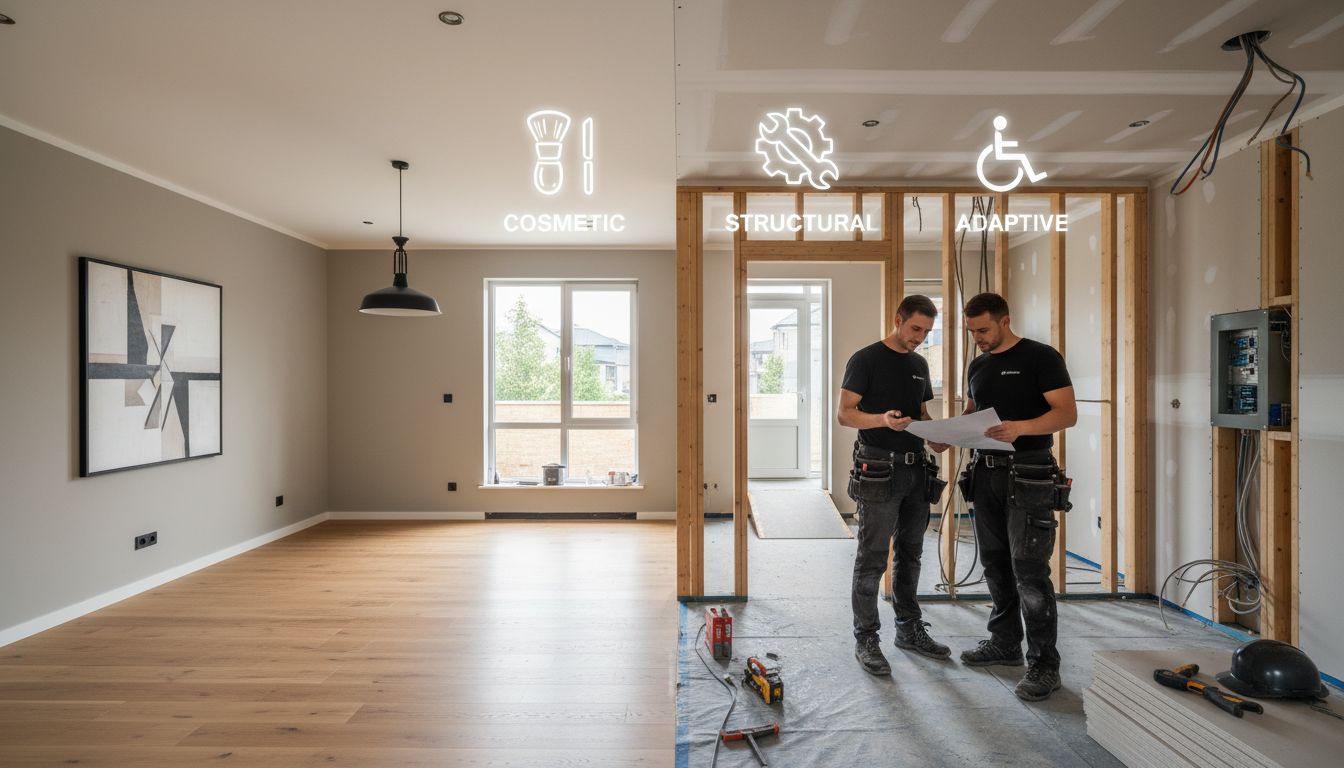 For instance, a kitchen renovation might start as a cosmetic update but evolve into a functional remodel when homeowners decide to completely redesign the layout. 7 Inspiring Examples of Remodeling Projects can provide visual insights into how these different scope types manifest in real-world scenarios.
Successful remodeling requires careful planning, understanding project limitations, and maintaining flexibility. Homeowners should collaborate closely with professional contractors to determine the most appropriate scope that balances aesthetic desires, functional needs, and budgetary constraints. By clearly defining the project’s objectives upfront, clients can ensure a smoother renovation experience with more predictable outcomes.
Key Elements Included in a Remodeling Scope
Remodeling scopes represent intricate blueprints that transform abstract project ideas into concrete implementation strategies. National Renewable Energy Laboratory emphasizes the critical importance of preparing a detailed scope of work during the initial planning stages, which includes providing comprehensive project schedules and precise estimations to ensure accurate project comparisons and planning.
A comprehensive remodeling scope typically encompasses several fundamental elements:
- Project Description: Detailed narrative explaining the project’s purpose and objectives
- Spatial Requirements: Exact measurements, layout modifications, and spatial transformations
- Material Specifications: Comprehensive list of materials, quality standards, and specific product requirements
- Labor Breakdown: Detailed explanation of required trades, skill levels, and labor allocation
- Technical Requirements: Specific electrical, plumbing, structural, and mechanical specifications
According to Hernando County School District’s Design Standard, it’s crucial to graphically differentiate between new equipment, existing equipment to be replaced, and equipment that will remain untouched. This level of granular detail prevents misunderstandings and ensures precise project execution.
Professional contractors understand that a well-crafted remodeling scope acts as a contractual roadmap, protecting both the client and the construction team. What Is a Remodeling Contract provides additional insights into how these detailed scopes translate into legally binding agreements that set clear expectations for project completion, budget management, and quality standards.
Determining Scope: Steps and Documentation
Scope determination represents a meticulous process that transforms initial project concepts into actionable construction plans. University of Wisconsin-Madison highlights the critical importance of a structured review process where remodeling requests are carefully evaluated, with recommendations and cost estimates developed to ensure comprehensive project planning.
The scope determination process typically involves several strategic steps:
- Initial Consultation: Comprehensive discussion of project goals, constraints, and client expectations
- Site Assessment: Detailed on-site evaluation of existing conditions, structural limitations, and potential challenges
- Requirements Gathering: Systematic documentation of specific project needs, design preferences, and functional objectives
- Feasibility Analysis: Technical and financial evaluation of proposed project modifications
- Detailed Documentation: Creation of comprehensive project blueprints, specifications, and implementation strategies
Successful scope determination requires collaborative communication between homeowners and professional contractors. Each step builds upon the previous one, creating a holistic understanding of the project’s potential and limitations.
Visual documentation plays a crucial role in this process, helping clients and contractors align their vision and expectations.
Remodeling Consultation Guide can provide additional insights into navigating these critical initial stages, ensuring that homeowners approach their renovation projects with clarity, confidence, and a comprehensive strategic roadmap.
Common Scope Pitfalls and How to Avoid Them
Remodeling scope challenges can derail even the most well-intentioned renovation projects. Stanford University’s Disaster Recovery Playbook emphasizes the critical importance of defining a clear end point, warning that undefined scope can lead to unnecessary upgrades or incomplete repairs that fail to restore a space to its safe and functional state.
The most frequent scope pitfalls typically include:
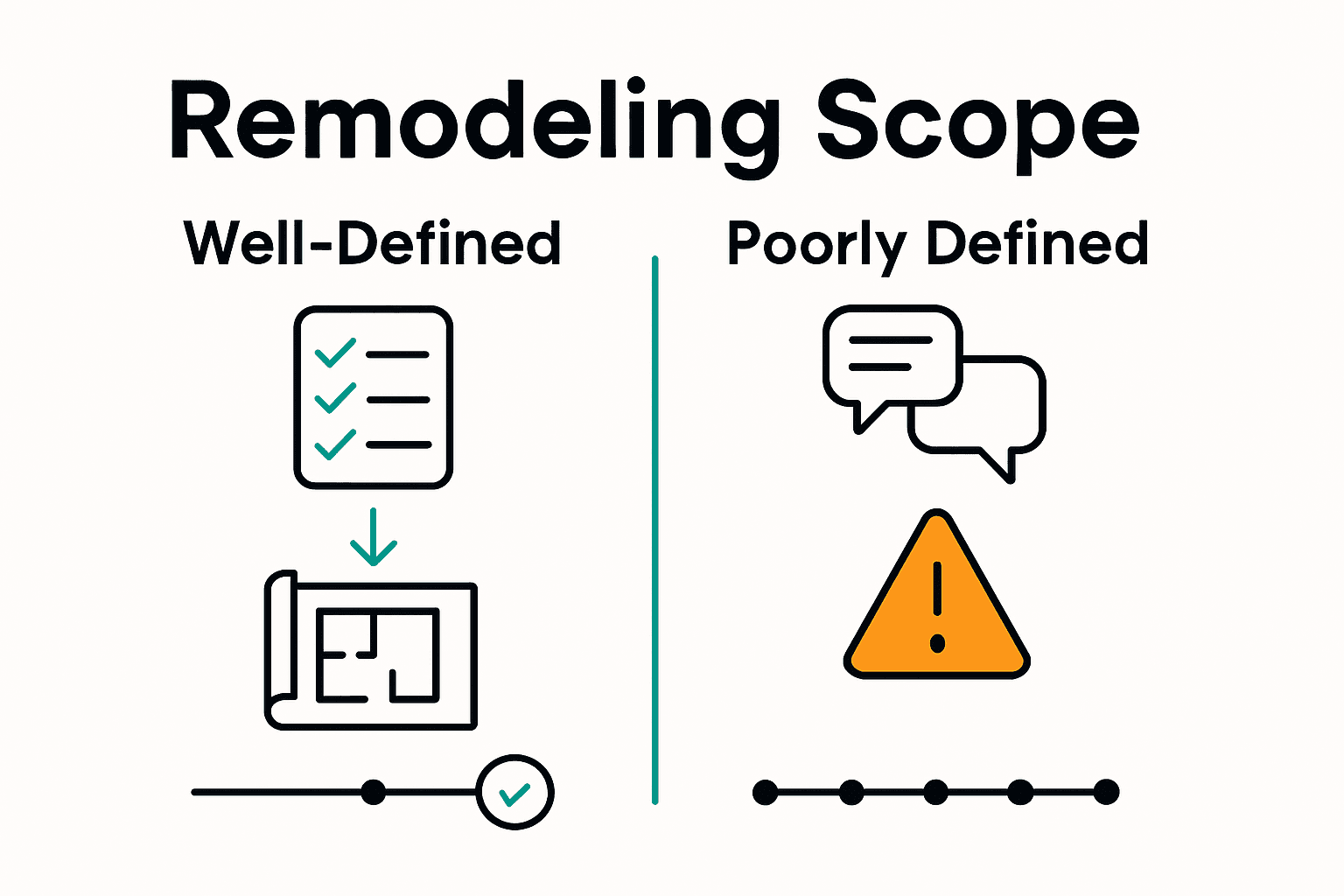
- Vague Project Boundaries: Undefined expectations that create misunderstandings between client and contractor
- Scope Creep: Gradual expansion of project requirements without corresponding budget adjustments
- Incomplete Documentation: Insufficient detailed specifications that leave room for interpretation
- Budget Misalignment: Unrealistic cost expectations not matching proposed project modifications
- Communication Breakdowns: Inadequate dialogue about project requirements and limitations
National Renewable Energy Laboratory recommends proactive strategies to mitigate these risks, such as charging a preliminary fee for comprehensive scope development or preparing detailed work outlines before finalizing cost estimates. This approach ensures more accurate project comparisons and maintains strict control over implementation.
Why Plan a Remodeling Budget offers additional guidance on preventing financial surprises, helping homeowners navigate the complex landscape of renovation planning with confidence and strategic foresight.
Ready to Define Your Remodeling Scope with Confidence
Understanding the full remodeling scope is crucial to avoid unexpected costs and scope creep during your renovation. This article highlights how vague project boundaries and incomplete documentation can lead to frustrating delays and budget overruns. If you want a clear, detailed remodeling plan that balances your vision with realistic construction demands, expert guidance is essential.
Take the first step toward a successful remodel by partnering with professionals who specialize in turning complex remodeling scopes into tangible results. At AstroTech Construction, we focus on precise planning and communication to prevent common pitfalls and deliver quality home and commercial renovations in the Dallas-Fort Worth Metroplex. Learn more about our approach in our Remodeling Contract Overview and explore How to Estimate Remodeling Costs for budgeting insights. Don’t let uncertainty stall your project reach out today at AstroTech Construction to schedule a consultation and build a remodeling scope that sets you up for success.
Frequently Asked Questions
What is a remodeling scope?
A remodeling scope is a detailed blueprint outlining the critical details of a construction project, including its purpose, physical requirements, timeline, and deliverables. It serves as a roadmap for both contractors and clients to ensure clear expectations and accountability.
What are the different types of remodeling scopes?
Remodeling scopes can be categorized into several types, such as cosmetic remodeling (surface updates), structural remodeling (significant changes), functional remodeling (reconfiguring spaces), energy efficiency remodeling (upgrades for efficiency), and adaptive remodeling (modifications for changing needs).
How do I determine the scope of my remodeling project?
To determine the scope, start with an initial consultation to discuss project goals, conduct a site assessment to evaluate existing conditions, gather requirements and preferences, perform feasibility analysis, and create detailed documentation for implementation.
What are common pitfalls in defining a remodeling scope?
Common pitfalls include vague project boundaries, scope creep, incomplete documentation, budget misalignment, and communication breakdowns between clients and contractors. Addressing these issues proactively can help ensure project success.
Recommended
- How to Estimate Remodeling Costs for Any Project – Astrotech Construction
- Complete Guide to Renovation vs Remodeling Differences – Astrotech Construction
- Why Plan a Remodeling Budget: Complete Guide – Astrotech Construction
- What Is a Remodeling Contract? Complete Guide – Astrotech Construction
- Toilet Installation And Plumbing Remodel Project in Hudson FL 34667 – Home Therapist Cooling, Heating, and Plumbing
- How to Clean After Renovation in McKinney: 2025 Guide