

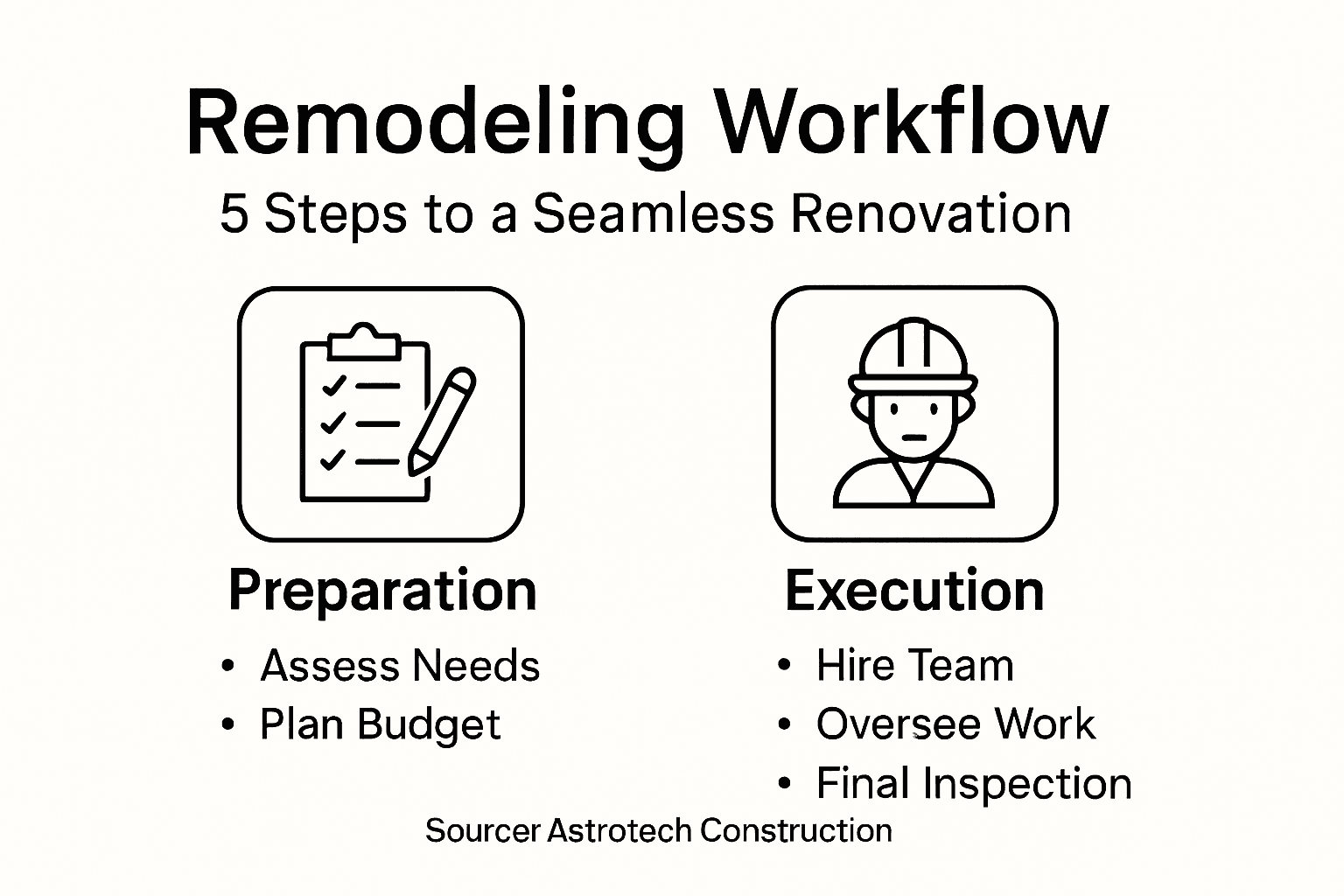
Feeling overwhelmed by where to start with your Dallas-Fort Worth kitchen or bathroom remodel is common for homeowners diving into major updates. A clear understanding of your goals, future needs, and budget keeps expensive missteps at bay. From creating a detailed project scope and requirements to navigating permits and contractor selection, well-planned steps help you avoid stressful surprises and set your renovation up for success.
Table of Contents
- Step 1: Assess Project Scope And Requirements
- Step 2: Plan Budget And Secure Needed Permits
- Step 3: Select Reliable Contractors And Schedule Tasks
- Step 4: Execute Remodeling Work With Regular Oversight
- Step 5: Inspect Completed Renovations And Finalize Details
Quick Summary
| Key Point | Explanation |
|---|---|
| 1. Identify Specific Problems | Make a detailed list of renovation pain points, addressing specific issues like functionality and aesthetics to guide your project effectively. |
| 2. Plan Your Budget with Permits | Create a comprehensive budget that includes materials, labor, permits, and a contingency fund to avoid financial surprises during your remodel. |
| 3. Choose Reliable Contractors | Obtain multiple bids from licensed contractors, checking references and ensuring transparency in contracts for a smooth remodeling experience. |
| 4. Maintain Regular Oversight | Conduct site inspections and communicate frequently with your contractor to monitor progress and address issues promptly throughout the project. |
| 5. Final Walkthrough is Essential | Schedule a thorough inspection upon project completion to identify any issues, create a punch list, and ensure all work meets contract standards before final payment. |
Step 1: Assess project scope and requirements
Before you schedule your first contractor visit or open a design magazine, you need to understand what you’re actually trying to accomplish. This step determines whether your kitchen or bathroom remodel stays on track or becomes a money pit. Start by identifying the specific problems driving your renovation. Is your kitchen’s layout forcing you to squeeze through tight spaces? Does your bathroom’s plumbing create backup issues during morning routines? Make a detailed list of these pain points. Don’t be vague. Instead of writing “kitchen feels old,” note “cabinet doors won’t close properly, countertops are cracked, and there’s inadequate lighting over the sink.”
Next, think beyond today’s problems and consider what your household needs for the next 5 to 20 years. Your lifestyle will evolve. Maybe you’re planning to age in place, or you anticipate your family growing. Perhaps you work from home and need a more functional layout. Defining comprehensive project requirements helps prevent expensive scope creep later. Write down how you want to use the space differently. If you’re remodeling a kitchen, do you envision entertaining guests more frequently? Will you need extra counter space for meal prep? Should the layout accommodate multiple people cooking at once? These lifestyle considerations shape decisions about appliance placement, storage solutions, and overall flow.
With your list in hand, assess your budget constraints and any environmental considerations specific to the Dallas-Fort Worth area. The Texas heat demands careful choices about materials and ventilation. You might need extra insulation or high-efficiency cooling systems. Document any structural limitations, plumbing locations, or electrical concerns. Take photos of the current space from multiple angles. Measure doorways, windows, and fixed elements. This groundwork prevents misunderstandings between you and your contractor about what’s actually possible. Your scope document becomes the foundation for accurate quotes and realistic timelines.
Pro tip: Create a spreadsheet with columns for “must-have,” “nice-to-have,” and “maybe later” items so you can quickly adjust priorities if your budget shifts during the planning process.
Step 2: Plan budget and secure needed permits
Now that you understand what needs to change, it’s time to determine how much it will cost and what legal requirements apply. These two elements work together because permits add time and expenses that many homeowners overlook. Start by creating a realistic budget that accounts for materials, labor, permits, and a contingency buffer. Most contractors recommend setting aside an additional 10 to 20 percent beyond your estimated costs because unforeseen issues almost always emerge once work begins. In the Dallas-Fort Worth area, labor rates and material costs fluctuate seasonally, so timing your project strategically can affect your bottom line. Before you commit to numbers, understand what financing options like property improvement loans might offer if paying cash isn’t practical. Know the total cost upfront, including any loan interest and repayment terms, so you avoid surprises later.
Permits are not optional red tape. Not all projects require them, but many do. Kitchen and bathroom remodels typically need permits when they involve electrical work, plumbing changes, or modifications to your home’s structure. When permits are required, they ensure your work meets current building codes and safety standards, which protects both your family and your investment’s resale value. Check with your local Dallas-Fort Worth building department or your contractor to determine what permits your specific project demands. Some cosmetic updates like new paint or cabinet hardware skip permits entirely, but changing electrical circuits or moving plumbing lines absolutely requires them. Getting permits early prevents costly delays and keeps you legally compliant. Your contractor should handle permit applications as part of their service, but confirm this is included in your quote and timeline estimates.
Coordinate your budget planning with permit timelines. The permit approval process typically takes two to six weeks depending on your jurisdiction and project complexity. Factor this waiting period into your project schedule. Build your total budget by adding permit fees, inspection costs, potential code upgrades discovered during inspections, materials, labor, and your contingency fund. Document everything in writing, including what your contractor includes in their quote and what remains your responsibility. This clarity prevents misunderstandings and keeps your remodel moving forward without financial surprises derailing your plans.
Pro tip: Request an itemized budget breakdown from your contractor showing materials, labor, permits, inspections, and timeline separately so you can track spending throughout the project and identify cost overruns immediately.
This table highlights key differences between major and minor renovations for permit and inspection requirements:
| Type of Renovation | Permit Needed | Inspections Required | Typical Timeline Impact |
|---|---|---|---|
| Minor (cosmetic) | Usually not | Rarely required | Minimal or none |
| Major (structural) | Almost always | Multiple phases | Delays likely, 2-6 weeks added |
Step 3: Select reliable contractors and schedule tasks
Your contractor makes or breaks your remodel. A skilled, professional team keeps your project on schedule and within budget, while an unreliable one creates chaos. Start by getting multiple bids from contractors who understand kitchen and bathroom work in the Dallas-Fort Worth area. Request at least three detailed estimates that break down labor, materials, timeline, and payment terms separately. Don’t choose based on price alone. The lowest bid often means corners will be cut or hidden costs will emerge later. Instead, verify that each contractor holds current licensing and insurance. Ask for proof of liability coverage and worker’s compensation. Check references by calling previous customers and asking specific questions about their experience, timeliness, and how the contractor handled unexpected issues.

When evaluating contractors, verify contractor licenses and check references thoroughly before signing anything. Look for contractors who maintain ethical standards and professional membership with organizations like the National Association of Home Builders. Interview potential contractors about their experience with projects similar to yours. Ask about their crew’s experience, their subcontracting practices, and how they handle communication during the project. A good contractor should be responsive and transparent about every aspect of the work. Avoid anyone requesting large upfront payments. Most reputable contractors ask for a deposit of 10 to 25 percent, with remaining payments tied to completion milestones. Get everything in writing. Your contract should specify materials, timelines, payment schedule, warranty information, and what happens if issues arise. Never rely on verbal agreements or handshake deals.
Once you’ve selected your contractor, work together to create a realistic project schedule. Coordinate the sequence of tasks so trades don’t overlap unnecessarily or cause delays. In a kitchen remodel, you typically need demolition first, then structural work, plumbing, electrical, and finally finishes. Your contractor should provide a detailed timeline showing when each phase begins and ends, accounting for permit approvals, inspections, and material delivery times. Build buffer time into the schedule for the unexpected issues that almost always appear once walls come down. Weekly check-ins with your contractor ensure the project stays on track and allows you to address concerns immediately rather than discovering problems weeks later.
Pro tip: Create a shared project document or use a simple tracking tool where your contractor updates progress, logs any issues discovered, and confirms upcoming milestones so you stay informed without constant back and forth calls.
Step 4: Execute remodeling work with regular oversight
Your project is underway, but your job is far from finished. Active oversight during construction prevents small problems from becoming expensive disasters. Establish a routine for site inspections where you visit regularly, typically twice per week for active phases, to observe progress and verify that work matches your contract specifications. Bring your contract with you and check off completed tasks. Look at material quality, workmanship, and adherence to the agreed timeline. Don’t be shy about asking questions or requesting explanations if something looks wrong. A reputable contractor welcomes your involvement and understands your desire to protect your investment.
Maintain regular communication with your contractor throughout the project. Set expectations early about how and when you’ll communicate. Weekly check-in calls or brief email updates keep everyone aligned on progress, upcoming phases, and any emerging issues. Effective oversight includes monitoring contractor work for compliance with safety codes and project specifications, which protects both your family’s wellbeing and the quality of results. When issues arise, address them immediately rather than hoping they’ll resolve themselves. A cracked tile, misaligned cabinet, or electrical concern discovered halfway through is far easier to correct than discovering it after final payment. Document everything with photos and written notes. If your contractor needs to make changes or address concerns, get those changes in writing before work continues. Verify that all materials delivered match what you specified and paid for. Request proof that permits are maintained current and inspections are scheduled on time.
Keep track of the project timeline and budget throughout execution. Compare actual progress against the schedule your contractor provided at the start. If work is falling behind, discuss reasons and potential solutions before delays compound. Monitor expenses and payments carefully. As each phase completes, verify that payment milestones have been met before releasing funds. Most contractors should provide progress photos or schedule walkthrough inspections so you see exactly what’s been accomplished. In the Dallas-Fort Worth area, summer heat can affect some construction phases, so weather delays happen occasionally. Understand these factors but ensure your contractor communicates them to you proactively. By the time work reaches final stages, you should feel confident that your remodel is being executed exactly as planned.
Pro tip: Keep a simple remodeling journal noting the date of each site visit, what work you observed, any concerns raised, and the contractor’s response so you have a clear record if disputes arise later.
Here’s a summary of how oversight responsibilities differ between homeowners and contractors during a remodel:
| Responsibility Area | Homeowner Role | Contractor Role |
|---|---|---|
| Site Inspections | Visit regularly, check quality | Prepare site, notify of issues |
| Communication | Set expectations, ask questions | Provide updates, address concerns |
| Documentation | Keep journal and photos | Maintain project records |
| Permit Compliance | Verify inspections are scheduled | Obtain permits, schedule inspections |
| Progress Tracking | Compare timeline vs. actual work | Report milestones and any changes |
| Issue Resolution | Raise and document concerns early | Correct problems promptly |
Step 5: Inspect completed renovations and finalize details
Your remodel is nearing completion, but don’t hand over final payment until you’ve thoroughly inspected every detail. This step protects your investment and ensures you receive exactly what you contracted for. Schedule a final walkthrough with your contractor present so you can discuss any concerns in real time. Bring your original contract and scope of work documents to reference specific requirements. Systematically go through each area, examining both what’s visible and what functions behind the scenes. Turn on every faucet, test every light switch, open and close cabinet doors, and check that appliances operate correctly. Look for aesthetic details like caulk lines, paint quality, tile alignment, and finish consistency.
Comprehensive visual evaluation of property systems including plumbing, electrical, and structural elements confirms that renovations comply with safety standards. Check that newly installed fixtures are secure and properly sealed. Inspect grout lines in tile work for uniformity and proper curing. Verify that water runs clear from faucets with no leaks underneath sinks or cabinets. Test that electrical outlets work and switches control the correct lights. Look at paint for drips, uneven coverage, or areas that need touch up. If your remodel involved structural changes, confirm that new walls are plumb and level. Examine flooring for gaps, uneven transitions, or damage. Take photos of any areas that don’t meet your expectations. These images provide documentation if you need to request corrections.
Create a punch list documenting any incomplete work or items needing correction. Be specific about locations and what needs fixing. Hand this list to your contractor and establish a timeline for corrections before final payment. Most punch list items get resolved quickly since they’re typically minor adjustments. Once corrections are complete, do a final inspection to confirm everything is satisfactory. Request all warranty documentation, product manuals, and maintenance instructions for new appliances and systems. Get written confirmation that your contractor has obtained a final inspection certificate from your local Dallas-Fort Worth building department confirming that work complies with all applicable codes. This certificate is essential for your records and valuable if you ever sell your home. Only then should you authorize final payment. Request paid invoices showing that your contractor has settled all material suppliers and subcontractors so no liens can be filed against your property later.
Pro tip: Take a video walkthrough of your completed renovation showing all systems working, fixtures operating, and overall quality so you have documented evidence of the project’s final condition for warranty claims or insurance purposes.
Take Control of Your Remodeling Journey with Astrotech Construction
Every home improvement project faces challenges like budget planning, securing permits, selecting trusted contractors, and keeping a close eye on progress. These pain points can cause stress and delays if not managed well. This article highlights the importance of thorough planning, clear communication, and persistent oversight for a smooth remodel in the Dallas – Fort Worth area. At Astrotech Construction, we understand these hurdles and have built our services around alleviating them with expert guidance and transparent processes.
Whether you need full home remodeling or targeted kitchen and bathroom upgrades, our experienced team ensures your goals become reality without surprises. We handle permits, provide detailed project timelines, and maintain constant communication to keep your project on track. Trust us to deliver quality workmanship and professionalism so you can enjoy your remodeled space with confidence.

Ready to experience a remodeling project that stays on schedule, respects your budget, and meets your expectations? Visit Astrotech Construction today. Explore our range of services including kitchen and bathroom upgrades and full home renovations. Contact us now to schedule your consultation and take the first step toward your dream home with peace of mind.
Frequently Asked Questions
What are the first steps to start my home improvement project?
Before starting your home improvement project, assess the project scope and requirements. Identify specific problems you want to address and think about your long-term lifestyle needs to create a detailed list of changes.
How can I effectively create and manage my budget for a remodel?
To create an effective budget, calculate costs for materials, labor, permits, and set aside a contingency fund. Consider allocating an additional 10 to 20 percent of your total estimated costs to cover unexpected expenses that may arise during the project.
How do I choose the right contractor for my remodel?
Select a contractor by obtaining multiple bids and ensuring they have relevant experience and valid licensing. Ask for detailed estimates that break down costs and verify their references to ensure you’re making a well-informed decision.
What should I inspect during the remodeling process?
During the remodeling process, conduct regular site inspections to verify that the work meets your contract specifications and quality expectations. Document any issues immediately and maintain open communication with your contractor to ensure prompt resolution.
How do I conduct a final inspection after my remodel is complete?
Conduct a thorough final inspection by reviewing each area with your contractor present. Check all systems, fixtures, and finishes against your original contract, and create a punch list of any items that need correction before authorizing final payment.
What documents should I keep after completing my home improvement project?
After completing your project, retain all warranty documents, product manuals, and the final inspection certificate from your contractor. These documents are essential for future maintenance and important if you decide to sell your home.
Recommended
- Role of Project Management in Remodeling: Complete Guide – Astrotech Construction
- Remodeling Project Checklist: Step-by-Step Guide for Success – Astrotech Construction
- How to Schedule Remodeling Projects for Optimal Results – Astrotech Construction
- Turn-Key Remodeling: Hassle-Free Home Transformations – Astrotech Construction
- Application Guide | krystal resin
- Local Render Cleaning Service Call/Text 07791 465052