

Most american business owners face tough decisions when planning a property remodel. Over 60 percent report that unclear goals or budget issues can delay commercial renovations. Tackling a remodel without a solid plan often leads to costly setbacks and missed opportunities. With the right approach, even complex projects become more manageable. Discover step-by-step guidance on how to assess your property, set clear goals, keep your project on track, and achieve a successful transformation.
Table of Contents
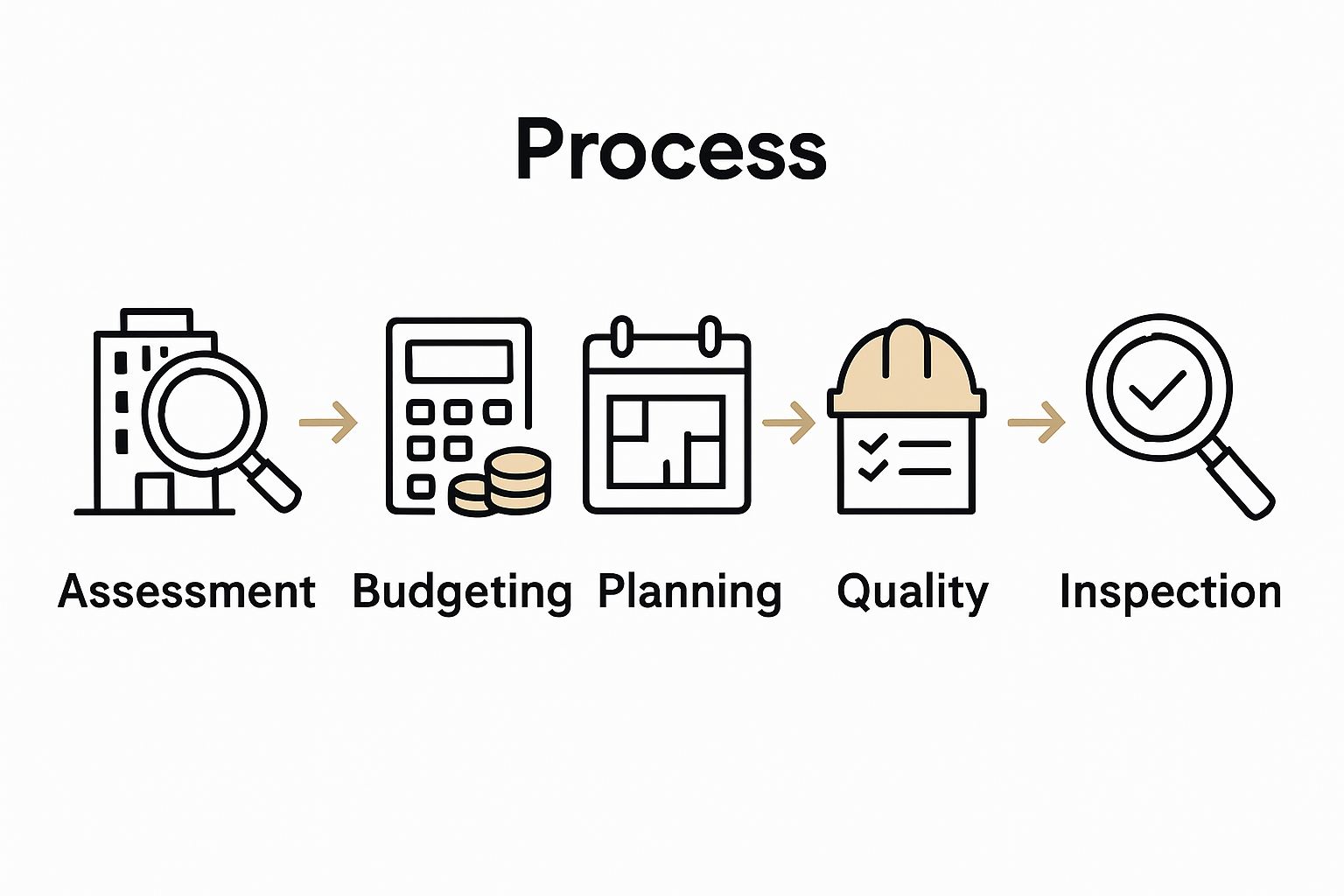
- Step 1: Assess Current Property Needs And Set Goals
- Step 2: Establish Budget And Select Professional Partners
- Step 3: Develop Detailed Remodeling Plans And Timeline
- Step 4: Implement Remodel With Quality Oversight
- Step 5: Verify Completion And Conduct Final Inspections
Quick Summary
| Essential Insight | Clarification |
|---|---|
| 1. Assess Property and Set Goals | Conduct a walkthrough to identify needs and define clear renovation objectives, prioritizing actionable items. |
| 2. Establish a Detailed Budget | Develop a comprehensive budget including a contingency fund of 20-30% for unforeseen expenses. |
| 3. Create a Project Timeline | Break down the remodeling process into phases with realistic milestones, including buffer times to manage delays. |
| 4. Implement Quality Oversight | Utilize project management tools and establish clear communication to ensure adherence to quality standards throughout the project. |
| 5. Conduct Thorough Final Inspections | Perform a detailed review with professionals to validate that the renovation meets all quality standards and compliance requirements. |
Step 1: Assess Current Property Needs and Set Goals
Beginning a commercial remodeling project requires a strategic approach that starts with thoroughly understanding your current property’s condition and defining clear objectives. According to Iowa State Extension, developing a comprehensive plan means organizing your ideas into goals, strategies, and specific actions that will drive your renovation forward.
To effectively assess your property needs, start by conducting a comprehensive evaluation of your current space. Walk through each area systematically and document existing conditions, potential functional limitations, and opportunities for improvement. Pay special attention to aspects like structural integrity, workflow efficiency, aesthetic appeal, and alignment with your brand identity. As insights from Business Click Do suggest, your renovation should not just address physical repairs but also enhance the visual atmosphere to create a memorable environment for employees and clients.
Your assessment should generate a clear list of priorities that transform broad ideas into actionable items. Break down your goals into specific categories such as infrastructure improvements, aesthetic upgrades, technological integrations, and functional redesigns.
 This methodical approach will help you create a realistic roadmap for your commercial remodeling project and ensure that every investment contributes meaningfully to your overall vision. Remember that successful renovation starts with clear, well-defined objectives that balance practical needs with strategic long-term planning.
Step 2: Establish Budget and Select Professional Partners
Creating a successful commercial remodeling project hinges on two critical elements: establishing a comprehensive financial plan and choosing the right professional partners. Main Street Contractors recommends developing a robust budget that includes a contingency fund between 20 to 30 percent, especially for older buildings or complex renovation scenarios. This strategic approach allows for unexpected structural issues, potential code compliance upgrades, and potential material price fluctuations.
When selecting professional partners, due diligence is paramount. Solutions GC emphasizes the importance of thoroughly verifying potential contractors licensing and insurance credentials. Look for professionals with specific experience in your project type, checking their portfolio for similar completed renovations. Request detailed project proposals, compare multiple bids, and assess not just pricing but also the contractors proven track record of delivering quality work within established timelines.
To maximize your budget and partnership strategy, consider creating a comprehensive spreadsheet that tracks all potential expenses, including materials, labor, permits, and your critical contingency funds. Prioritize transparent communication with potential contractors, asking detailed questions about their process, estimated timelines, and how they handle unexpected challenges. By combining meticulous financial planning with careful partner selection, you set the foundation for a successful commercial remodeling project that meets both your functional and budgetary objectives.
Step 3: Develop Detailed Remodeling Plans and Timeline
Claris Design Build emphasizes the critical importance of comprehensive pre-construction planning for any commercial renovation project. Before diving into design specifics, you must conduct thorough site assessments that include evaluating zoning regulations, understanding land use restrictions, and performing environmental and soil testing. These initial steps ensure your project remains legally compliant and technically feasible from the very beginning.
Creating a detailed project timeline requires breaking down the renovation into manageable phases with realistic milestones. According to RCG Co., your planning should include comprehensive cost estimations that account for materials, labor, potential unexpected challenges, and precise scheduling. Develop a visual project timeline that outlines each stage of construction, including design finalization, permit acquisition, demolition, construction, and final inspections. Include buffer periods for potential delays and communicate these timelines clearly with all stakeholders to manage expectations and maintain project momentum.
To maximize planning effectiveness, create a collaborative digital document that tracks progress, allows real time updates, and provides transparency for everyone involved. Include detailed drawings, material specifications, color schemes, and budget allocations for each project phase. This systematic approach transforms your renovation from a concept into an actionable, well-structured plan that minimizes surprises and keeps your commercial remodeling project moving smoothly toward successful completion.
Step 4: Implement Remodel with Quality Oversight
Fondion highlights the critical role of communication and technology in successful commercial renovation projects. Implementing effective quality oversight means establishing clear communication channels and leveraging modern project management tools to track progress, identify potential issues, and maintain transparency throughout the construction process. Utilize construction management software that allows real-time updates, tracks budget allocations, and provides comprehensive reporting to keep all stakeholders informed and aligned.
Quality oversight requires consistent and systematic monitoring of every project phase. Set up regular site inspections, maintain detailed documentation of all work completed, and establish clear quality benchmarks that contractors must meet. According to RSVC, this is also an excellent opportunity to incorporate sustainability considerations, such as upgrading to energy-efficient systems and selecting environmentally responsible materials that can reduce long-term operational costs and improve your property’s overall value.
To ensure successful implementation, create a comprehensive oversight checklist that covers key areas including material quality, workmanship standards, safety protocols, timeline adherence, and budget compliance. Schedule weekly progress meetings with your project manager and primary contractors to review achievements, address potential challenges, and make real-time adjustments. This proactive approach transforms quality oversight from a passive review process into an active management strategy that guarantees your commercial remodeling project meets the highest standards of excellence.
Step 5: Verify Completion and Conduct Final Inspections
According to Iowa State Extension, successful project completion involves systematically reviewing how each action contributes to your original project goals, strategies, and desired outcomes. Final inspections represent the critical moment where you confirm that every aspect of your commercial remodeling project meets the predefined quality standards, regulatory requirements, and your specific project objectives.
Fondion emphasizes the importance of regulatory compliance during final inspections. Engage professional inspectors who can comprehensively assess the renovation, verifying adherence to local building codes, safety standards, and industry specific regulations. Prepare a detailed checklist that covers structural integrity, electrical and mechanical systems, material quality, aesthetic finishes, and functional performance of all renovated spaces.
To ensure a thorough final inspection, assemble all project documentation including original plans, change orders, material specifications, and compliance certificates. Walk through the entire renovated space methodically, documenting any discrepancies or items requiring correction. Schedule a final walkthrough with your primary contractor to address any remaining issues, ensuring that every detail aligns with your original vision and quality expectations. This meticulous approach transforms final inspections from a mere procedural step into a comprehensive validation of your commercial remodeling investment.
Transform Your Commercial Remodeling Vision into Reality with Expert Guidance
Embarking on a commercial remodeling project can feel overwhelming when balancing clear goal setting, budgeting, detailed planning, and quality oversight all at once. The challenge lies in turning your property’s current needs and renovation aspirations into a well-structured, manageable plan while avoiding costly surprises and delays. You deserve a partner who understands the importance of strategic assessments, realistic budgeting, and thorough project timelines to achieve your functional and aesthetic goals with confidence.
AstroTech Construction brings trusted expertise in commercial renovation across the Dallas – Fort Worth Metroplex. We specialize in delivering personalized remodeling solutions that address your unique business needs, providing detailed planning support and proactive project management to ensure quality results. Whether you are upgrading your workspaces or enhancing building functionality, our proven process aligns perfectly with the step-by-step success plan outlined in the Commercial Remodeling Guide.
Ready to start your remodeling journey with a team committed to quality assurance and seamless communication?
Connect with the experts at AstroTech Construction today for a comprehensive consultation. Explore how our commercial remodeling services can help you achieve outstanding results on time and on budget. Visit AstroTech Construction to take the first step toward revitalizing your business space, or learn more about our full remodeling capabilities. Your successful remodel starts here.
Frequently Asked Questions
What should I assess before starting a commercial remodeling project?
To ensure a successful remodeling project, conduct a comprehensive evaluation of your current property’s condition, focusing on structural integrity, workflow efficiency, and alignment with your brand identity. Document existing conditions and identify specific areas for improvement to create a list of actionable priorities.
How do I establish a budget for my commercial remodeling project?
Create a detailed financial plan that includes all potential expenses, such as materials, labor, permits, and a contingency fund of 20-30% for unexpected costs. Organize your budget in a spreadsheet to track each element, which will help you maintain financial control throughout the project.
What steps are involved in developing a remodeling timeline?
Develop a project timeline by breaking down the remodeling into manageable phases, setting realistic milestones for each stage. Create a visual timeline that includes key activities like design finalization, demolition, and inspections to keep all stakeholders informed and on track.
How can I ensure quality oversight during the remodeling process?
Implement quality oversight by establishing clear communication channels and using project management tools to track progress and budget. Conduct regular site inspections and set quality benchmarks for contractors to meet, ensuring that the project stays on schedule and within budget.
What should I do during the final inspection of the remodeled space?
During the final inspection, systematically review the renovated space to ensure it meets quality standards and regulatory requirements. Prepare a comprehensive checklist covering all aspects of the project and engage with your contractor to address any discrepancies before completion.
Recommended
- 7 Steps to an Effective Commercial Renovation Checklist – Astrotech Construction
- Why Remodel Commercial Spaces: Complete Guide – Astrotech Construction
- Commercial Renovation Explained: Essential Guide for 2025 – Astrotech Construction
- How to Plan a Home Remodel for Stress-Free Results – Astrotech Construction