

Nearly forty percent of American homeowners believe that every remodeling project will raise their property value, yet the reality is far more complex. Understanding the true return on investment means separating fact from fiction and making strategic choices instead of relying on assumptions. By exploring what really drives financial gains in home upgrades and addressing common misconceptions, you will discover smarter ways to approach property improvements that benefit both your wallet and your everyday living.
Table of Contents
- Defining Remodeling ROI And Common Myths
- Major Types Of Home Remodeling ROI
- How ROI Is Calculated For Renovations
- Top Value Drivers In DFW Remodel Projects
- Common Pitfalls That Reduce Returns
Key Takeaways
| Point | Details |
|---|---|
| Understanding Remodeling ROI | Remodeling ROI reflects the combined value of financial returns and personal enjoyment, emphasizing strategic upgrades over simple repairs. |
| Impact of Project Type | Kitchen, bathroom, and exterior renovations generally yield the highest returns, with targeted improvements providing better financial outcomes than costly, personalized projects. |
| Importance of Strategic Planning | Homeowners should prioritize research on local market dynamics and choose improvements that appeal to a broad buyer demographic. |
| Avoiding Common Pitfalls | Overcapitalization and highly personalized renovations can reduce ROI; maintaining market alignment and focusing on universally appealing updates are crucial for success. |
Defining Remodeling ROI and Common Myths
Remodeling Return on Investment (ROI) represents the financial value homeowners can expect when upgrading their property. Unlike simple home repairs, strategic remodeling projects aim to increase property value while enhancing livability. Return on investment in home improvements isn’t just about immediate monetary gains but long-term property appreciation and personal enjoyment.
Homeowners often misunderstand ROI calculations, believing every renovation automatically increases home value. In reality, not all upgrades deliver equal financial returns. Kitchen remodels typically offer higher ROI compared to more personalized renovations. The National Association of Home Builders highlights that strategic home improvements can significantly impact property valuation, dispelling myths about renovation investments.
Common remodeling myths persist in the home improvement landscape. Many homeowners believe expensive upgrades always translate to proportional value increases. However, data suggests more modest, targeted improvements often yield better financial returns. Factors like local market conditions, neighborhood standards, and current home condition play critical roles in determining renovation effectiveness. Strategic planning and understanding specific market dynamics help homeowners make informed decisions that maximize their property’s potential value.
To optimize remodeling ROI, homeowners should focus on projects with proven track records of adding substantial value. Kitchen and bathroom renovations consistently rank among top investments. By carefully planning remodeling budgets, understanding local real estate trends, and selecting improvements that appeal to broader buyer demographics, property owners can transform home upgrades from mere expenses into strategic financial investments.
Major Types of Home Remodeling ROI
Home remodeling projects present diverse opportunities for financial investment and property value enhancement. Remodeling ROI varies significantly across different home improvement categories, with some upgrades delivering substantially higher returns than others. Homeowners seeking strategic improvements must understand the financial potential of each renovation type.
The Better Business Bureau provides critical insights into remodeling return on investment, revealing specific performance metrics for various renovation categories. Minor kitchen remodels demonstrate remarkable financial potential, with an impressive 81.1% average ROI. Exterior improvements like siding replacement follow closely, generating a solid 76.7% return, while bathroom renovations consistently deliver approximately 70.1% investment recovery.
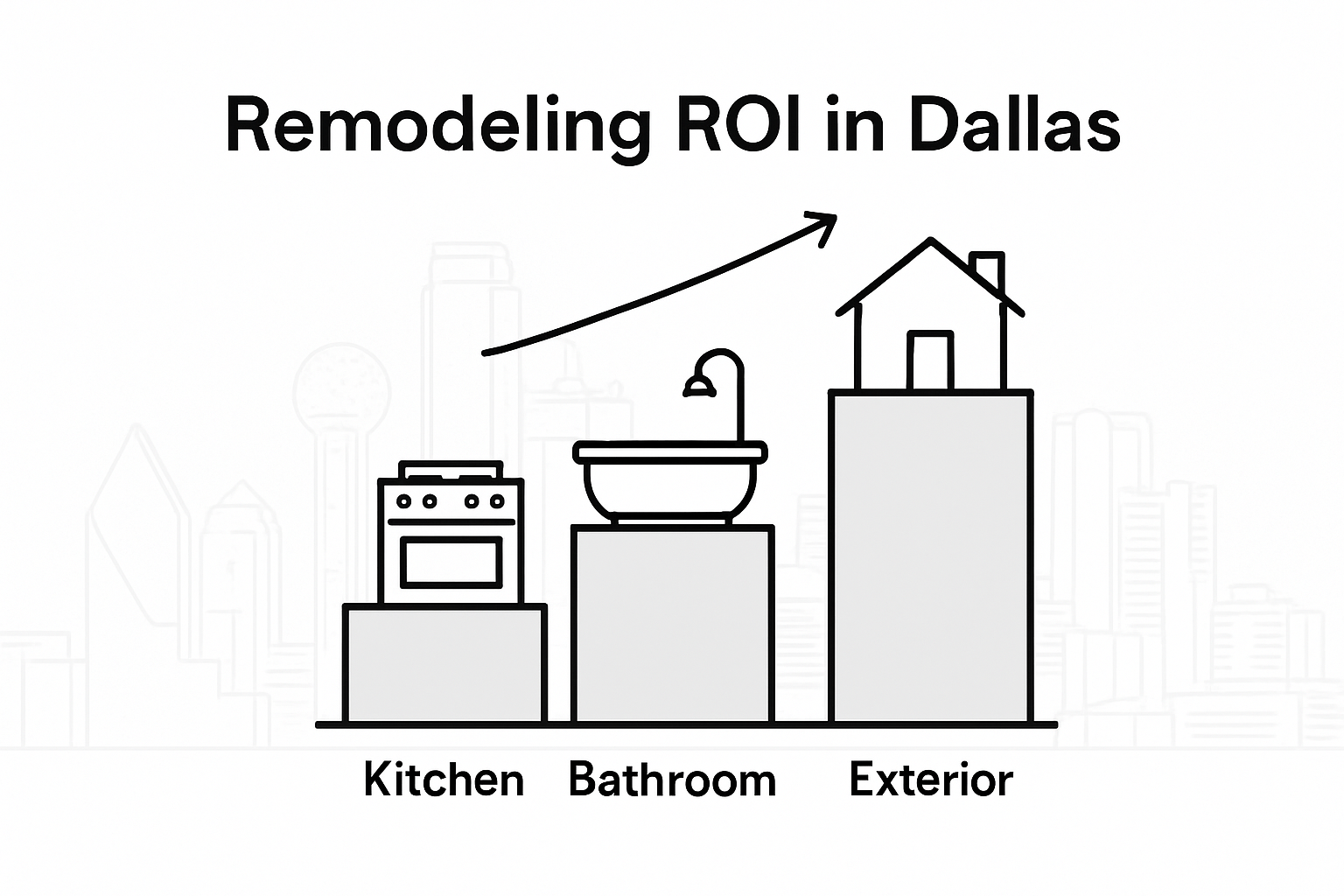
Different remodeling categories offer unique financial benefits and value propositions. Comprehensive remodeling services typically include several high-performing upgrade categories. Kitchen renovations remain top performers, offering both aesthetic appeal and substantial monetary returns. Bathroom updates rank similarly, providing significant value through modernization and functional improvements. Exterior projects like roof replacements, siding upgrades, and window installations also contribute meaningfully to overall property valuation.
Strategic homeowners approach remodeling as a calculated investment rather than a pure expense. Prioritizing projects with documented high returns, understanding local real estate market dynamics, and selecting improvements that broadly appeal to potential buyers can transform home upgrades into powerful financial tools. The most successful remodeling approaches balance personal enjoyment with measurable financial appreciation, creating spaces that are both personally satisfying and economically smart.
How ROI Is Calculated for Renovations
Calculating home renovation return on investment requires a nuanced understanding of multiple financial factors. Remodeling ROI isn’t a simple mathematical equation but a complex analysis of project costs, potential property value increases, and market-specific variables. Homeowners must consider both immediate expenses and long-term financial implications when evaluating renovation investments.
The University of Central Florida’s College of Business provides crucial insights into ROI calculation methodologies, emphasizing the critical comparison between project costs and potential resale value increases. Typically, ROI is computed by subtracting the total project expenses from the estimated property value appreciation. For instance, a $30,000 kitchen renovation that increases home value by $25,000 would represent a partial return on investment, capturing approximately 83% of the initial expenditure.
Several key factors influence renovation ROI calculations beyond basic cost recovery. Home renovation planning involves analyzing neighborhood property values, current market trends, and specific improvement types. Location-specific dynamics play a significant role, with some upgrades performing dramatically differently depending on local real estate conditions. High-demand improvements like kitchen remodels, bathroom updates, and energy-efficient upgrades tend to generate more consistent and predictable returns.
Successful ROI calculation requires comprehensive research and strategic planning. Homeowners should prioritize improvements with documented value increases, consult local real estate professionals, and consider both financial metrics and personal satisfaction. While monetary return remains crucial, the intrinsic value of creating a more functional, enjoyable living space should not be overlooked. The most intelligent renovation investments balance quantitative financial returns with qualitative lifestyle enhancements, transforming home improvements from mere expenses into strategic long-term investments.
Top Value Drivers in DFW Remodel Projects
In the dynamic Dallas-Fort Worth real estate market, certain home improvement projects stand out as powerful value drivers. Remodeling investments require strategic planning to maximize property appreciation and homeowner satisfaction. Understanding the local market dynamics becomes crucial for making informed renovation decisions.

The Parade of Homes Blog highlights critical insights specific to the DFW area, revealing that kitchen remodels, laundry room additions, and exterior upgrades consistently generate the highest returns. These targeted improvements not only enhance property aesthetics but also significantly boost market value. Kitchen renovations remain particularly potent, typically delivering substantial financial and functional benefits that resonate with potential buyers.
Residential remodeling trends in the Dallas-Fort Worth region demonstrate that strategic upgrades go beyond simple cosmetic improvements. Exterior enhancements like modernized siding, energy-efficient windows, and refined landscaping create immediate curb appeal while simultaneously increasing property valuation. Interior transformations focusing on open floor plans, updated fixtures, and smart home technologies further amplify a property’s marketability and perceived value.
Successful value-driven remodeling requires a holistic approach that balances local market expectations, personal preferences, and financial prudence. Homeowners should prioritize improvements with proven track records of generating meaningful returns, consulting local real estate professionals to understand neighborhood-specific trends. The most effective renovations seamlessly blend aesthetic appeal, functional upgrades, and strategic financial planning, transforming properties into more desirable, valuable assets within the competitive DFW housing market.
Common Pitfalls That Reduce Returns
Remodeling investments can quickly turn from strategic financial decisions to costly mistakes when homeowners fail to understand critical ROI principles. Renovation risks extend beyond simple budget overruns, encompassing complex factors that dramatically impact property value and investment potential. Strategic planning and careful consideration become essential to avoid diminishing returns.
The University of Central Florida’s College of Business reveals significant insights into renovation pitfalls, specifically highlighting projects like backyard patios and upscale master suite additions as potential ROI traps. Overcapitalization represents a substantial risk, where renovation expenses far exceed the potential increase in property value. Homeowners frequently make the mistake of personalizing improvements too extensively, creating spaces that reflect individual tastes rather than broader market preferences.
Home renovation planning demands a nuanced approach to avoiding common value-reduction strategies. Typical pitfalls include over-improving relative to neighborhood standards, selecting trendy but short-lived design elements, and neglecting fundamental structural improvements in favor of cosmetic upgrades. Complex, highly customized renovations often yield minimal returns, while practical, widely appealing improvements consistently demonstrate stronger financial performance.
Successful remodeling requires a delicate balance between personal preferences and market-driven considerations. Homeowners should prioritize improvements that offer broad appeal, maintain proportionality with neighborhood property values, and address functional needs. Consulting local real estate professionals, researching comparable property improvements, and maintaining a realistic perspective on potential returns can transform renovation projects from potential financial risks into strategic value-enhancement opportunities.
Unlock Maximum Value for Your Dallas Home with Expert Remodeling
Understanding the challenges of remodeling ROI is essential for Dallas homeowners seeking to increase their property value without costly mistakes. This article highlights the importance of strategic upgrades like kitchen and bathroom renovations, balancing personal enjoyment with smart financial decisions. Avoid common pitfalls such as overcapitalization and overly personalized projects by trusting seasoned professionals who know how to align your vision with local market demands.
AstroTech Construction offers comprehensive remodeling solutions tailored to the Dallas-Fort Worth Metroplex market. Our expertise spans full home remodeling, kitchen and bathroom upgrades, roof replacement, siding, gutters, and more. With a focus on quality assurance and unmatched service, we help you transform improvements into valuable investments that appeal to buyers and enhance your lifestyle. Explore our remodeling services today and start planning a renovation designed to maximize your ROI.
Thinking about your next remodel project Start with AstroTech Construction and experience how our expert team turns your remodeling goals into a smart investment.

Contact us now at AstroTech Construction to schedule your consultation and take the first step toward maximizing your home’s value in the Dallas market.
Frequently Asked Questions
What is Remodeling ROI?
Remodeling ROI, or Return on Investment, refers to the financial value homeowners can expect from renovations when selling or appraising their property. It highlights both immediate monetary gains and long-term property appreciation.
Which type of remodeling projects typically offer the highest ROI?
Kitchen and bathroom renovations generally provide the highest ROI. Minor kitchen remodels can yield an impressive 81.1% average return, while bathroom renovations typically offer around 70.1% returns.
How should homeowners calculate the ROI for a remodeling project?
To calculate ROI, subtract the total project costs from the estimated increase in property value. For example, if a $30,000 kitchen remodel increases the home value by $25,000, the partial ROI would be approximately 83%.
What common pitfalls can reduce the ROI of home renovations?
Common pitfalls include overcapitalization, personalizing renovations too much, and focusing on trendy designs that may not appeal to future buyers. Ensuring that upgrades align with neighborhood standards is also crucial for maximizing ROI.
Recommended
- Kitchen Remodels and ROI: Complete Homeowner Guide – Astrotech Construction
- 7 Key Advantages of Bathroom Remodeling for Homeowners – Astrotech Construction
- 7 Key Benefits of Kitchen Remodeling for Homeowners – Astrotech Construction
- 7 Inspiring Examples of Remodeling Projects to Elevate Your Space – Astrotech Construction