
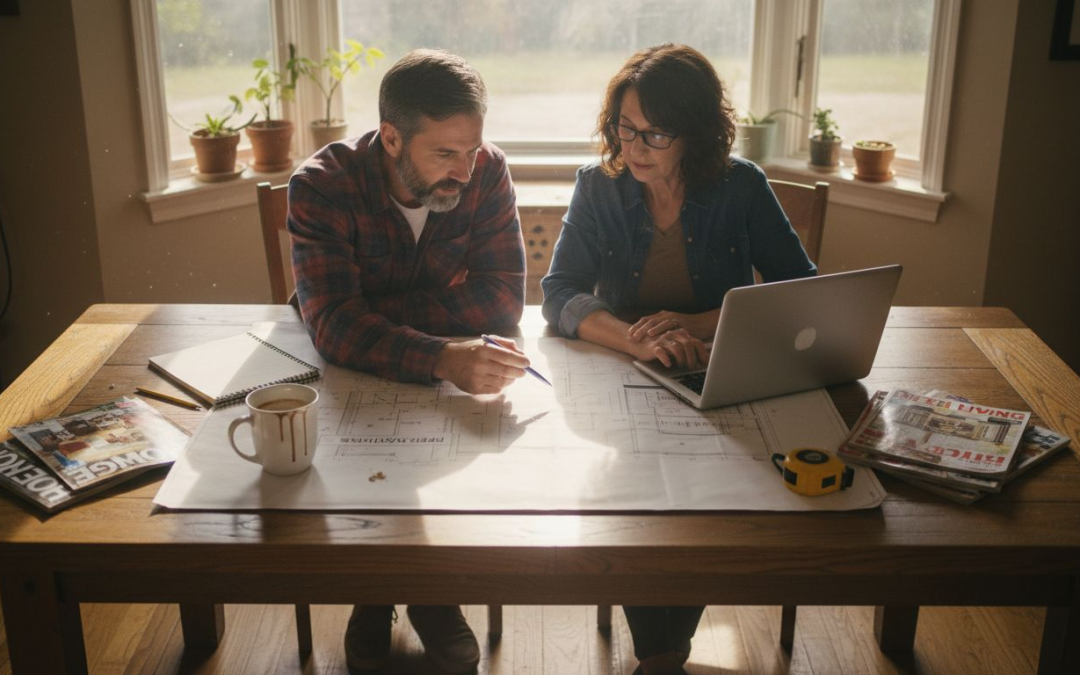
Every Dallas-Fort Worth homeowner knows that updating a kitchen or bathroom can feel exciting and overwhelming at the same time. Tackling a renovation requires more than just picking stylish finishes. It demands a clear process, from assessing what your home truly needs to balancing design dreams with budget realities. This guide walks you through each stage and highlights expert strategies, so you can approach your home upgrade with confidence and a focus on systematic planning for lasting value.
Table of Contents
- Step 1: Assess Renovation Needs And Set Project Goals
- Step 2: Plan Budget And Finalize Design Choices
- Step 3: Select Qualified Contractors And Secure Permits
- Step 4: Execute Upgrades With Project Oversight
- Step 5: Inspect Completed Work And Ensure Quality
Quick Summary
| Key Insight | Explanation |
|---|---|
| 1. Assess Your Renovation Needs | Start by evaluating your home’s strengths and weaknesses to set clear goals for your project. |
| 2. Create a Detailed Budget | Break down your budget into categories and set aside a contingency fund for unexpected expenses. |
| 3. Choose Qualified Contractors | Verify licensing and insurance, and review contractor portfolios and references thoroughly. |
| 4. Maintain Active Project Oversight | Regular inspections and effective communication with contractors ensure quality and progress. |
| 5. Conduct a Thorough Final Inspection | Verify that all renovations meet your standards and document any discrepancies before acceptance. |
Step 1: Assess renovation needs and set project goals
Before diving into your home renovation, understanding your specific needs and establishing clear project goals is crucial for success. A systematic needs assessment process will help you identify your home’s strengths, weaknesses, and potential improvement areas.
Start by conducting a comprehensive home evaluation that covers multiple aspects of your property. Here are key areas to assess:
- Structural integrity: Check for foundation issues, roof condition, and potential water damage
- Energy efficiency: Evaluate insulation, window quality, and HVAC system performance
- Functional limitations: Identify spaces that feel cramped, outdated, or inefficient
- Personal comfort: Consider how your current layout meets (or fails to meet) your lifestyle needs
A strategic renovation begins with honest, thorough self-assessment of your home’s current condition.
After identifying potential improvement areas, prioritize your goals based on urgency, budget, and long-term value. Some homeowners focus on enhancing resale value, while others prioritize personal comfort and functionality. Align your renovation objectives with your specific household requirements, whether that means creating more living space, improving energy efficiency, or modernizing outdated areas.
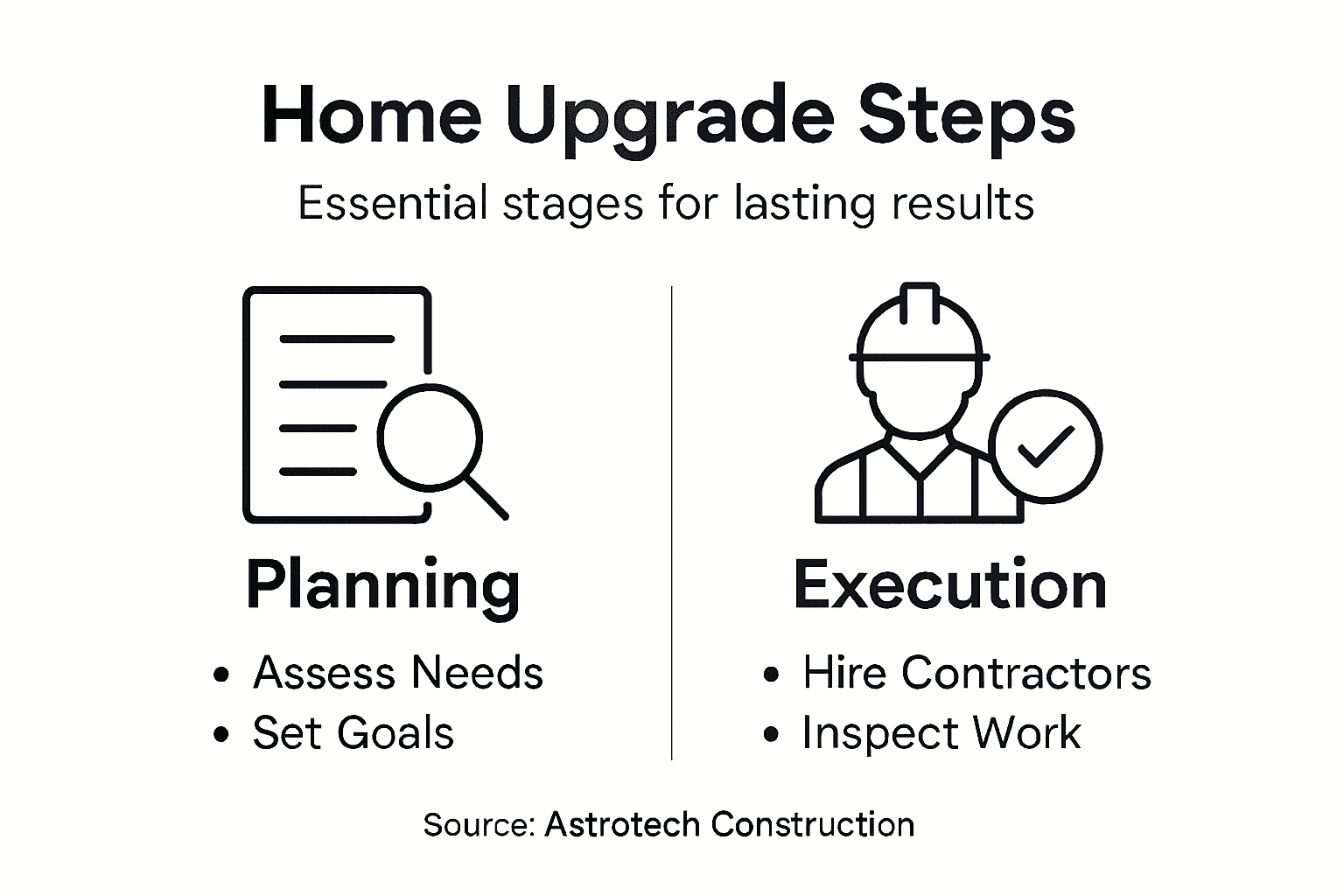
Pro tip: Create a detailed spreadsheet tracking your renovation goals, estimated costs, and potential return on investment to maintain clear project focus and financial discipline.
Step 2: Plan budget and finalize design choices
Now that you have assessed your renovation needs, it’s time to transform your vision into a concrete plan by carefully planning your home renovation budget and finalizing design choices. This crucial step requires balancing your aesthetic desires with financial realities.

Start by breaking down your budget into clear categories:
Here’s a concise overview of renovation budget components and their typical impact on your project:
| Budget Category | Typical Percentage | Common Risks | Long-Term Impact |
|---|---|---|---|
| Materials | 40-50% | Price fluctuations | Affects durability |
| Labor | 30-35% | Inexperienced workforce | Quality of completion |
| Permits/Inspections | 5-10% | Delays or rework | Legal compliance |
| Contingency Fund | 10-20% | Underestimating surprises | Project flexibility |
- Materials: Estimate costs for flooring, paint, fixtures, and other essential components
- Labor: Calculate professional service expenses, including contractor fees
- Contingency fund: Set aside 10-20% for unexpected expenses
- Permits and inspections: Budget for required legal and safety documentation
Your renovation budget is a roadmap, not a rigid constraint – flexibility and strategic planning are key.
When finalizing design choices, consider energy-efficient home design strategies that can provide long-term cost savings. Collaborate with design professionals who can help you maximize both aesthetic appeal and functional value. This means thinking beyond immediate visual impact and evaluating how your design choices will perform over time in terms of durability, maintenance, and energy consumption.
Pro tip: Request detailed quotes from multiple contractors and compare them line by line, looking not just at total cost but at the specific breakdown of materials and labor to ensure true value.
Step 3: Select qualified contractors and secure permits
Selecting the right contractors and navigating the permit process are critical steps that can make or break your renovation project. Understanding permit requirements and contractor selection will help you avoid costly mistakes and legal complications.
When searching for qualified contractors, consider these essential screening criteria:
- Licensing: Verify current state and local professional licenses
- Insurance: Confirm comprehensive liability and worker’s compensation coverage
- Experience: Check portfolio of similar renovation projects
- References: Request and contact multiple recent client references
- Communication: Assess their responsiveness and clarity during initial consultations
Professional contractors are your partners in transforming your home renovation vision into reality.
Securing necessary permits requires proactive communication with local building authorities. Different renovation types demand specific documentation, so work closely with your chosen contractor to understand exact requirements. Experienced building professionals can guide you through complex regulatory landscapes, ensuring your project meets all safety and zoning standards.
Compare contractor selection with permit acquisition to clarify each step’s challenges and benefits:
| Step | Main Challenge | Key Benefit | Who Is Involved |
|---|---|---|---|
| Contractor Selection | Verifying credentials | Improved craftsmanship | Homeowner, Contractor |
| Permit Acquisition | Navigating regulations | Ensures safety/legality | Contractor, Authorities |
Pro tip: Request copies of all contractor licenses and insurance documentation upfront, and verify their authenticity with local licensing boards before signing any agreements.
Step 4: Execute upgrades with project oversight
As your renovation project moves from planning to execution, maintaining active project management becomes critical. Implementing integrated project management approaches ensures your upgrades progress smoothly and meet all predetermined quality standards.
During project execution, focus on these key oversight strategies:
- Regular site inspections: Schedule weekly walkthroughs with your contractor
- Documentation: Photograph progress and maintain detailed written records
- Communication: Hold consistent check-in meetings to discuss timeline and challenges
- Quality control: Verify work meets initial design specifications
- Budget tracking: Monitor expenses against your original budget
Successful project oversight transforms potential complications into smooth, manageable progress.
Effective oversight requires more than just monitoring. You need to remain proactive, anticipate potential issues, and address them before they become significant problems. This means staying engaged with your contractor, understanding each phase of the renovation, and being prepared to make informed decisions quickly.
Pro tip: Create a dedicated project management folder with digital and physical copies of all contracts, communication logs, progress photos, and change orders to maintain comprehensive documentation.
Step 5: Inspect completed work and ensure quality
Your renovation journey culminates in a critical final step: thoroughly verifying that every aspect of the project meets your expectations and quality standards. Comprehensive home upgrade inspections are essential to confirm that your investment delivers the performance and comfort you anticipated.
During the final inspection, systematically evaluate these key areas:
- Structural elements: Check alignment, stability, and finish quality
- System performance: Test electrical, plumbing, and HVAC functionality
- Energy efficiency: Verify insulation, window seals, and overall thermal performance
- Aesthetic details: Examine paint, trim work, and surface finishes
- Safety features: Confirm all installations meet building code requirements
Quality assurance is not just about catching mistakes, but celebrating the successful transformation of your living space.
Work closely with your contractor during the final walkthrough, documenting any discrepancies or areas needing adjustment. Professional contractors should welcome a detailed review and be prepared to address any concerns. Remember that final acceptance means more than visual satisfaction – it requires confirming that every upgrade functions exactly as designed and meets your original project goals.
Pro tip: Request a comprehensive written report from your contractor detailing all completed work, including materials used, warranty information, and specific performance specifications.
Transform Your Home Renovation Vision into Lasting Results with Astrotech Construction
The process of effective home upgrades requires clear goals, careful budgeting, and expert project oversight to achieve lasting results. If you find yourself overwhelmed by permit complexities, contractor selection, or ensuring the quality of final work Astrotech Construction in the Dallas – Fort Worth Metroplex specializes in guiding homeowners through each critical step. Our professional team understands the importance of thorough needs assessment, strategic budgeting, and ongoing communication to prevent unexpected challenges and deliver superior craftsmanship.
Partner with a trusted company that provides:
- Full home remodeling and targeted kitchen and bathroom upgrades
- Expert roof replacement and siding solutions
- Assistance with storm damage repair and seamless permit navigation
Ready to make your renovation stress free and successful Visit Astrotech Construction today to schedule your consultation and discover how our customer-focused approach turns your upgrade plans into beautifully executed projects. Take the first step toward a home that truly meets your needs and exceeds your expectations.
Frequently Asked Questions
What are the first steps in the effective home upgrade process?
Start by assessing your renovation needs and defining clear project goals. Conduct a thorough evaluation of your home, focusing on areas like structural integrity, energy efficiency, and personal comfort.
How can I create a renovation budget that supports my goals?
Break down your budget into categories such as materials, labor, permits, and a contingency fund. Aim to allocate around 40-50% for materials and 10-20% for unexpected expenses, adjusting as needed to fit your vision.
What should I look for when selecting contractors for my home renovation?
Focus on key criteria like licensing, insurance, and experience with similar projects. Ensure you gather client references and assess communication skills during initial consultations to determine if they’re a good fit for your project.
How do I effectively manage the renovation project during execution?
Maintain active oversight by conducting regular site inspections, documenting progress, and holding consistent check-in meetings with your contractor. This will help you stay on track and manage challenges as they arise.
What should I do during the final inspection of my home renovation?
Systematically evaluate structural elements, system performance, energy efficiency, aesthetic details, and safety features. Make sure everything meets your set expectations and document any issues that need addressing before final acceptance.