
Planning a renovation in Dallas or Fort Worth brings excitement and stress in equal measure, especially when a home inspection stands between you and your dream project. For homeowners, understanding what a home inspector actually looks for can make the process far less daunting. Learning the basics and confronting common myths about home inspections gives you the clarity needed to spot significant issues, avoid costly surprises, and move your renovation forward with confidence.
Table of Contents
- Home Inspection Basics And Common Myths
- Types Of Home Inspections And Main Differences
- What Inspectors Check During The Process
- Regulations, Licensing, And Standards In Texas
- Costs, Risks, And Mistakes To Avoid
Key Takeaways
| Point | Details |
|---|---|
| Importance of Home Inspections | Home inspections provide a critical overview of a property’s condition, helping buyers make informed decisions. |
| Types of Inspections | Various inspection types, such as general and specialty inspections, serve unique purposes in assessing property conditions. |
| Inspection Limitations | Home inspections are visual assessments with limitations; they cannot detect concealed defects or guarantee future performance. |
| Texas Licensing Regulations | Texas has rigorous licensing requirements for home inspectors to ensure professional standards and consumer protection. |
Home Inspection Basics and Common Myths
A home inspection is a critical step in understanding a property’s condition, offering prospective buyers and homeowners an essential overview of potential issues. Home inspection standards define this process as a non-invasive, visual examination designed to identify material defects that could impact property value or safety.
Contrary to popular belief, home inspections are not exhaustive technical evaluations. They provide a snapshot of observable conditions, with key limitations that every homeowner should understand:
- Visual Assessment: Inspectors examine accessible areas only
- Scope Limitations: Cannot identify concealed or latent defects
- Non-Invasive: No destructive testing or wall/floor penetration
- Specific Purpose: Identifies material defects, not market valuation
Common Myths about home inspections can mislead property owners and buyers. Many people mistakenly believe that an inspector will catch every single problem or provide a guarantee of the home’s future performance. In reality, inspection reports document observed conditions at a specific moment and often include recommendations for further specialist evaluation.
Home inspections typically cover major systems including electrical, plumbing, roofing, structural integrity, and HVAC. The goal is to provide transparency about the property’s current state, helping buyers make informed decisions and understand potential future maintenance requirements.
Pro tip: Always accompany your home inspector during the assessment to ask questions and gain firsthand insights about the property’s condition.
Types of Home Inspections and Main Differences
Home inspections are not a one-size-fits-all service, with various types designed to address specific property assessment needs. Home inspection standards recognize multiple inspection categories, each serving a unique purpose in evaluating residential properties.
The primary categories of home inspections include:
- General Home Inspection: Comprehensive evaluation of major home systems
- Specialty Inspections: Focused assessments of specific property elements
- Pre-Purchase Inspections: Detailed examination before property acquisition
- Pre-Listing Inspections: Seller-initiated assessments to identify potential issues
Specialized Inspection Types provide targeted insights into particular property concerns. Detailed inspection reports might include evaluations for:
- Pest Inspections
- Radon Testing
- Mold Assessment
- Septic System Evaluation
- Energy Efficiency Audit
- Structural Integrity Analysis
Each inspection type follows distinct protocols and focuses on different aspects of a property. General home inspections typically cover major systems like electrical, plumbing, roofing, and structural components. Specialized inspections dig deeper into specific potential problems that might not be apparent during a standard assessment.
Understanding the differences between inspection types helps homeowners and buyers make informed decisions about property condition and potential maintenance requirements. Some inspections might be recommended or even required by lenders, insurance companies, or local regulations.
Here’s a side-by-side comparison of general and specialized home inspections in terms of scope, benefits, and when each is recommended:
| Aspect | General Home Inspection | Specialized Inspection |
|---|---|---|
| Main Focus | Broad overview of all key systems | In-depth look at specific system or concern |
| Typical Use | Routine part of buying process | Follow-up to flagged issues or special needs |
| Example Systems | Electrical, plumbing, HVAC, roof | Mold, radon, septic, pests |
| When to Choose | Always for property purchase | When advised by inspector or regulations |
Pro tip: Consider scheduling multiple specialized inspections if the general home inspection reveals potential complex issues in specific areas.
What Inspectors Check During the Process
Home inspection standards outline a systematic approach to evaluating residential properties, focusing on comprehensive visual assessments of accessible areas. Home inspectors conduct a detailed examination of multiple critical home systems, providing homeowners and potential buyers with a comprehensive overview of property condition.
Key Areas of Inspection typically include:
- Structural Components: Foundation, walls, roof, and framing
- Exterior Elements: Siding, grading, drainage, and landscaping
- Roof System: Covering materials, flashing, and potential water damage
- Plumbing Systems: Pipes, water pressure, drainage, and potential leaks
- Electrical Systems: Wiring, panel, outlets, and circuit functionality
- HVAC Components: Heating, cooling, and ventilation equipment
Professional inspection protocols emphasize several critical examination principles. Inspectors perform non-invasive, visual assessments that document observable conditions without destructive testing. They systematically sample and evaluate different property elements, providing a snapshot of the home’s current state.
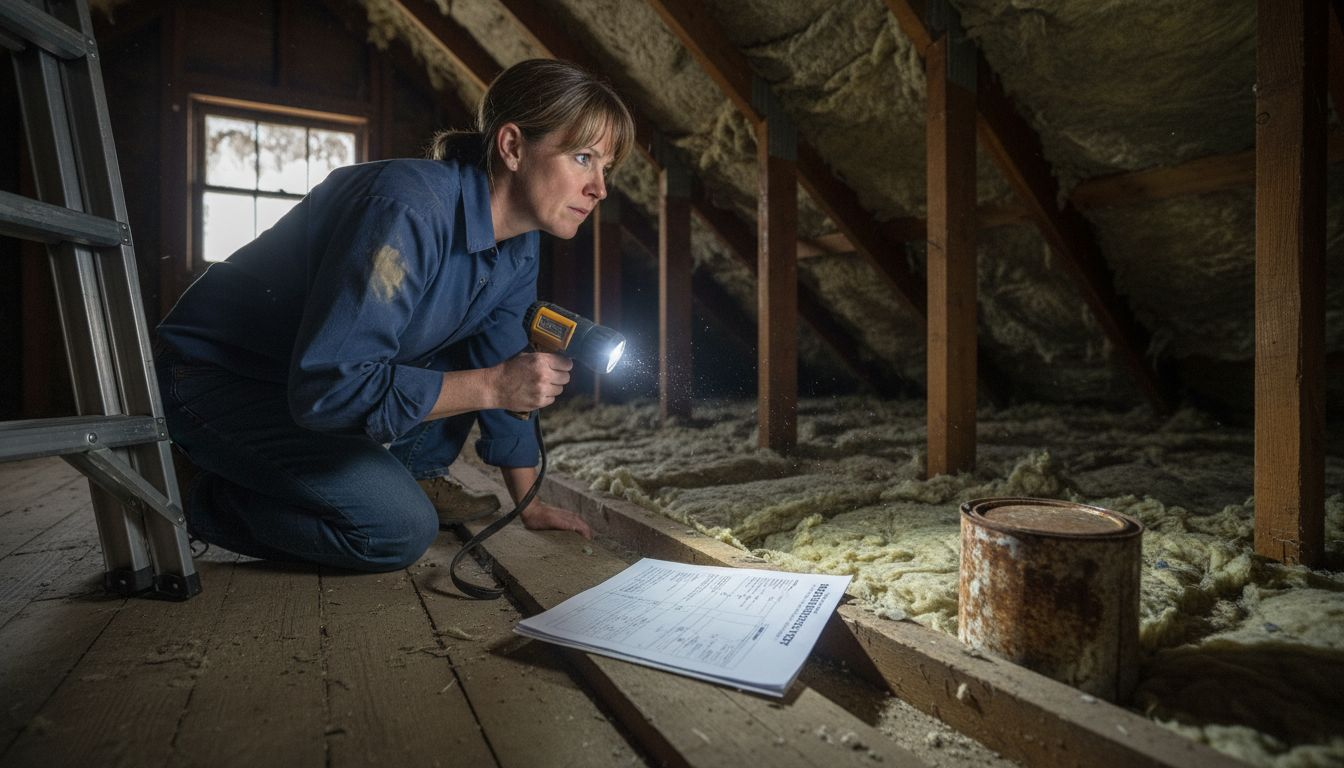
The inspection process involves carefully examining both interior and exterior systems. Inspectors look for signs of potential issues like water damage, structural weakness, electrical hazards, and system inefficiencies. Their goal is to provide a comprehensive report that helps property owners understand potential maintenance needs and existing conditions.
Pro tip: Always request and carefully review the full written inspection report, paying special attention to recommended follow-up evaluations or specialist assessments.
Regulations, Licensing, and Standards in Texas
Home inspector licensing in Texas is a comprehensive process managed by the Texas Real Estate Commission (TREC), designed to ensure professional standards and protect homeowner interests. The state has established rigorous requirements that demonstrate a commitment to quality home inspection services.
Licensing Categories for home inspectors in Texas include:
- Apprentice Inspector: Entry-level certification with supervised work requirements
- Real Estate Inspector: Mid-level professional designation
- Professional Real Estate Inspector: Highest level of certification
To become a licensed home inspector in Texas, professionals must complete:
- 154 classroom training hours in inspector modules
- 40 hours of Texas Practicum or equivalent field training
- Pass a state-administered examination
- Complete 32 hours of continuing education every two years
Professional certification standards require inspectors to adhere to strict professional guidelines. The Texas Professional Real Estate Inspectors Association (TPREIA) provides additional support and resources for professionals seeking to maintain high-quality inspection practices.
Regulatory requirements ensure that home inspectors have the knowledge and skills necessary to provide comprehensive property assessments. These standards protect consumers by establishing a baseline of competence and professional conduct in the home inspection industry.
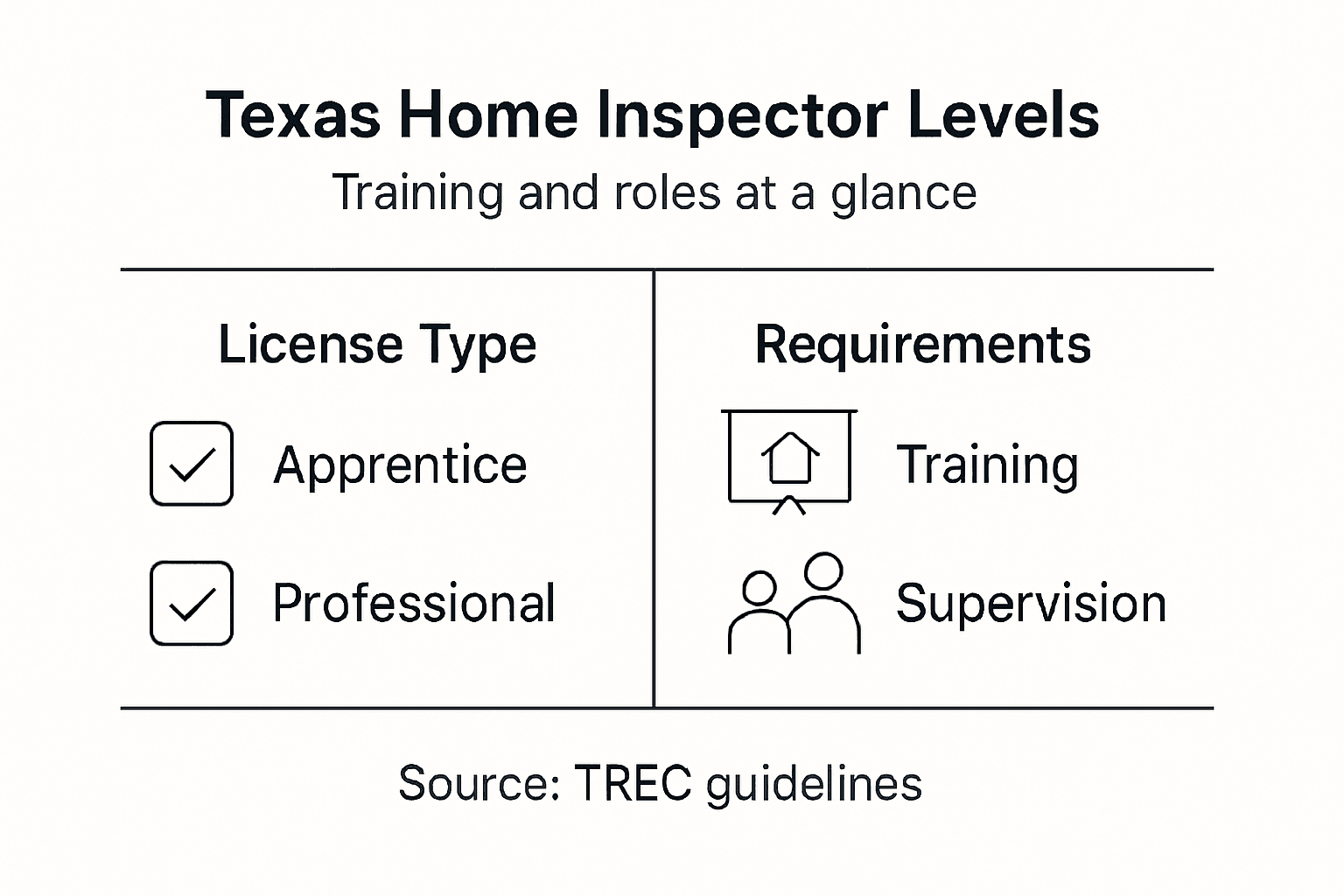
Review this breakdown of Texas home inspector licensing to understand requirements and career progression:
| License Level | Training Requirements | Supervision Needed | Professional Role |
|---|---|---|---|
| Apprentice Inspector | 154 hours classroom, 40 hours field | Direct oversight | Entry-level trainee |
| Real Estate Inspector | Passed exam, previous experience | Some supervision | Mid-level independent inspector |
| Professional Real Estate Inspector | All prior steps, continuing education | None required | Highest independent licensure |
Pro tip: Always verify an inspector’s current TREC license status before hiring, as maintaining active certification is crucial for professional credibility.
Costs, Risks, and Mistakes to Avoid
Home inspection risks involve more than just financial considerations, requiring homeowners to understand the nuanced landscape of property assessments. While inspections provide critical insights, they are not exhaustive guarantees of future property performance.
Common Mistakes Buyers Make include:
- Skipping professional inspections entirely
- Choosing unlicensed or inexperienced inspectors
- Waiving inspections in competitive housing markets
- Misunderstanding the scope of inspection limitations
- Failing to follow up on recommended specialist evaluations
Typical Cost Ranges for home inspections in the Dallas-Fort Worth area vary depending on property size and complexity:
- Small homes (under 1,500 sq ft): $300-$400
- Medium homes (1,500-2,500 sq ft): $400-$550
- Large homes (over 2,500 sq ft): $550-$700
- Additional specialized inspections: $100-$300 per assessment
Texas property inspection standards emphasize that walk-through or abbreviated inspections often fail to meet comprehensive evaluation requirements. Consumers should prioritize thorough, licensed professional assessments that provide complete property condition disclosures.
Risks of inadequate inspections can lead to significant unexpected repair costs, potential safety hazards, and reduced property value. Understanding inspection limitations helps buyers make informed decisions and negotiate effectively during real estate transactions.
Pro tip: Budget for a comprehensive home inspection as an investment, not an expense, and always request the full written report for detailed documentation.
Ensure Your New Home Not Only Passes Inspection But Exceeds Expectations
A thorough home inspection reveals critical information about your future property’s condition but also highlights areas where improvement is needed to make your investment safe and comfortable. Common challenges like unseen structural issues, roofing wear, or outdated systems identified during inspections call for trusted expertise to address these concerns head-on. Astrotech Construction specializes in tackling the exact problems inspections uncover by providing comprehensive remodeling and repair solutions tailored to your needs in the Dallas – Fort Worth Metroplex.
From roof replacement and siding upgrades to full home remodeling and storm damage repair, our skilled team ensures your home not only meets but surpasses quality and safety standards. Partner with experienced professionals who understand the value of starting your homeownership journey on a solid foundation.
Ready to transform inspection findings into confidence and comfort?

Explore how our services can support your home’s health at Astrotech Construction. Take the first step by scheduling a consultation today and turn your inspection report into a clear action plan with experts you can trust.
Frequently Asked Questions
What is a home inspection and why is it important?
A home inspection is a non-invasive, visual examination of a property’s accessible areas, providing a critical overview of its condition. It helps buyers identify any material defects that could affect the property’s value or safety, allowing for informed decision-making.
What are common myths about home inspections?
Common myths include the belief that inspectors will identify every potential issue or guarantee the home’s future performance. In reality, inspections provide a snapshot of observable conditions, and reports include recommendations for further evaluations.
What types of home inspections are available?
There are various types of home inspections, including general home inspections, specialty inspections (like mold or radon assessments), pre-purchase inspections, and pre-listing inspections. Each type focuses on specific aspects of the property to provide detailed insights.
How much does a home inspection typically cost?
Home inspection costs can vary based on property size and complexity, typically ranging from $300 to $700. Specialized inspections may incur additional fees ranging from $100 to $300 each.
Recommended
- Why Remodel Before Selling? Boost Home Value Fast – Astrotech Construction
- Why Prioritize Exterior Repairs for Property Value – Astrotech Construction
- What Is Renovation Insurance and Why It Matters – Astrotech Construction
- Role of Remodeling Warranties – Protecting Your Renovation – Astrotech Construction