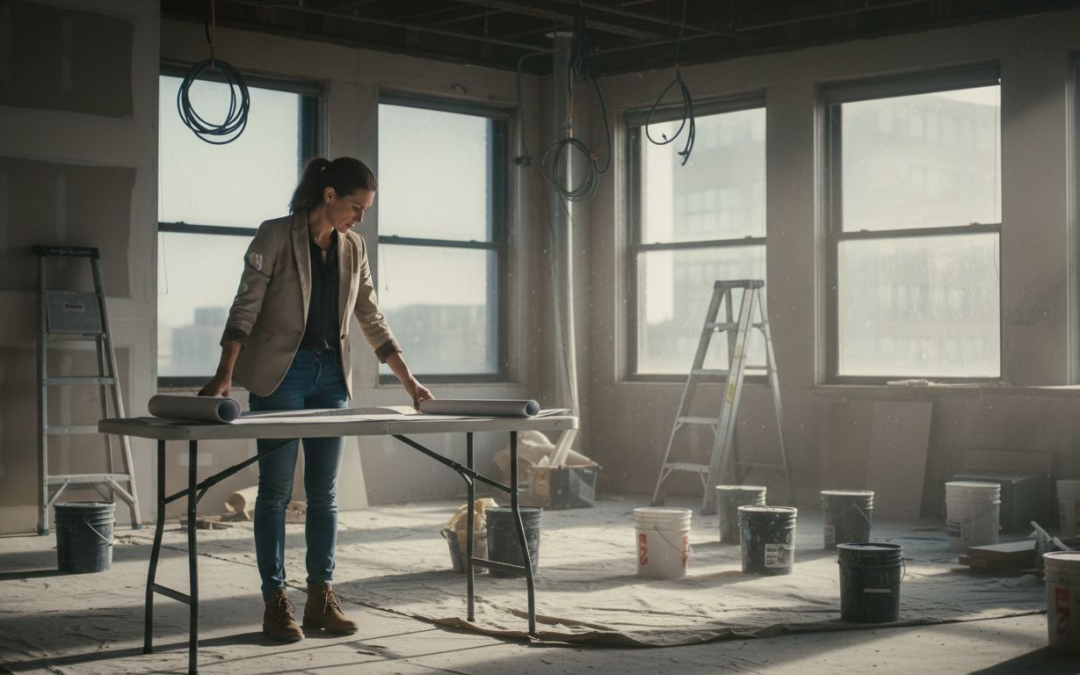
Deciding how to renovate your business space can feel overwhelming when you want to achieve real results for both your team and your customers. Whether you manage an office, restaurant, retail store, or any other commercial environment, every design choice matters for performance and satisfaction. The truth is, your space sets the tone for productivity, creativity, and comfort every single day.
If you have ever wondered which upgrades can actually make a difference, you are not alone. Backed by research on workplaces, restaurants, and retail, this list delivers practical strategies that go beyond quick fixes. You will discover actionable ways to modernize and transform your environment, helping you create spaces that people want to return to again and again. Get ready for insights that can reshape how your business space works for everyone inside.
Table of Contents
- Modernizing Office Spaces For Productivity
- Upgrading Restaurant Interiors For Customer Appeal
- Revamping Retail Stores To Enhance Shopping Experience
- Renovating Medical Offices For Comfort And Efficiency
- Transforming Warehouses For Better Functionality
- Refreshing Hospitality Venues For Guest Satisfaction
- Improving Educational Facilities For Better Learning
Quick Summary
| Key Message | Explanation |
|---|---|
| 1. Modernize office spaces for productivity | Thoughtful office design boosts performance, collaboration, and employee well-being. Consider flexible configurations and smart technologies. |
| 2. Upgrade restaurant interiors to enhance customer experience | Restaurant design influences emotions and spending. Focus on inviting layouts and strategic lighting for memorable visits. |
| 3. Revamp retail stores for immersive experiences | Retail environments must engage customers beyond products through interactive displays and seamless technology integration. |
| 4. Renovate medical offices for comfort and efficiency | A patient-centered design enhances experiences and operational flow. Prioritize adaptable areas and modern technologies. |
| 5. Transform warehouses into logistics ecosystems | Effective warehouse design integrates smart tech and ergonomic features to improve functionality and operational efficiency. |
1. Modernizing Office Spaces for Productivity
In today’s rapidly evolving workplace, office design directly impacts employee performance. Modernizing workspace environments goes far beyond aesthetic upgrades – it’s about creating strategic layouts that enhance productivity, collaboration, and employee well-being.
Research demonstrates that thoughtful office renovations can significantly transform workplace dynamics. A comprehensive study analyzing post-occupancy evaluations across multiple countries reveals critical insights into how physical workspace modifications influence worker productivity.
Key strategies for modernizing office spaces include:
- Flexible workspace configurations that support hybrid work models
- Integrating natural light and ergonomic design elements
- Creating dedicated collaboration and private focus zones
- Implementing smart technology infrastructure
- Prioritizing employee comfort and wellness
Successful office modernization requires understanding how physical environments influence psychological and professional performance. By redesigning spaces for hybrid work environments, companies can create adaptive workspaces that meet evolving employee needs.
A well-designed office is not just a physical space – it’s a productivity ecosystem that supports creativity, collaboration, and individual performance.
Implementing these strategies requires careful planning and a holistic approach to workspace design. Consider consulting professional renovation experts who understand the nuanced requirements of modern office environments.
Pro tip: Conduct employee surveys before renovation to understand specific workspace preferences and functional requirements.
2. Upgrading Restaurant Interiors for Customer Appeal
Restaurant interiors are far more than just visual backdrops – they are strategic environments that directly influence customer experience and business success. Design transforms dining from mere eating to memorable experiences.
Research reveals the profound impact of interior design on restaurant performance. Qualitative studies demonstrate how specific design elements can dramatically affect customer emotions, spending behaviors, and return intentions.
Key strategies for restaurant interior upgrades include:
- Creating inviting spatial layouts
- Implementing strategic lighting designs
- Selecting color palettes that enhance mood
- Incorporating unique textural elements
- Balancing aesthetics with functional comfort
Modern restaurant design goes beyond traditional approaches. By integrating biophilic design elements, restaurants can create immersive environments that engage customers on multiple sensory levels.
Restaurant design is not just decoration – it’s a powerful communication tool that tells your brand’s story and creates emotional connections.
Successful restaurant interiors blend visual appeal with psychological understanding. Consider how every design choice influences customer perception and dining experience.
Pro tip: Conduct informal customer feedback sessions to understand how your current interior design impacts their dining experience and comfort.
3. Revamping Retail Stores to Enhance Shopping Experience
In the evolving retail landscape, physical stores must do more than display products – they must create immersive, memorable experiences. Modern retail spaces are dynamic environments that compete directly with online shopping platforms.
Multisensory design strategies have become critical for creating compelling in-store experiences that attract and retain customers. Understanding how to transform retail environments can significantly impact business performance.
Key strategies for retail store revamps include:
- Creating interactive product display zones
- Integrating digital technology seamlessly
- Designing intuitive store navigation
- Developing engaging sensory experiences
- Implementing flexible, adaptable store layouts
Post-pandemic retail requires innovative approaches. Conceptual frameworks for value creation highlight the importance of inspiration, social interaction, and novel technologies in physical store design.
A well-designed retail space is not just a sales environment – it’s an immersive brand storytelling platform that transforms shopping from a transaction to an experience.
Successful retail revamps require a holistic approach that balances aesthetic appeal with functional design and technological integration.
Pro tip: Conduct periodic customer journey mapping to identify and eliminate friction points in your store’s physical layout and shopping experience.
4. Renovating Medical Offices for Comfort and Efficiency
Medical office design goes far beyond aesthetics – it directly impacts patient experience, staff productivity, and overall healthcare delivery. Patient-centered design transforms medical spaces from sterile environments into healing sanctuaries.
Architectural design principles now emphasize creating inclusive, adaptable healthcare spaces that prioritize both patient comfort and operational efficiency.
Key strategies for medical office renovations include:
- Creating flexible, adaptable treatment areas
- Implementing advanced infection control measures
- Integrating cutting-edge medical technologies
- Designing patient-friendly waiting spaces
- Enhancing staff workflow and comfort zones
Medical office renovation planning requires a holistic approach that balances functionality, patient experience, and regulatory compliance. Modern medical spaces must be designed to support healing while maintaining operational excellence.
A well-designed medical office is more than a treatment space – it’s a critical component of the healing process that communicates care, professionalism, and patient respect.
Successful renovations consider every detail from material selection to spatial configuration, creating environments that reduce patient stress and support medical professionals.
Pro tip: Consult with healthcare staff during renovation planning to understand workflow challenges and gather insights for optimal space design.
5. Transforming Warehouses for Better Functionality
Warehouses are no longer just storage spaces – they are critical logistics ecosystems that demand continuous innovation and strategic redesign. Technology drives warehouse transformation at unprecedented speeds.
Emerging technological frameworks are revolutionizing how businesses approach warehouse functionality and operational efficiency.
Key strategies for warehouse transformation include:
- Integrating smart inventory management systems
- Implementing robotics and automation technologies
- Creating flexible storage and workflow configurations
- Enhancing data tracking and real-time monitoring
- Designing ergonomic workspaces for employee productivity
Modern warehouses require a holistic approach that combines technological innovation with intelligent spatial design. The goal is creating adaptive environments that respond quickly to changing business needs.
A well-designed warehouse is more than a storage facility – it’s a strategic asset that can dramatically improve operational performance and competitive advantage.
Successful warehouse transformations balance technological investment with practical, user-centered design principles that support both efficiency and human performance.
Pro tip: Conduct a comprehensive workflow audit before renovation to identify specific technological and spatial improvements that will deliver maximum operational impact.
6. Refreshing Hospitality Venues for Guest Satisfaction
Hospitality venues are more than physical spaces – they are immersive experiences that define customer perception and loyalty. Strategic venue design transforms guest interactions from transactional to memorable.
Physical environment modifications have profound implications for customer satisfaction and operational success in hospitality settings.
Key strategies for hospitality venue refreshment include:
- Creating intuitive and welcoming spatial layouts
- Integrating smart technology seamlessly
- Designing flexible multi-purpose areas
- Implementing sustainable design elements
- Enhancing sensory experiences through strategic aesthetics
Hotel management practices demonstrate that thoughtful renovations go beyond visual appeal – they create holistic experiences that drive customer loyalty.
A remarkable hospitality venue is an ecosystem of comfort, functionality, and emotional engagement that begins the moment a guest walks through the door.
Successful venue refreshments require a comprehensive approach that balances aesthetic innovation with functional design and guest-centric experiences.
Pro tip: Conduct periodic guest feedback surveys to identify specific design elements that most significantly impact satisfaction and perception.
7. Improving Educational Facilities for Better Learning
Educational facilities are more than physical structures – they are critical environments that shape learning experiences and academic potential. Learning spaces profoundly impact student performance by creating conducive environments for intellectual growth.
School infrastructure research demonstrates significant correlations between physical facility quality and student academic achievement.
Key strategies for improving educational facilities include:
- Creating flexible learning environments
- Maximizing natural light and ventilation
- Designing collaborative and individual study zones
- Integrating technology-enabled learning spaces
- Ensuring accessibility and safety features
Quality infrastructure development goes beyond aesthetic upgrades – it represents a fundamental investment in student potential and educational outcomes.
An exceptional learning environment transforms education from information transfer to inspirational experience.
Successful facility improvements require holistic approaches that consider pedagogical needs, technological advances, and student well-being.
Pro tip: Engage students and educators in facility design discussions to ensure spaces genuinely support diverse learning styles and educational objectives.
Below is a comprehensive table summarizing key strategies and benefits discussed throughout the article for modernizing various types of spaces to improve functionality, productivity, and user satisfaction.
| Space type | Key Strategies | Benefits/Outcomes |
|---|---|---|
| Office Spaces | Flexible configurations, ergonomic design, collaboration zones, smart technology integration | Enhanced productivity, well-being, and adaptability |
| Restaurant Interiors | Inviting layouts, strategic lighting, mood-enhancing colors | Improved customer experiences and emotional connections |
| Retail Stores | Interactive displays, seamless technology, adaptable layouts | Memorable shopping experiences and increased retention |
| Medical Offices | Flexible areas, advanced infection control, patient-friendly spaces | Improved patient comfort and operational efficiency |
| Warehouses | Smart inventory systems, automation, ergonomic design | Boosted operational performance and employee productivity |
| Hospitality Venues | Welcoming layouts, sustainable design, enhanced sensory appeal | Improved guest satisfaction and loyalty |
| Educational Facilities | Flexible environments, natural lighting, collaborative study zones | Increased academic performance and learning engagement |
Remodel Your Business Space for Lasting Impact and Success
The article highlights the powerful role of strategic remodeling across various business environments—whether enhancing collaboration in modern offices or transforming commercial kitchens and retail spaces. If your goal is to boost productivity, improve customer appeal, or create a healing atmosphere in medical offices, you understand the challenges that come with designing adaptable, functional, and inviting spaces. Astrotech Construction specializes in commercial renovation services crafted to meet these diverse needs throughout the Dallas – Fort Worth Metroplex. We address key pain points like inflexible layouts, outdated interiors, and inefficient workflows by delivering expert remodeling solutions that unlock your space’s full potential.
We bring your vision to life with:
- Customized remodels tailored to your unique business type
- Integration of modern design concepts that promote efficiency and comfort
- A seamless process focused on quality assurance and exceptional service
Ready to experience a transformation that makes a powerful impact on your business environment and those who use it every day
Take the first step with Astrotech Construction by visiting our commercial remodeling services page. Connect with our experts now to schedule a consultation. Your ideal business space that inspires success starts here.
Frequently Asked Questions
What are the key benefits of modernizing office spaces for employee productivity?
Modernizing office spaces can enhance employee performance, collaboration, and overall well-being. To maximize these benefits, gather employee feedback to determine specific design needs before planning renovations.
How can I create a more inviting restaurant interior to boost customer satisfaction?
Creating a more inviting restaurant interior can significantly enhance the customer experience and increase return visits. Focus on elements like strategic lighting, comfortable seating, and appealing color schemes to transform the atmosphere within 30 days.
What factors should I consider when revamping retail stores for a better shopping experience?
Consider factors like interactive displays, intuitive navigation, and the integration of technology to enhance the in-store experience. Conduct customer journey mapping to identify pain points in your layout that can be improved effectively.
How can I make my medical office more comfortable and efficient for patients and staff?
To enhance comfort and efficiency, focus on patient-friendly waiting areas and adaptable treatment spaces. Engage healthcare staff in the planning process to identify workflow challenges and design solutions that support both patient care and staff productivity.
What steps should I take to transform a warehouse into a more functional space?
Transforming a warehouse involves integrating smart inventory systems and creating flexible layouts that facilitate workflow. Start with a comprehensive workflow audit to pinpoint specific areas for technological and spatial improvements that can boost operational efficiency.
How can I refresh a hospitality venue to enhance guest satisfaction?
Refreshing a hospitality venue requires creating inviting layouts and integrating technology to enhance the guest experience. Survey guests regularly to gather input on their preferences, and use that feedback to inform changes within your venue.
Recommended
- Why Remodel Commercial Spaces: Complete Guide – Astrotech Construction
- 7 Inspiring Commercial Renovation Examples for DFW Owners – Astrotech Construction
- 7 Smart Commercial Renovation Ideas for Modern Spaces – Astrotech Construction
- 7 Inspiring Examples of Remodeling Projects to Elevate Your Space – Astrotech Construction