A faded exterior or peeling paint can make even the most successful Dallas business look neglected. For commercial property managers and owners in the Dallas-Fort Worth Metroplex, maintaining a professional appearance is more than cosmetic—it affects tenant retention, property value, and your reputation. Commercial painting applies protective coatings, enhances durability, and keeps your building in top shape, addressing unique regional challenges like North Texas heat and moisture. This article breaks down what makes commercial painting vital and how the right service protects your investment.
Table of Contents
- Defining Commercial Painting for Businesses
- Key Types of Commercial Painting Projects
- How Professional Commercial Painting Works
- Costs, Risks, and Safety Considerations
- Selecting the Right Commercial Painting Partner
Key Takeaways
| Point | Details |
|---|---|
| Importance of Professionalism | Commercial painting enhances the aesthetic and protects the integrity of your property, positively influencing client perceptions and business outcomes. |
| Specialized Techniques Required | Proper surface preparation and the use of durable, professional-grade materials are essential in commercial painting projects to ensure longevity and compliance. |
| Costs and Risks | Understanding the factors influencing costs, including material selection and labor quality, is crucial for budgeting and avoiding future liabilities. |
| Choosing the Right Contractor | Selecting a qualified commercial painting partner with local expertise can significantly impact project success and ensure adherence to regional standards. |
Defining Commercial Painting for Businesses
Commercial painting is specialized work. It’s not the same as painting your office walls yourself or hiring someone to refresh a residential space. Commercial painting applies protective coatings to commercial and industrial properties, preserving structures while maintaining the professional appearance your clients and tenants expect.
For a Dallas-Fort Worth business owner, this distinction matters. Your building represents your brand. A faded storefront, peeling exterior paint, or dingy stairwell sends the wrong message to potential customers walking through your door.
What Sets Commercial Painting Apart
Commercial painting involves far more than slapping paint on walls. It requires advanced preparation, specialized equipment, and strict adherence to industry standards.
Key differences include:
- Surface preparation that goes beyond simple cleaning—power washing, scraping, priming, and surface repair
- Professional-grade materials designed for high-traffic areas, durability, and compliance with building codes
- Specialized techniques for different surfaces: metal, concrete, drywall, and industrial finishes
- Safety protocols protecting workers and your property during the project
- Compliance expertise ensuring paints meet environmental regulations and safety standards
Commercial painting ensures durability, maintains regulatory compliance, and protects your investment in ways residential painting simply cannot match.
The professional craft of applying coatings requires knowledge of how different materials interact with local Dallas weather conditions. Your North Texas summers bring intense heat and UV exposure. Winter cold snaps can affect adhesion and curing. A qualified commercial painter understands these regional factors.
Why This Matters for Your Dallas Property
Your commercial building faces constant exposure to environmental stressors. Quality commercial painting protects against moisture intrusion, rust, and deterioration. It extends the lifespan of your structure and prevents costly repairs down the road.
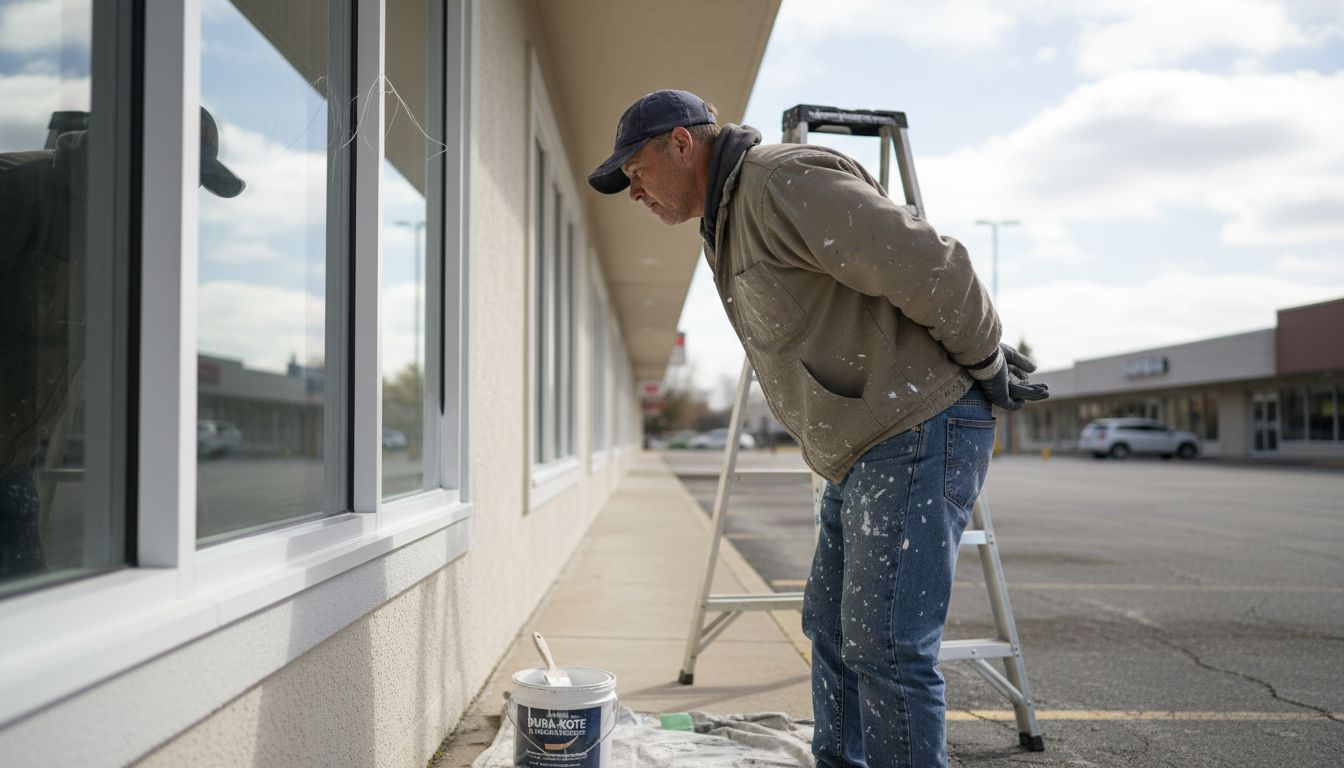
Beyond protection, appearance drives business results. Studies show professional-looking facilities increase tenant retention and attract higher-quality tenants willing to pay premium rates. Your building’s exterior sets expectations before anyone steps inside.
Compliance also affects your bottom line. Certain commercial properties must meet specific safety and environmental standards. Improper painting can create liability issues or fail inspections.
Pro tip: When evaluating painting contractors, ask specifically about their experience with commercial properties in the Dallas-Fort Worth area—local expertise with humidity, heat, and building materials makes a measurable difference in longevity.
Key Types of Commercial Painting Projects
Commercial painting isn’t one-size-fits-all. Different building types demand different approaches, materials, and expertise. Understanding what your property needs helps you communicate with contractors and budget appropriately for your Dallas-Fort Worth business.
Common Commercial Painting Categories
Most commercial painting projects fall into distinct categories based on building type and function. Each requires specialized knowledge and problem-solving.
Typical project types include:
- Office buildings requiring durable, professional finishes that enhance workspace aesthetics
- Retail spaces where first impressions drive customer traffic and sales
- Healthcare facilities needing infection-control paints and strict compliance standards
- Industrial sites demanding corrosion-resistant coatings for machinery and structural steel
- Educational institutions requiring safe, washable finishes for high-traffic areas
- Hospitality venues like hotels and restaurants where appearance directly impacts guest experience
Each facility type presents unique challenges. A hospital can’t close for painting during business hours. A manufacturing plant requires coatings that withstand chemical exposure and temperature fluctuations.
Here’s how different commercial painting categories impact business outcomes:
| Facility Type | Primary Business Impact | Specialized Need |
|---|---|---|
| Office Building | Enhances branding and professionalism | Durable, low-odor coatings |
| Retail Space | Boosts curb appeal and sales potential | Fast-drying, vibrant finishes |
| Healthcare Facility | Supports health regulations and safety | Antimicrobial, easy-clean paints |
| Industrial Site | Reduces equipment downtime | Corrosion and chemical resistance |
| Hospitality Venue | Improves guest satisfaction and reviews | High-appearance, washable finishes |
| Educational Institution | Increases safety and longevity | Low-VOC, resilient coatings |
Project Scope Types
Beyond building type, projects break down by scope. Specialty coatings for corrosion and fire protection represent just one category of work within commercial painting.
Three main project types drive demand:
- New construction painting applied during building completion
- Remodeling and renovation projects updating existing spaces
- Maintenance painting refreshing worn surfaces and protecting investments
The right painting project can transform how clients and employees perceive your facility, directly impacting your business reputation and property value.
For Dallas property owners, exterior painting matters tremendously. North Texas heat, UV exposure, and occasional severe weather accelerate paint deterioration. Quality commercial exterior work protects against moisture intrusion and structural damage.
Interior painting affects daily operations too. Fresh paint improves morale, communicates professionalism, and makes spaces feel cleaner and more organized. Worn, dingy interiors send the opposite message.
Why Project Type Matters
Mismatching paint type to facility function wastes money and creates problems. Industrial coatings won’t perform in retail settings. Healthcare-grade paints on warehouse walls represent unnecessary expense.
A qualified commercial painter assesses your specific needs and recommends appropriate materials and techniques. This expertise prevents costly mistakes and ensures your investment lasts.
Pro tip: When discussing your painting project with contractors, clearly specify your building type and primary concerns—whether durability, aesthetics, compliance, or environmental factors—so they can recommend the most cost-effective solution for your situation.
How Professional Commercial Painting Works
Professional commercial painting isn’t just grabbing a brush and slapping paint on walls. It’s a systematic process with defined steps, quality checkpoints, and strict standards at every stage. Understanding this process helps you know what to expect and why quality work takes time.
The Professional Painting Process
Professional commercial painting follows comprehensive industry standards that govern every phase from initial assessment through final inspection. This structured approach ensures durability, safety, and compliance with regulations.
The process unfolds in these key phases:
- Site evaluation assessing the building condition, identifying problem areas, and determining scope
- Surface preparation including cleaning, scraping, repairing, and priming damaged areas
- Material selection choosing appropriate primers and coatings for your specific needs
- Application using proper techniques for your building type and surface conditions
- Quality inspection verifying the work meets specifications before project completion
Each step matters. Skipping surface preparation leads to peeling paint and wasted money. Using wrong-grade materials causes premature failure. Rushing application creates uneven coverage and durability issues.
Quality Control Built In
Professional painters implement quality control plans with inspection phases before, during, and after work. This isn’t optional—it’s how legitimate contractors ensure your investment lasts.
Quality control includes:
- Pre-application inspections verifying surface readiness and material specifications
- In-process checks monitoring application methods and coverage consistency
- Final audits confirming the finished work meets contractual standards
Quality control isn’t an extra cost—it’s the difference between painting that lasts five years and painting that lasts fifteen.
For Dallas commercial properties, this meticulous approach protects against North Texas weather challenges. Proper surface preparation prevents moisture infiltration. Correct primer selection resists UV damage. Quality coatings withstand temperature fluctuations.
Why Process Matters to You
When contractors cut corners, problems appear within months. Paint peels. Rust returns. Moisture damages underlying materials. These failures cost far more than quality work up front.
A professional painter respects timelines because proper work can’t be rushed. Primers need cure time. Humidity and temperature affect application windows. Multiple coats require drying between applications.
Pro tip: Request a detailed timeline and quality control plan before signing any contract—this shows the contractor understands proper procedures and takes accountability for results.
Costs, Risks, and Safety Considerations
Commercial painting involves real costs and real risks. Understanding both helps you budget accurately and choose contractors who prioritize safety. Cutting corners on either front creates expensive problems down the line.
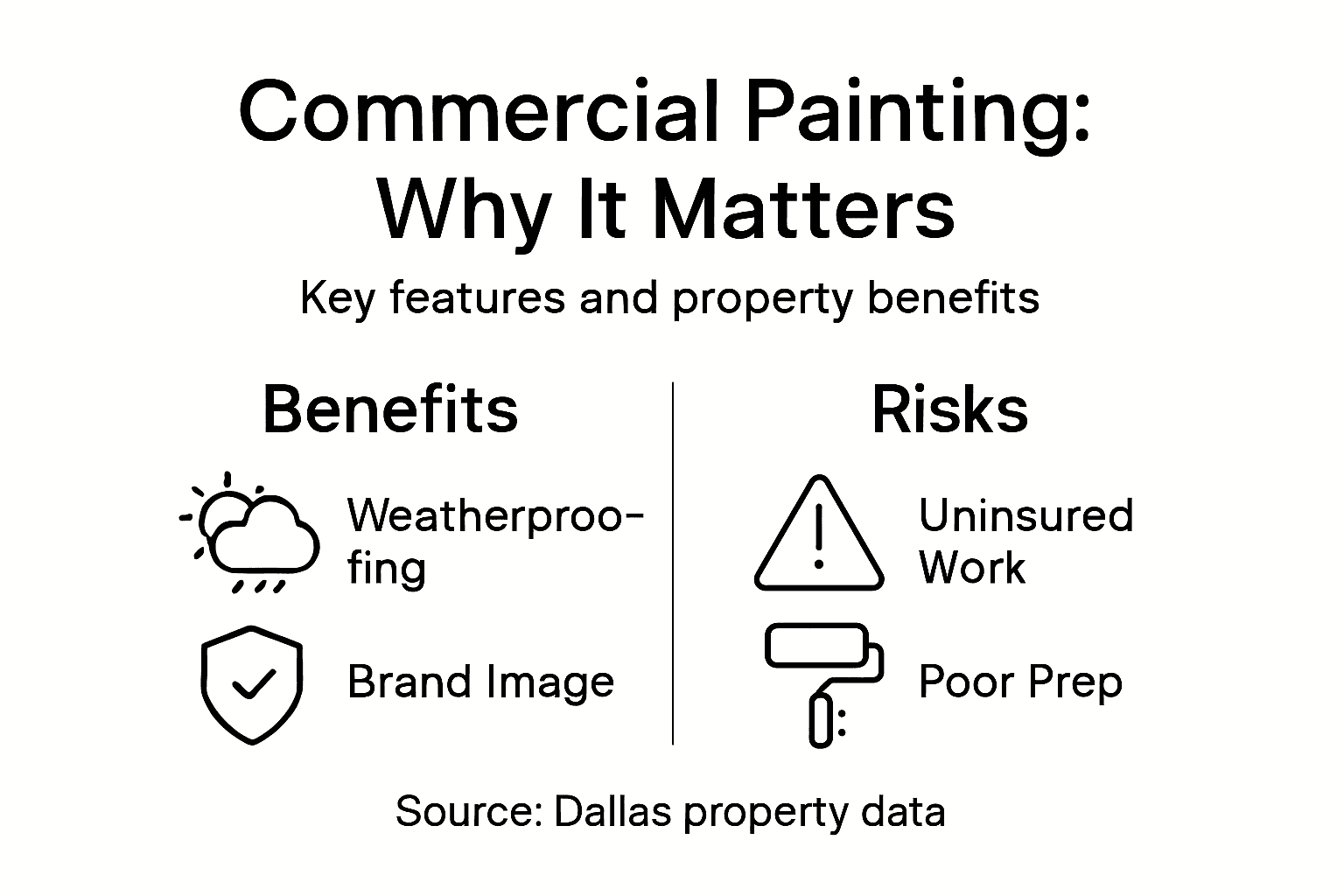
What Drives Commercial Painting Costs
Pricing depends on multiple factors beyond simple square footage. Project complexity, coating types, labor skill levels, and site conditions all affect your final invoice.
Major cost factors include:
- Material expenses varying by paint grade, specialty coatings, and coverage needs
- Surface preparation often consuming 40 percent of project time and cost
- Labor hours determined by crew size, complexity, and accessibility
- Project duration influenced by weather windows and cure times
- Compliance costs for safety protocols and regulatory adherence
For Dallas properties, expect to budget more for exterior work. North Texas heat accelerates paint curing, affecting scheduling. Humidity and temperature swings require premium coatings designed for regional conditions.
Compare key cost and risk factors in commercial painting for better budgeting:
| Cost/Risk Area | Business Consideration | Example in Dallas-Fort Worth |
|---|---|---|
| Labor Quality | Skilled crews prevent rework | Premium paid for top contractors |
| Material Selection | Right paints extend lifespan | UV-resistant coatings for exteriors |
| Schedule Delays | Impact productivity and reputation | Weather changes cause rescheduling |
| Regulatory Compliance | Avoids fines and failed inspections | Follows Texas safety requirements |
| Insurance Coverage | Reduces owner liability | Contractor provides proof of coverage |
| Safety Protocols | Prevents injuries and project shutdowns | Required safety certifications |
Safety Risks and Worker Protection
Commercial painting requires strict safety protocols to manage chemical exposure, falls, and environmental hazards. Professional contractors maintain rigorous risk assessment and safety management plans throughout projects.
Critical safety considerations involve:
- Personal protective equipment including respirators, safety glasses, and protective clothing
- Proper ventilation preventing toxic fume accumulation in enclosed spaces
- Chemical handling following strict procedures for flammable or hazardous materials
- Fall prevention using appropriate scaffolding and safety systems for elevated work
- Training requirements ensuring workers understand hazard recognition and response
Contractors who dismiss safety concerns aren’t saving money—they’re creating liability exposure that could cost thousands in worker injuries or regulatory violations.
The liability and insurance implications matter to you. Uninsured contractors leave your property responsible for worker injuries. Improper chemical handling damages building systems or ground contamination.
Financial and Operational Risks
Cutting costs through inexperienced contractors creates rework costs. Poor surface preparation requires repainting within months. Wrong coating selections fail prematurely. Improper application creates liability for durability claims.
Operationally, poor planning disrupts business. Professional projects schedule work for minimal operational impact. Unplanned delays cost money in lost productivity and customer inconvenience.
Pro tip: Request proof of current liability insurance, worker’s compensation coverage, and safety certifications before hiring—these protections matter as much as the price quote when evaluating commercial painting contractors.
Selecting the Right Commercial Painting Partner
Not all painting contractors deliver the same results. Your choice directly impacts project success, budget adherence, and long-term durability. Selecting the right partner requires more than comparing price quotes.
What Qualifies a Strong Painting Partner
Selecting the right commercial painting partner involves evaluating contractors based on industry standards adherence, insurance coverage, technical expertise, and project management capabilities. A qualified partner demonstrates proven experience, regulatory compliance, and strong client references.
Look for contractors who show:
- Industry certifications proving adherence to commercial painting standards
- Current insurance and bonding protecting your property during work
- Documented safety records and worker training compliance
- Local experience with Dallas-Fort Worth climate and building types
- Financial stability ensuring they complete projects as promised
- Detailed references from comparable commercial projects
Don’t just accept claims. Request proof. Verify licenses with the Texas Department of Licensing and Regulation. Call past clients. Site visits to completed projects reveal quality better than any sales pitch.
Evaluating Reliability and Capacity
Effective contractor selection requires assessing supplier qualifications and contractor reliability through systematic vetting of past performance. A strong evaluation process supports informed decision-making for successful partnerships.
Key questions to ask:
- Can they meet your timeline without compromising quality?
- Do they maintain adequate crew size and equipment?
- How do they handle project communication and scheduling?
- What’s their process for managing changes and unexpected issues?
A contractor who listens to your specific needs and asks clarifying questions is more likely to deliver what you actually want than one who promises everything.
For Dallas properties, experience matters. Regional weather patterns, local building codes, and common structural issues differ from other markets. A contractor unfamiliar with North Texas conditions may recommend wrong materials or miss existing problems.
Making Your Final Decision
Compare proposals on more than price. Look for detailed scope definitions, material specifications, timelines, and warranty terms. Vague proposals hide problems that surface mid-project when costs spike.
Get everything in writing. What’s included? What triggers extra charges? Who handles scheduling disruptions? Clear contracts prevent disputes.
Pro tip: Request a project timeline breaking work into phases with specific start and completion dates—this accountability measure separates professional contractors from those who overpromise and underdeliver.
Protect and Enhance Your Dallas Commercial Property with Expert Painting Services
Commercial painting is more than just aesthetics. It safeguards your building against harsh North Texas weather, prevents costly repairs, and upholds your professional image. If you want durable coatings, precise surface preparation, and compliance with industry standards, you need a trusted partner who understands your unique business needs.
At Astrotech Construction we specialize in commercial renovation solutions tailored for Dallas-Fort Worth properties. Backed by years of experience, we deliver high-quality workmanship that ensures lasting protection and an impressive appearance. Explore our range of services beyond painting to maintain and improve your commercial property’s value and appeal by visiting our Uncategorized – Astrotech Construction page.
Don’t let weather damage or outdated facilities impact your bottom line. Contact us today at Astrotech Construction for a consultation and discover how professional commercial painting combined with expert remodeling can elevate your business image and protect your investment.
Frequently Asked Questions
What is commercial painting?
Commercial painting is a specialized service that involves applying protective coatings to commercial and industrial properties. It differs from residential painting by focusing on durability, adherence to industry standards, and using professional-grade materials tailored for high-traffic areas.
Why is surface preparation important in commercial painting?
Surface preparation is crucial because it ensures that the paint adheres properly and lasts longer. Proper preparation includes cleaning, scraping, priming, and repairing surfaces, preventing issues like peeling and flaking paint in the future.
What types of projects fall under commercial painting?
Commercial painting projects can vary widely and include types such as office buildings, retail spaces, healthcare facilities, industrial sites, educational institutions, and hospitality venues. Each type requires unique materials and techniques based on its specific functions and challenges.
How do safety protocols factor into commercial painting?
Safety protocols are essential in commercial painting to manage risks related to chemical exposure, falls from heights, and environmental hazards. Professional contractors implement strict safety measures, including personal protective equipment and proper ventilation, to ensure a safe working environment.
Recommended
- What Is Interior Painting and Its Impact on Home Value – Astrotech Construction
- What Is Exterior Painting and Why Quality Matters – Astrotech Construction
- Why Renovate Commercial Property: Boost Value and Success – Astrotech Construction
- How to Plan Commercial Renovations for Lasting Value – Astrotech Construction
- Architectural Significance: Why It Matters for Preservation –
- 7 Essential Commercial Building Maintenance Tips for Success – HVAC Service and Repair | Louisville, KY | Project Heating & Cooling