
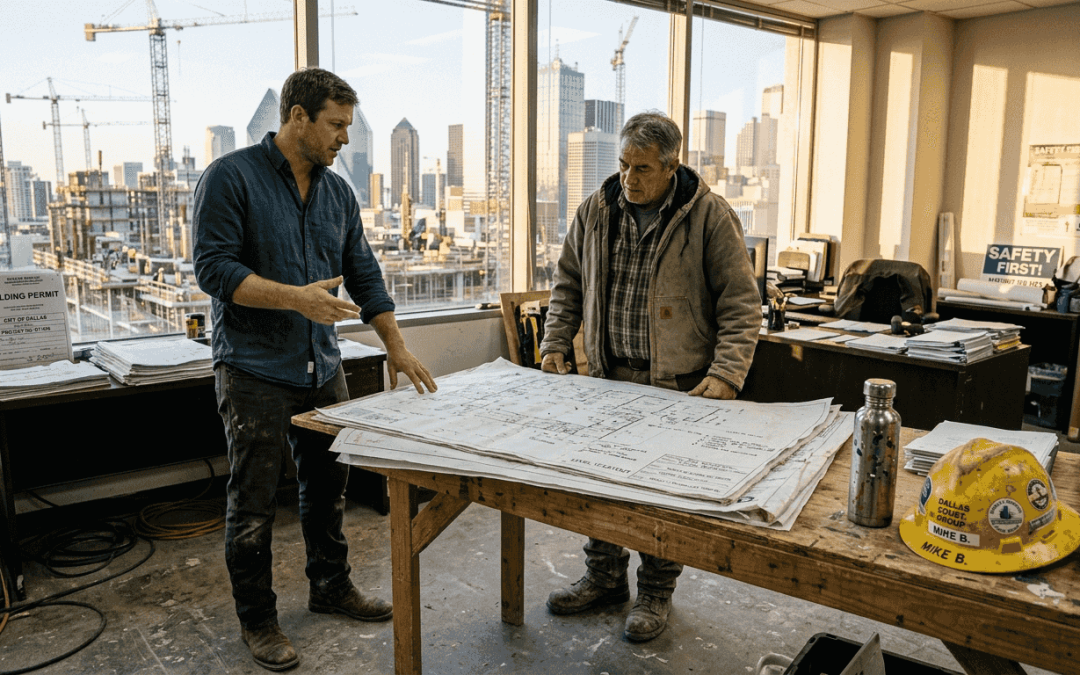
Commercial renovation is frequently misunderstood as simple cosmetic updates, yet it involves strategic planning, strict regulatory compliance, and design tailored to specific business objectives. Dallas-Fort Worth property owners face unique regional challenges including Texas building codes, permit requirements, and market dynamics that shape successful projects. This guide clarifies what commercial renovation truly encompasses, from storefront transformations to full tenant build-outs, and provides actionable insights for navigating the process effectively. Whether you manage retail spaces, office buildings, or mixed-use properties, understanding renovation fundamentals helps you maximize your investment and avoid costly mistakes.
Table of Contents
- Understanding Commercial Renovation: Scope And Benefits
- Permits, Compliance, And Regulations In Texas Commercial Renovations
- Common Commercial Renovation Types In Dallas-Fort Worth
- Planning And Executing A Successful Commercial Renovation
- Discover Expert Commercial Renovation Services In Dallas-Fort Worth
- Frequently Asked Questions
Key takeaways
| Point | Details |
|---|---|
| Strategic scope | Commercial renovation combines aesthetics, functionality, and regulatory compliance to support business growth |
| Texas regulations | Projects must meet International Building Code standards and secure proper permits to avoid violations |
| Project variety | Common renovations include storefront upgrades, interior remodels, and tenant build-outs with varying complexity |
| Value creation | Well-executed renovations boost property value, customer traffic, and operational efficiency |
| Expert coordination | Professional planning and subcontractor management ensure timely, compliant project completion |
Understanding commercial renovation: scope and benefits
Commercial renovation involves substantial remodeling that improves aesthetics, functionality, and code compliance for business properties. Unlike residential projects, commercial work must address higher traffic volumes, specialized equipment needs, and stricter safety standards. Building refresh projects in Dallas transform retail stores, offices, and restaurants to enhance brand image and operational efficiency.
Typical commercial renovation projects include:
- Storefront and facade updates that improve curb appeal and attract customers
- Interior space reconfigurations optimizing workflow and customer experience
- Lobby and reception area modernization creating strong first impressions
- Tenant build-outs customizing raw space for specific business operations
- Systems upgrades improving HVAC, electrical, and plumbing infrastructure
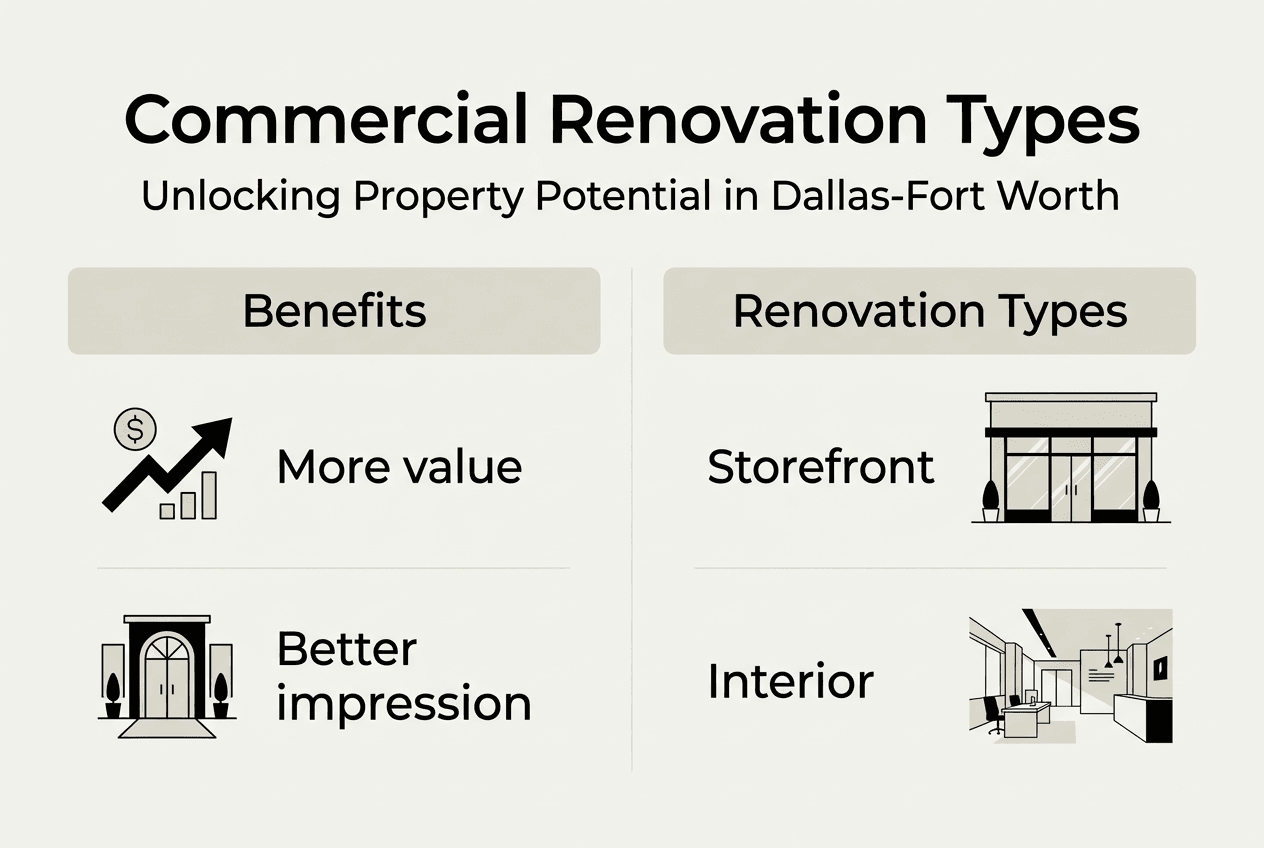
The benefits extend far beyond visual improvements. Renovated spaces directly impact customer perceptions and purchasing decisions. A modern, well-designed environment signals professionalism and attention to detail. Employees work more productively in updated facilities with better lighting, climate control, and functional layouts. Property values increase substantially when renovations address both aesthetic and structural improvements.
For Dallas-Fort Worth business owners, what is commercial remodeling means unlocking your property’s potential through strategic improvements. Well-planned renovations support business growth by creating spaces that adapt to changing needs. Retail stores gain flexible display areas, offices accommodate hybrid work models, and restaurants optimize kitchen workflows. These functional improvements translate directly to competitive advantages in crowded markets.
Commercial renovation also addresses deferred maintenance before minor issues become expensive emergencies. Aging electrical systems, deteriorating roofs, and outdated HVAC units operate inefficiently and risk sudden failures. Proactive renovation prevents business interruptions and reduces long-term operating costs through modern, energy-efficient systems.
Permits, compliance, and regulations in Texas commercial renovations
Texas commercial renovations must comply with the International Building Code, which sets minimum safety and construction standards statewide. Commercial building remodeling in Texas requires navigating a complex network of permits to avoid costly violations. Local jurisdictions enforce these codes through plan reviews and inspections at various construction stages.
Securing proper permits protects you from legal liability and ensures work meets safety standards. Unpermitted renovations create serious problems when discovered during property sales, insurance claims, or routine inspections. Fines accumulate daily until violations are corrected, and you may need to demolish completed work that doesn’t meet code requirements. Future tenants and buyers scrutinize permit histories, making unpermitted work a significant liability.
Key regulatory considerations include:
- Building permits for structural changes, electrical work, and plumbing modifications
- Fire safety compliance including sprinkler systems, emergency exits, and alarm installations
- ADA accessibility requirements ensuring equal access for people with disabilities
- Zoning approvals confirming your intended use matches property designations
- Environmental permits for projects affecting drainage, waste systems, or hazardous materials
Large projects trigger additional oversight. Projects over $50,000 require TDLR registration for Architectural Barriers compliance, ensuring accessibility for individuals with disabilities. This Texas-specific requirement adds documentation and review steps that extend project timelines. Property owners must budget time for TDLR submissions, reviews, and potential revisions.
Pro Tip: Start permit applications 6 to 8 weeks before planned construction to account for review cycles and revision requests, preventing costly delays.
Navigating Dallas-Fort Worth permit processes requires understanding local jurisdiction variations. Each city maintains specific submittal requirements, fee structures, and inspection protocols. A remodeling permit guide DFW helps property owners prepare complete applications that avoid rejection and resubmittal delays. Experienced contractors familiar with local building departments streamline approvals through established relationships and process knowledge.
Compliance extends beyond initial approvals to ongoing inspections throughout construction. Inspectors verify work at critical stages like foundation, framing, electrical rough-in, and final completion. Failed inspections halt progress until corrections are made, emphasizing the importance of quality workmanship. Following compliance tips for remodels Dallas Fort Worth ensures your project passes inspections on schedule.
Common commercial renovation types in Dallas-Fort Worth
Dallas-Fort Worth commercial properties undergo three primary renovation types, each serving distinct business objectives and requiring different planning approaches. Understanding these categories helps you identify the right solution for your property goals and budget constraints.
Storefront remodeling focuses on exterior improvements that maximize visibility and foot traffic. These projects deliver the quickest return on investment by immediately enhancing curb appeal. New signage, updated facades, modern entryways, and improved lighting attract customers and differentiate your business from competitors. Storefront renovations typically complete within 4 to 8 weeks with minimal interior disruption, making them ideal for businesses that cannot afford extended closures.

Interior remodels transform functional spaces to improve operations and visitor experiences. Popular commercial renovations in Dallas-Fort Worth include lobby upgrades, office reconfigurations, restaurant kitchen modernization, and retail floor plan optimization. These projects require careful coordination to minimize business interruptions. Phased construction allows portions of your facility to remain operational while work progresses in isolated areas.
Tenant build-outs represent the most comprehensive renovation type, involving complete demolition and reconstruction of interior spaces. Developers and property owners use build-outs to customize raw commercial space for specific tenant needs. These projects include:
- Demolition of existing partitions, finishes, and outdated systems
- Installation of new electrical, plumbing, and HVAC infrastructure
- Construction of custom layouts matching tenant operational requirements
- Integration of specialized equipment and technology systems
- Finish work including flooring, paint, millwork, and fixtures
The following table compares renovation types by key factors:
| Factor | Storefront Remodel | Interior Remodel | Tenant Build-Out |
| — | — | — |
| Typical timeline | 4 to 8 weeks | 8 to 16 weeks | 12 to 24 weeks |
| Budget range | $50,000 to $150,000 | $100,000 to $500,000 | $200,000 to $1,000,000+ |
| Business disruption | Minimal | Moderate | Significant |
| Permit complexity | Low | Moderate | High |
| ROI timeline | 6 to 12 months | 12 to 24 months | 24 to 36 months |
Modern renovations incorporate custom millwork, hardware and fixtures that reinforce brand identity while improving functionality. Carefully selected finishes create cohesive environments that resonate with target customers. Retail spaces use displays and lighting to showcase products effectively. Professional offices project credibility through quality materials and thoughtful design. Restaurants balance aesthetic appeal with operational efficiency in kitchen and dining areas.
Pro Tip: Prioritize renovation types based on immediate business needs and available capital, starting with improvements that deliver measurable customer or operational benefits within 12 months.
Exploring commercial renovation examples DFW property owners have completed provides inspiration and realistic expectations for your project. Case studies reveal common challenges, budget considerations, and timeline factors specific to Dallas-Fort Worth market conditions. Learning from similar projects helps you avoid mistakes and make informed decisions throughout your renovation journey.
Planning and executing a successful commercial renovation
Successful commercial renovations begin with comprehensive planning that establishes clear budgets, realistic timelines, and defined project scopes. Rushed planning leads to cost overruns, delays, and compromised quality. Invest time upfront to research options, gather multiple bids, and develop contingency plans for unexpected issues.
Establish your budget by obtaining detailed estimates from qualified contractors. Include 15 to 20 percent contingency funds for unforeseen conditions like hidden structural damage or code upgrades required during permit review. Careful planning and transparent progress reporting are critical for renovation success. Break your budget into categories including demolition, construction, systems, finishes, permits, and professional fees to track spending accurately.
Critical path scheduling identifies tasks that directly impact project completion dates. This method prioritizes activities that cannot be delayed without extending the overall timeline. Understanding your project’s critical path helps you allocate resources effectively and make informed decisions when issues arise. Non-critical tasks offer flexibility for adjustments without affecting completion dates.
Effective coordination practices include:
- Weekly progress meetings with all subcontractors to address conflicts and adjust schedules
- Detailed material procurement schedules preventing delays from long lead-time items
- Quality control checkpoints at each construction phase ensuring work meets specifications
- Regular communication with building officials maintaining positive inspection relationships
- Documentation systems tracking changes, decisions, and approvals for future reference
Subcontractor coordination requires strategic sequencing to minimize conflicts and downtime. Electrical, plumbing, and HVAC trades must coordinate rough-in work before drywall installation. Finish trades like painters, flooring installers, and millwork specialists need clean, completed spaces. Poor coordination creates expensive rework when trades damage each other’s completed work or discover conflicts requiring design changes.
Tenant and customer considerations significantly impact renovation planning. Retail businesses schedule intensive work during off-peak seasons or overnight hours. Office renovations often proceed in phases, relocating employees to completed areas while work continues elsewhere. Restaurants may close entirely for kitchen renovations but maintain partial service during dining room updates. Clear communication with affected parties prevents frustration and maintains goodwill.
Pro Tip: Engage experienced project managers who understand Dallas-Fort Worth’s market conditions, contractor networks, and regulatory environment to navigate challenges efficiently.
Transparent estimating and progress reporting build trust and enable informed decision-making. Detailed estimates break costs into line items you can evaluate and adjust. Regular progress reports compare actual spending and timelines against projections, highlighting variances early when corrective action is most effective. This transparency helps you understand trade-offs when changes become necessary.
Following a commercial renovation explained guide provides frameworks for managing complex projects from conception through completion. Structured approaches reduce stress and improve outcomes by establishing clear processes for decision-making, communication, and quality control.
Discover expert commercial renovation services in Dallas-Fort Worth
Navigating commercial renovation complexity requires experienced partners who understand Dallas-Fort Worth’s unique market dynamics and regulatory landscape. Astrotech Construction specializes in transforming business properties through comprehensive renovation services tailored to your specific goals and budget. Their team manages every aspect from initial planning and permit acquisition through final inspections and occupancy.
Explore our remodeling services to discover how strategic renovations enhance your property’s value and functionality. Their portfolio showcases diverse projects including retail transformations, office modernizations, and restaurant build-outs that demonstrate proven expertise across commercial property types. Review commercial renovation examples DFW property owners have completed to envision possibilities for your space. Professional guidance ensures your project meets all Texas regulations while optimizing your investment through efficient execution and quality craftsmanship. Contact Astrotech today to discuss your renovation vision and receive expert recommendations based on years of Dallas-Fort Worth market experience. Their commitment to transparent communication and detailed planning helps you navigate compliance tips for remodels Dallas requirements confidently.
Frequently asked questions
What exactly does commercial renovation include?
Commercial renovation encompasses structural modifications, interior reconfigurations, systems upgrades, and aesthetic improvements to business properties. Projects range from simple storefront updates to complete tenant build-outs involving demolition and reconstruction. Unlike maintenance, renovation substantially changes spaces to improve functionality, compliance, or market appeal.
How long do commercial renovation projects typically take in Dallas-Fort Worth?
Project duration varies by scope and complexity. Storefront remodels complete in 4 to 8 weeks, interior renovations require 8 to 16 weeks, and full tenant build-outs extend 12 to 24 weeks or longer. Permit approval timelines, material availability, and coordination complexity influence schedules. Weather and seasonal factors specific to Dallas-Fort Worth also affect outdoor work timelines.
What permits do I need for commercial renovation in Texas?
Texas commercial renovations require building permits for structural, electrical, plumbing, and mechanical work. Projects exceeding $50,000 need Texas Department of Licensing and Regulation registration for Architectural Barriers compliance. Additional permits may include fire safety, zoning approvals, and environmental clearances depending on project scope. Local jurisdictions enforce specific requirements, so consult your city’s building department early in planning.
How does commercial renovation increase property value?
Renovations boost property value through improved aesthetics, enhanced functionality, updated systems, and better code compliance. Modern spaces command higher rents and attract quality tenants more quickly than outdated properties. Energy-efficient systems reduce operating costs, increasing net operating income. Well-documented, permitted renovations provide buyers confidence in property condition and reduce perceived investment risk.
Should I hire professional contractors or manage renovation myself?
Professional contractors bring expertise in planning, permitting, subcontractor coordination, and problem-solving that prevents costly mistakes. They maintain insurance, understand code requirements, and have established supplier relationships. Property owners managing projects themselves risk permit violations, quality issues, and extended timelines. For projects exceeding basic cosmetic updates, professional management delivers better outcomes and protects your investment through proper execution and documentation.
Recommended
- Commercial Renovation Explained: Essential Guide for 2025 – Astrotech Construction
- 7 Inspiring Commercial Renovation Examples for DFW Owners – Astrotech Construction
- What Is Commercial Remodeling and Why It Matters – Astrotech Construction
- 7 Essential Home Improvement Tips 2025 for Dallas Owners – Astrotech Construction
- Historic Greene and Greene renovations: preserve legacy –