
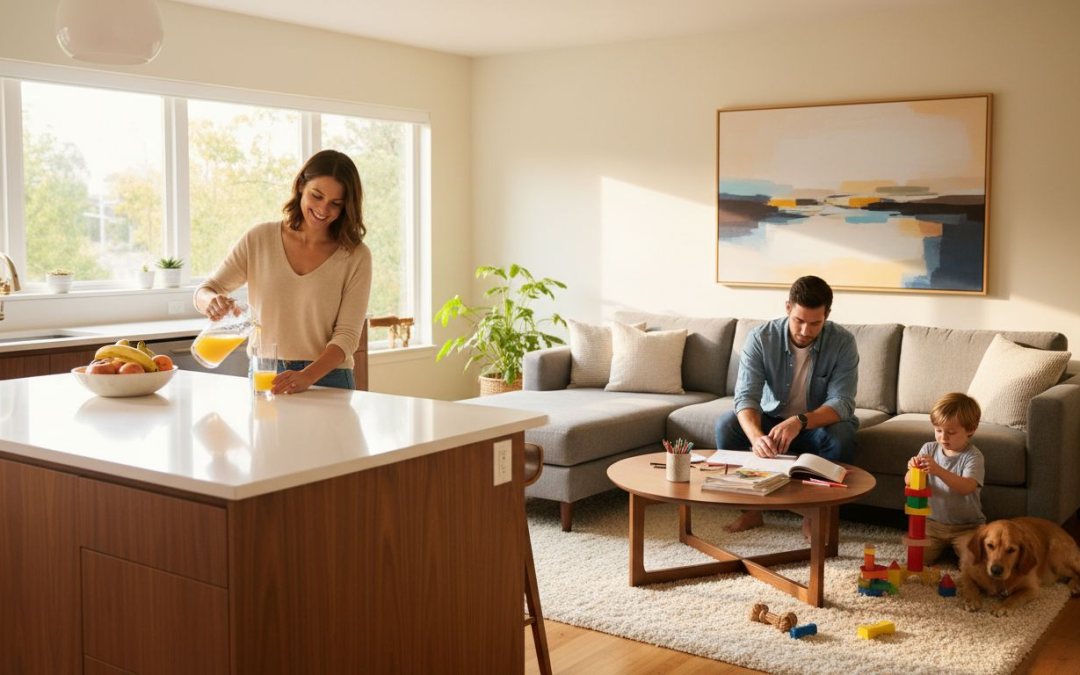
Most American homebuyers are willing to pay a premium for open concept layouts that create brighter, more connected spaces. In Southlake, Texas, many homeowners are rethinking traditional interiors to maximize square footage and boost resale value. Understanding open concept remodeling helps you avoid costly mistakes and achieve seamless design that fits your lifestyle. This overview uncovers common misconceptions, practical features, and essential strategies for crafting a functional and visually appealing open concept home.
Table of Contents
- Defining Open Concept Remodeling And Common Misconceptions
- Types Of Open Concept Layouts For Homes
- Core Features And How Open Concept Works
- Structural And Safety Requirements For Remodeling
- Costs, Challenges, And Comparison To Traditional Layouts
- Mistakes To Avoid And Best Practices
Key Takeaways
| Point | Details |
|---|---|
| Open Concept Remodeling | This design approach enhances spatial flow by removing walls but requires careful planning to address individual lifestyle needs and potential trade-offs. |
| Structural Requirements | Professional structural assessments are necessary to ensure safety and compliance when removing walls, as these changes impact the overall integrity of the home. |
| Costs and Considerations | Remodeling costs can range from $5,000 to $25,000, emphasizing the need for comprehensive budgeting that includes long-term value and functionality. |
| Best Practices | Focus on zoning techniques and acoustic management to create distinct functional spaces while maintaining an open feel that enhances livability. |
Defining Open Concept Remodeling and Common Misconceptions
Open concept remodeling represents a transformative approach to residential design, fundamentally reimagining interior spaces by strategically removing walls between primary living areas. This architectural strategy creates seamless, multifunctional zones that enhance spatial flow and visual connectivity. Open concept layouts challenge traditional room segmentation by merging kitchen, dining, and living spaces into one integrated environment.
Contrary to popular belief, open concept remodeling isn’t a universal solution that works identically for every home. Homeowners often mistakenly assume that removing walls automatically creates more space or improves functionality. In reality, successful open concept design requires careful planning, consideration of individual lifestyle needs, and understanding potential trade-offs. Noise transmission, reduced privacy, and increased visibility of household activities are critical factors that must be evaluated before undertaking such a significant renovation.
The most effective open concept remodeling strategies involve strategic compromises. Professional designers frequently recommend partial wall solutions, visual anchors, and carefully planned sight lines to maintain spatial definition while preserving an open feel. These nuanced approaches allow homeowners to achieve a sense of openness without completely sacrificing architectural structure or functional separation between living zones.
Pro Tip: Spatial Harmony: Before committing to a full open concept remodel, create temporary barriers using furniture or room dividers to test how different areas interact and ensure the layout genuinely enhances your living experience.
Types of Open Concept Layouts for Homes
Open concept layouts have evolved far beyond simple room merging, offering diverse design possibilities tailored to different lifestyles and architectural preferences. Contemporary open floor plans range from minimalist configurations to complex multi-zone arrangements that strategically balance connection and functional separation.
Traditional open concept designs typically focus on integrating kitchen, dining, and living areas into a seamless environment. However, modern interpretations have expanded to include more nuanced approaches. Loft-style layouts emphasize vertical openness with high ceilings and minimal interior barriers, while hybrid designs incorporate strategic partial walls or glass partitions to create visual connectivity without complete spatial dissolution. These approaches allow homeowners to customize their living spaces according to specific aesthetic and practical requirements.
Architecturally sophisticated open concept layouts often incorporate innovative zoning techniques. Multi-level open concept designs can transform residential spaces by creating visual connections between different floors, utilizing features like open staircases, mezzanine levels, and transparent railings. Such configurations not only enhance spatial perception but also facilitate natural light transmission and create a sense of expansiveness that traditional segmented floor plans cannot achieve.
Pro Tip: Zonal Definition: Use area rugs, furniture placement, and subtle color variations to create distinct functional zones within an open concept layout without introducing physical barriers.
Core Features and How Open Concept Works
Open concept design fundamentally transforms interior spaces by eliminating traditional room barriers, creating a fluid and interconnected living environment. Modern open floor plan configurations leverage architectural strategies that maximize spatial perception, natural light transmission, and functional flexibility. This approach goes beyond mere aesthetic appeal, reimagining how individuals interact within their living spaces.
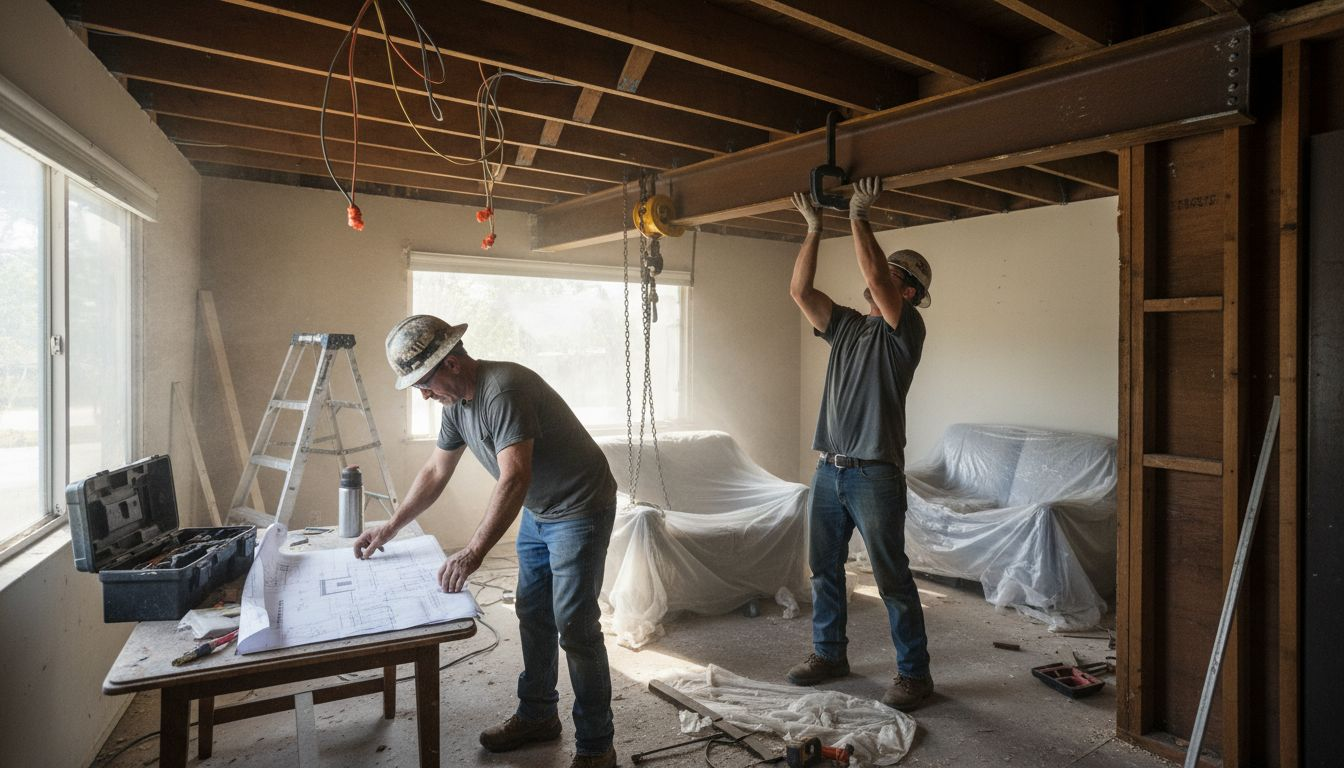
The core mechanics of open concept design involve strategic structural modifications that maintain architectural integrity while enhancing visual and functional connectivity. Structural elements like support beams, carefully positioned columns, and intelligent load-bearing solutions replace traditional walls, ensuring the home’s structural stability. These technical considerations allow designers to create expansive, uninterrupted spaces that feel simultaneously open and purposefully defined, enabling seamless transitions between cooking, dining, working, and relaxation zones.
Beyond physical restructuring, open concept layouts prioritize sensory and social experiences. The elimination of physical barriers facilitates improved communication, allows natural light to penetrate deeper into living spaces, and creates a sense of spaciousness that traditional segmented floor plans cannot achieve. This design philosophy transforms homes from a collection of isolated rooms into dynamic, interactive environments that adapt to changing lifestyle needs, supporting everything from family gatherings to remote work scenarios.
Pro Tip: Acoustic Harmony: Install sound-absorbing materials like area rugs, fabric wall hangings, and strategically placed furniture to manage noise levels and maintain acoustic comfort in your open concept space.
Structural and Safety Requirements for Remodeling
Open concept remodeling demands sophisticated structural engineering to ensure home safety and long-term stability. Comprehensive structural assessments are critical for identifying load-bearing walls, calculating appropriate support beam dimensions, and maintaining the overall architectural integrity of the home. Homeowners must recognize that removing walls is not a simple cosmetic decision but a complex structural intervention requiring professional expertise.
The process of evaluating structural requirements involves multiple technical considerations. Professional structural engineers conduct detailed analyses to determine which walls can be safely removed, how load distributions will change, and what reinforcement strategies are necessary. This typically includes assessing foundation strength, roof support systems, and potential stress points that could compromise the building’s structural framework. Advanced techniques like steel beam installations, additional column placements, and strategic reinforcement help redistribute structural loads while preserving the home’s essential architectural stability.
Building code compliance represents another crucial aspect of structural remodeling. Local municipalities enforce specific regulations governing structural modifications, requiring precise documentation, professional inspections, and adherence to safety standards. These requirements protect homeowners by ensuring that renovations meet minimum structural integrity and safety benchmarks. Potential risks include compromised load-bearing capabilities, potential structural failure, decreased property value, and potential legal complications if modifications do not meet official building standards.
Pro Tip: Professional Verification: Always engage a certified structural engineer to conduct a comprehensive assessment before removing any walls, ensuring your open concept remodel maintains both aesthetic appeal and structural safety.
Costs, Challenges, and Comparison to Traditional Layouts
Open concept remodeling represents a significant financial investment that extends far beyond simple aesthetic upgrades. Comprehensive remodeling cost analyses reveal that transforming traditional layouts into open spaces typically ranges from $5,000 to $25,000, depending on structural complexity, home size, and required architectural modifications. Homeowners must carefully evaluate not just immediate expenses, but long-term value implications and potential return on investment.
Compared to traditional segmented layouts, open concept designs offer distinct advantages and challenges. Traditional rooms provide more defined storage and acoustic privacy, while open concepts enhance natural light transmission, create visual spaciousness, and facilitate better social interactions. Energy efficiency becomes a nuanced consideration, with open layouts potentially requiring more sophisticated heating and cooling strategies to maintain consistent temperatures across larger, interconnected spaces. Acoustic management emerges as a critical challenge, necessitating strategic sound absorption techniques to mitigate noise transfer between functional zones.
The financial and practical trade-offs of open concept remodeling extend beyond initial construction costs. Resale market trends increasingly favor flexible, interconnected living spaces, particularly among younger homebuyers who prioritize social interaction and adaptable environments. However, potential drawbacks include reduced wall space for furniture placement, increased visibility of household activities, and potential challenges with temperature regulation. Successful open concept transformations require meticulous planning, professional engineering expertise, and a nuanced understanding of individual lifestyle needs.
Here’s a comparison of open concept and traditional home layouts:
| Aspect | Open Concept Layout | Traditional Segmented Layout |
|---|---|---|
| Spatial Flow | Seamless, interconnected zones | Distinct, separated rooms |
| Natural Light | Enhances light distribution | Limited to individual spaces |
| Acoustic Privacy | Reduced, needs management | High, built-in by walls |
| Furniture Placement | Flexible, fewer wall options | More wall-based arrangements |
| Remodeling Cost Range | $5,000–$25,000 | Typically lower costs |
| Market Appeal | High, especially for millennials | Varies by demographic |
Pro Tip: Budget Projection: Create a comprehensive budget that includes not just construction costs, but also potential furniture repositioning, acoustic treatments, and potential HVAC system adjustments to ensure a holistic financial approach to your open concept remodel.
Mistakes to Avoid and Best Practices
Open concept remodeling requires strategic planning to avoid common pitfalls that can compromise both aesthetic and functional objectives. Critical design mistakes often emerge from insufficient spatial planning, where homeowners fail to establish clear functional zones within the interconnected space. Successful transformations demand thoughtful consideration of traffic flow, furniture placement, and visual cohesion to prevent the space from feeling chaotic or disorganized.
Acoustic management and lighting design represent two pivotal areas where homeowners frequently miscalculate. Without careful engineering, open concepts can become echo chambers with poor sound distribution and inconsistent illumination. Strategic solutions include implementing multilayered lighting systems, using area rugs and soft furnishings for sound absorption, and creating visual boundaries through furniture arrangement and subtle color variations. Remodeling best practices emphasize the importance of maintaining a consistent design language while preserving individual zone identities through intelligent architectural and decorative techniques.
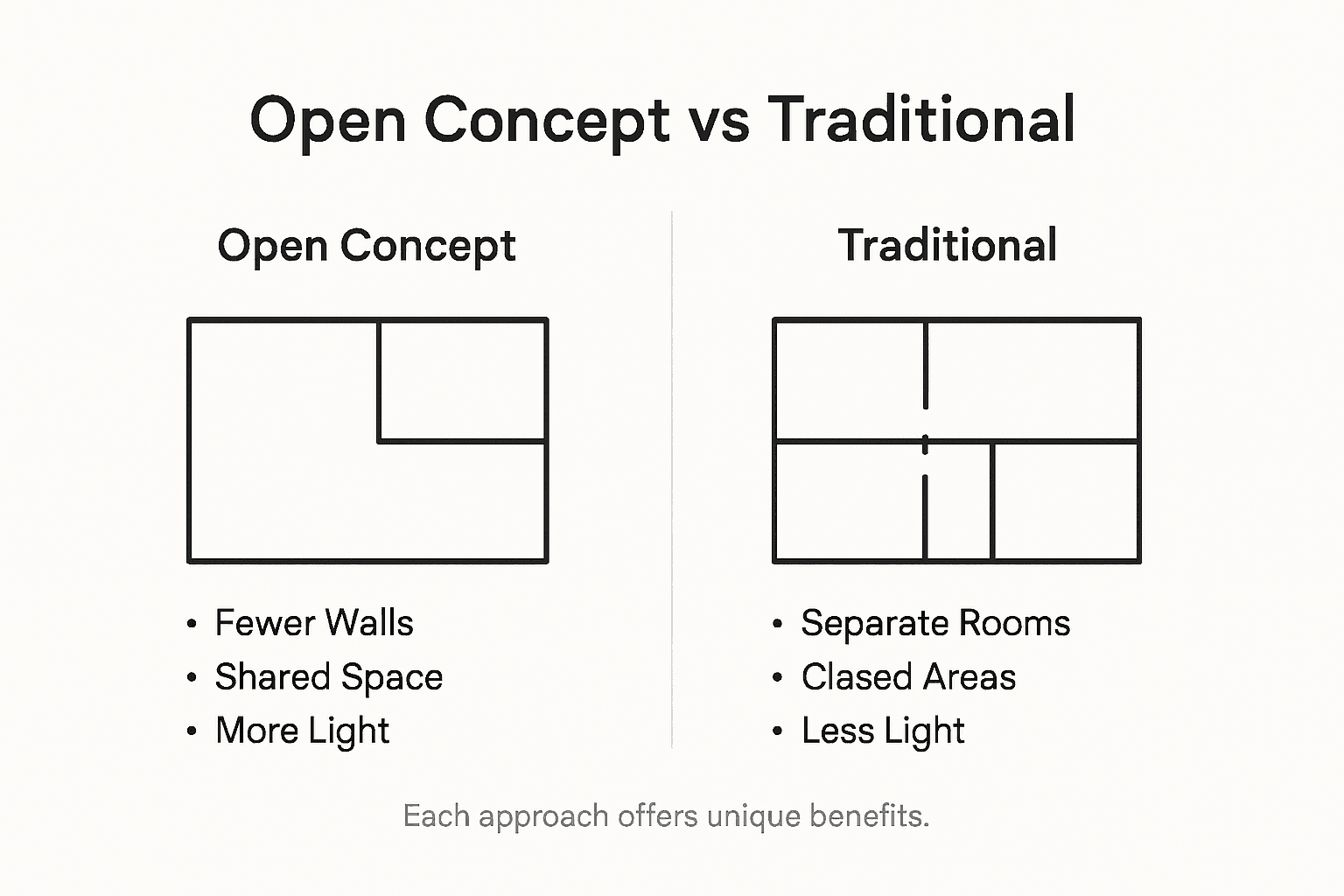
Storage challenges emerge as another critical consideration in open concept designs. Traditional segmented layouts offer more wall space for cabinetry and shelving, whereas open concepts require innovative storage solutions that maintain visual cleanliness. Homeowners must think creatively about integrating hidden storage, utilizing multi-functional furniture, and designing custom built-ins that blend seamlessly with the overall aesthetic. Successful open concept remodels balance transparency with practical functionality, ensuring that the space remains both visually appealing and highly usable.
Pro Tip: Zonal Harmony: Use area rugs, strategic furniture placement, and subtle color transitions to create distinct functional zones without introducing physical barriers in your open concept space.
Below is a summary of essential considerations for successful open concept remodeling:
| Consideration | Impact on Remodel | Professional Advice |
|---|---|---|
| Structural Integrity | Ensures home safety | Engineer assessment required |
| Acoustic Management | Controls noise transfer | Use sound-absorbing elements |
| Zoning Techniques | Defines functional spaces | Furniture and decor choices |
| Storage Solutions | Maintains usability | Use built-ins, multi-purpose |
| Budget Planning | Prevents cost overruns | Account for all expenses |
Transform Your Home with Expert Open Concept Remodeling Solutions
If you have been thinking about maximizing your living space and enhancing your home’s value through open concept remodeling but feel overwhelmed by the structural, acoustic, and design challenges, you are not alone. Many homeowners struggle with balancing spaciousness and functionality while ensuring safety and aesthetic harmony. At Astrotech Construction, we understand the important concepts like structural integrity, acoustic management, and zonal harmony discussed in the article. Our experienced team specializes in providing comprehensive remodeling services that address these pain points with precision and care.
Whether you want to remove walls safely, improve natural light flow, or create distinct functional zones without sacrificing openness, our full home remodeling and kitchen upgrade services can bring your vision to life. We combine expert structural assessments with creative design solutions to ensure your open concept space is not just beautiful but structurally sound and comfortable.
Discover how to avoid costly mistakes and maximize your investment by partnering with trusted professionals who prioritize your lifestyle needs. Learn more about our commitment to quality and how we can support your remodeling goals by visiting Astrotech Construction, exploring our full home remodeling services, or checking out our kitchen upgrades.
Ready to unlock the full potential of your home with a stunning open concept remodel that lasts?
Contact Astrotech Construction today for your personalized consultation and take the first confident step towards a home that perfectly blends openness, style, and safety. Visit us now at https://astrotechconstruction.com to get started.
Frequently Asked Questions
What are the main benefits of open concept remodeling?
Open concept remodeling enhances spatial flow, increases natural light, and promotes social interaction by merging living areas. It creates a more dynamic living environment adaptable to various activities.
What are some common misconceptions about open concept layouts?
Many homeowners mistakenly believe that removing walls automatically increases space and functionality. Successful open concept design requires careful planning, understanding individual lifestyle needs, and evaluating potential trade-offs like noise and privacy.
How do I ensure structural safety during an open concept remodel?
Engaging a certified structural engineer is crucial to assess load-bearing walls and recommend appropriate support modifications. This ensures that the home maintains structural integrity and meets building code requirements.
What are effective ways to manage acoustics in an open concept space?
To manage acoustics, incorporate sound-absorbing materials such as area rugs, fabric wall hangings, and strategic furniture placement. This helps reduce noise transfer and improves overall acoustic comfort in the space.
Recommended
- 7 Key Benefits of Kitchen Remodeling for Homeowners – Astrotech Construction
- 7 Inspiring Examples of Remodeling Projects to Elevate Your Space – Astrotech Construction
- Kitchen Remodels and ROI: Complete Homeowner Guide – Astrotech Construction
- Complete Guide to the Role of Design in Kitchen Remodeling – Astrotech Construction
- Swimming Pool Remodeling Winter Park FL | Classic Marcite