

More than 60 percent of American homeowners discover unexpected problems after beginning a major renovation. Tackling home improvement in the Dallas-Fort Worth area can feel overwhelming without a clear starting point. Whether you are upgrading for comfort or boosting your home’s value for the future, a comprehensive checklist helps you identify challenges early and stay organized every step of the way.
Table of Contents
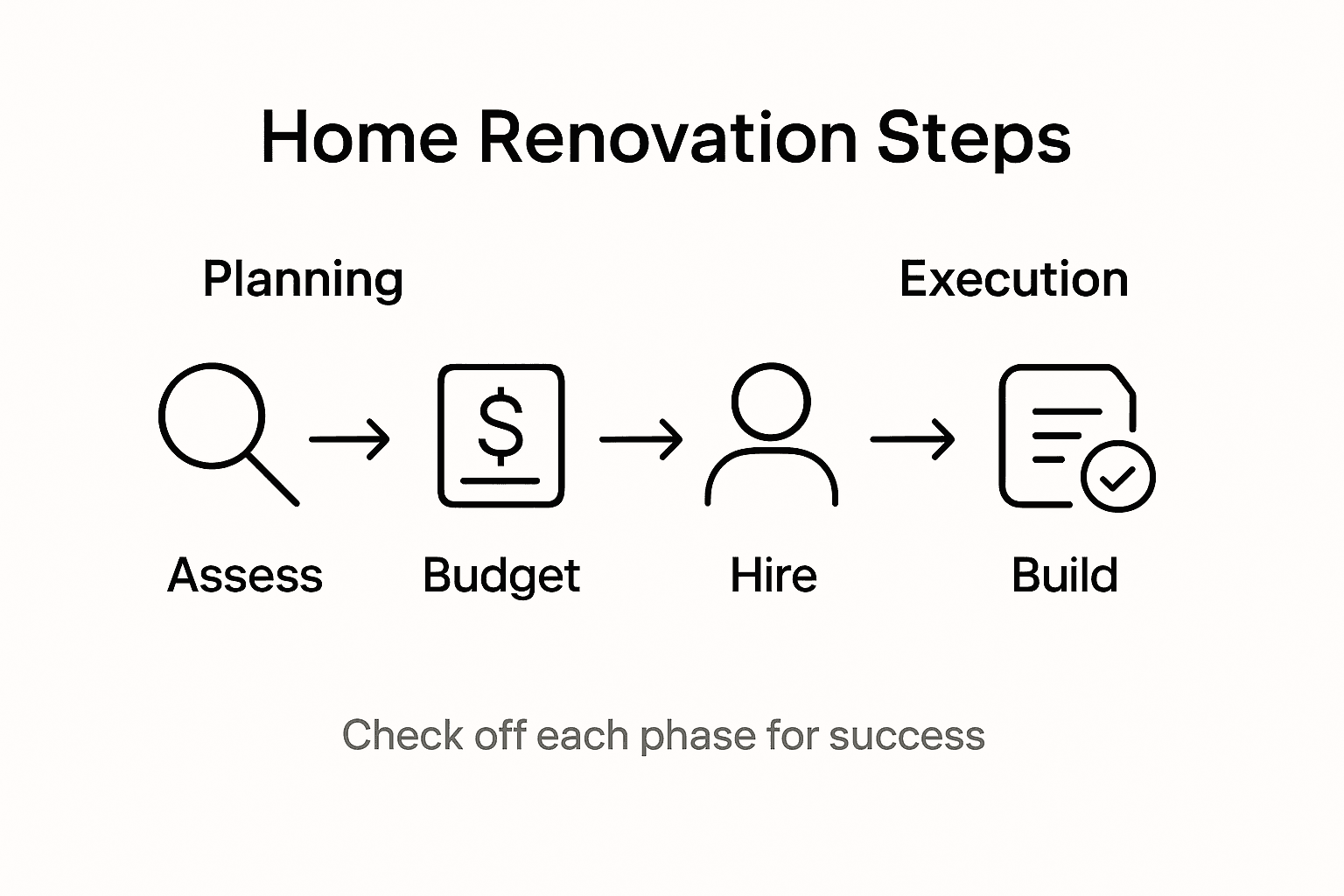
- Step 1: Assess Current Home Condition And Goals
- Step 2: Define Renovation Scope And Set Budget
- Step 3: Hire Trusted Contractors And Finalize Plans
- Step 4: Obtain Permits And Schedule Renovation
- Step 5: Oversee Construction And Monitor Progress
- Step 6: Inspect Completed Work And Confirm Quality
Quick Summary
| Key Point | Explanation |
|---|---|
| 1. Assess Home Condition Thoroughly | Conduct a visual inspection to document issues and understand how renovations can enhance comfort and value. |
| 2. Define Project Scope and Budget | Create a detailed list of desired improvements and estimate costs with a contingency fund for unexpected expenses. |
| 3. Hire Qualified Contractors | Research potential contractors, verify credentials, and compare estimates to ensure a reliable partnership for your renovations. |
| 4. Obtain Necessary Permits | Understand local building codes and gather required documentation to ensure compliance before beginning renovations. |
| 5. Conduct Final Inspection | After completion, verify work quality against plans and hold payment until all issues are resolved satisfactorily. |
Step 1: Assess Current Home Condition and Goals
Home renovation starts with a comprehensive understanding of your property’s existing condition and your specific improvement objectives. Identifying potential issues early helps you create a strategic renovation roadmap that maximizes both value and functionality.
Begin by conducting a thorough visual inspection of your home, paying close attention to structural elements, systems, and potential wear and tear. National building renovation strategies emphasize evaluating residential building stock for vulnerabilities and energy performance. Look for signs of structural damage, outdated systems, inefficient insulation, and areas that no longer meet your lifestyle needs. Document everything meticulously using photographs and detailed notes.
Your assessment should cover key areas including foundation integrity, roof condition, electrical systems, plumbing, HVAC performance, and overall energy efficiency. Consider scheduling professional inspections for a comprehensive evaluation. The goal is not just identifying problems but understanding how potential renovations can enhance your home’s comfort, functionality, and long-term value.
Pro tip: Create a spreadsheet to track your home’s current condition, prioritizing renovation needs based on urgency, budget impact, and potential return on investment.
Explore how professional inspections compare to personal assessments:
| Aspect | Personal Assessment | Professional Inspection |
|---|---|---|
| Cost | Free or minimal | Varies by service ($200-$500) |
| Thoroughness | May miss hidden problems | Detailed with specialized tools |
| Documentation | Personal notes, photos | Official reports provided |
| Objectivity | Potential for bias | Impartial, expert perspective |
Here’s a concise summary of key areas to assess during your initial home inspection:
| Home Area | Typical Issues | Impact on Renovation |
|---|---|---|
| Foundation | Cracks, moisture intrusion | Can require structural fixes |
| Roof | Missing shingles, leaks | May affect weatherproofing |
| Electrical System | Outdated wiring, tripped breakers | Requires safety upgrades |
| Plumbing | Leaks, corrosion | Can increase budget demands |
| HVAC | Poor airflow, old units | Impacts comfort, efficiency |
| Insulation | Drafts, energy loss | Affects utility bills |
Step 2: Define Renovation Scope and Set Budget
Defining your renovation project’s scope and establishing a realistic budget are critical steps that will guide your entire home improvement journey. This phase transforms your initial vision into a structured plan that balances your dreams with financial practicality.

Project scope management requires carefully outlining all necessary work to meet your renovation objectives. Start by creating a detailed list of desired improvements room by room. Be specific about what you want to change whether it involves cosmetic updates like painting and flooring or more extensive modifications such as structural alterations or systems upgrades. Consider both your immediate needs and long term home value when determining project details.
Estimating costs accurately demands thorough research and potentially consulting professionals. Break down potential expenses into categories including materials labor permits design fees and a contingency fund for unexpected challenges. Aim to include a 10 to 20 percent buffer in your budget for unforeseen circumstances. Review quotes from multiple contractors and be transparent about your budget constraints while remaining flexible about potential modifications that could impact overall project costs.
Pro tip: Create a digital spreadsheet with color-coded categories to track renovation expenses and help visualize your budget allocation in real time.
Step 3: Hire Trusted Contractors and Finalize Plans
Selecting the right contractors is a critical milestone in your home renovation journey that can determine the success of your entire project. This step transforms your carefully crafted plans into actionable reality through strategic professional partnerships.
Carefully verify contractors’ credentials and licenses to protect yourself from potential home improvement scams. Begin by requesting recommendations from trusted friends neighbors and local professional networks. Research potential contractors thoroughly by checking their online reviews professional certifications and standing with local business bureaus. Request detailed written estimates from at least three different contractors comparing not just overall pricing but also their proposed approach timeline and specific work details. During initial consultations pay close attention to their communication style professionalism and willingness to answer your questions comprehensively.
Once you have identified your preferred contractor review the proposed contract meticulously. Ensure the document comprehensively outlines project scope materials timeline payment schedule and specific expectations. Pay special attention to clauses regarding potential change orders unexpected complications and warranty provisions. For older homes especially verify that contractors follow specialized safety protocols particularly regarding lead paint and hazardous material handling. Do not hesitate to ask for clarification on any contract terms and consider having a legal professional review the agreement before signing.
Pro tip: Create a dedicated project folder with digital and physical copies of all contractor communications estimates and contracts to maintain clear documentation throughout your renovation.
Step 4: Obtain Permits and Schedule Renovation
Obtaining the necessary permits and creating a strategic renovation schedule are essential steps that transform your project from planning to reality. This phase ensures your renovation complies with local regulations while establishing a clear roadmap for implementation.
Understanding local building codes and regulations is crucial when preparing your renovation permit application. Start by researching your specific local municipality’s requirements for renovation permits. Different types of work such as structural changes electrical updates plumbing modifications or substantial remodeling will require different permit levels. Contact your local building department to get precise details about the documentation needed. Prepare comprehensive project plans including detailed drawings architectural schematics and a clear description of proposed work. Some jurisdictions offer online platforms to streamline the permit application process making it easier to submit materials and track approval status.
Once you have gathered all necessary documentation schedule an initial consultation with local building officials. This meeting helps you understand potential challenges specific requirements and allows officials to provide guidance on your submission. Be prepared to answer detailed questions about your renovation scope materials being used and potential impact on existing structures. After submitting your application allow adequate time for review and potential requests for additional information. Maintain open communication with the permitting office and be responsive to any inquiries to expedite the approval process.
Pro tip: Request a preliminary review of your permit documents before formal submission to identify and address potential issues early in the process.
Step 5: Oversee Construction and Monitor Progress
Oversight and active monitoring are critical phases that transform your renovation from theoretical plans into tangible results. This stage requires consistent engagement vigilance and strategic communication to ensure your project stays aligned with original goals and quality standards.
Effective construction planning involves defining work tasks estimating resources and scheduling sequential activities to manage project progression. Schedule regular onsite meetings with your contractors to review progress inspect work quality and address any emerging challenges. Create a structured communication protocol that includes weekly status updates detailed progress reports and a shared digital platform where all project documents photographs and communications can be tracked. Pay close attention to how each completed phase transitions into the next ensuring that work meets your agreed specifications and local building standards.
Document everything meticulously throughout the renovation process. Take periodic photographs maintain a written log of completed work and track any modifications or unexpected discoveries. Be prepared to make real time decisions if unforeseen circumstances arise such as structural issues hidden damage or material availability challenges. Maintain open professional communication with your contractor addressing concerns promptly and constructively. Remember that proactive management helps prevent minor issues from becoming costly problems and keeps your renovation moving smoothly toward completion.
Pro tip: Create a dedicated digital folder with timestamped photographs and written documentation to provide a comprehensive record of your renovation progress.
Step 6: Inspect Completed Work and Confirm Quality
The final inspection is your opportunity to ensure that every aspect of your renovation meets your expectations and adheres to the highest standards of craftsmanship. This critical phase transforms your months of planning and investment into a completed project that reflects your vision and protects your home’s value.
Final inspections are essential for verifying that renovation work complies with building codes and project specifications. Begin with a comprehensive walkthrough of the entire renovated space systematically checking each area against your original plans and contract specifications. Look for precise details such as paint quality trim alignment electrical outlet positioning tile grout consistency and overall finish. Test all new systems and fixtures thoroughly including plumbing electrical appliances heating and cooling elements to confirm proper functionality. Bring your project plans contract and a detailed checklist to document any discrepancies or areas requiring additional attention.
If you identify any issues during your inspection communicate them professionally and immediately with your contractor. Request a formal punch list of items needing correction with specific timelines for resolution. Consider hiring an independent professional inspector for an unbiased third party assessment especially for complex renovations involving structural changes or significant systems upgrades. Dont hesitate to withhold final payment until all agreed upon work meets your quality standards and all necessary documentation such as warranties and permit closure certificates are provided.
Pro tip: Take high resolution photographs of completed work from multiple angles to document the final result and maintain a record for future reference or potential warranty claims.
Transform Your Home Renovation Vision Into Reality With Expert Support
Tackling home renovation challenges like assessing your property’s condition, defining a clear budget, and managing construction progress can feel overwhelming. You want to make sure your project delivers improved comfort, enhanced value, and long-term quality without unexpected delays or hidden costs. That is where professional guidance matters most. At Astrotech Construction, we specialize in turning the detailed step-by-step goals of your home renovation checklist into a smooth, stress-free process.
With expertise in full home remodeling, kitchen and bathroom upgrades, roof replacement, and more, we help you navigate every stage from initial inspection and permitting through skilled construction and final quality review. Our commitment to quality assurance and client satisfaction means your renovation stays on track and meets the highest standards.
Ready to take the next step in your renovation journey? Explore our services to see how we bring your renovation checklist to life.
Start your renovation with confidence by scheduling a consultation today at Astrotech Construction. Let us help you create the home you deserve with professionalism, transparency, and unmatched craftsmanship.
Frequently Asked Questions
What are the first steps in the home renovation checklist for 2025?
Begin by assessing your home’s current condition and defining your renovation goals. Conduct a visual inspection, document any issues, and create a prioritized list of improvements.
How do I set a budget for my home renovation project?
To set a budget, break down potential expenses into categories like materials, labor, and permits. Include a contingency of 10 to 20 percent for unexpected costs to keep your finances on track.
What should I look for when hiring contractors for my renovation?
When hiring contractors, verify their credentials, obtain multiple estimates, and assess their communication style. Focus on their professionalism and willingness to answer your questions to ensure a smooth working relationship.
How do I know if I need permits for my renovation?
Research your local building regulations to determine if your renovation requires permits. Different types of work, such as structural changes or electrical updates, may have varying permit requirements, so contact your local building department for specifics.
What is the importance of a final inspection after renovations?
A final inspection is crucial as it verifies that all work meets your expectations and complies with building codes. Conduct a detailed walkthrough and document any discrepancies to ensure completion to your satisfaction.
How can I track the progress of my renovation project effectively?
To track progress effectively, schedule regular meetings with your contractors and maintain a structured communication protocol. Document completed work with photos and written logs to keep everything organized and transparent.
Recommended
- Step by Step Renovation Checklist for Homeowners – Astrotech Construction
- Complete Guide to Why Renovate Your Home – Astrotech Construction
- Remodeling Project Checklist: Step-by-Step Guide for Success – Astrotech Construction
- How to Plan a Home Remodel for Stress-Free Results – Astrotech Construction
- 7 Essential Renovation Timeline Steps for a Smooth Project