
Choosing the right renovation partner in the Dallas-Fort Worth area starts with understanding how vital comprehensive quality assurance is for your property’s safety and value. Without a proactive system to prevent defects, repairs can quickly become expensive headaches and threaten structural integrity. This article clarifies the core principles of quality assurance in construction, showing how systematic strategies and compliance checks protect your investment and deliver long-lasting results for homeowners and commercial property managers.
Table of Contents
- Defining Quality Assurance in Construction
- Types and Key Elements of QA Systems
- Quality Assurance vs. Quality Control
- Legal Requirements and Industry Standards
- Roles, Responsibilities, and Common Mistakes
- Risks, Costs, and Impact on Project Outcomes
Key Takeaways
| Point | Details |
|---|---|
| Comprehensive Quality Assurance is Essential | A systematic approach ensures safety and prevents errors throughout the construction process. |
| Distinction Between Quality Assurance and Quality Control | QA is proactive and focuses on prevention, while QC is reactive and addresses defects post-completion. |
| Importance of Legal Compliance | Adherence to building codes and industry standards is critical for maintaining project quality and safety. |
| Financial Impact of Quality Management | Investing in quality assurance can reduce costs and enhance project outcomes in the long term. |
Defining Quality Assurance in Construction
Quality assurance in construction represents a systematic approach to maintaining rigorous standards throughout the building process. Quality assurance is more than a simple checklist – it’s a comprehensive strategy designed to prevent errors, ensure safety, and deliver exceptional results. Quality management frameworks outline this process as a proactive method of detecting potential issues before they become costly problems.
At its core, construction quality assurance involves multiple critical components:
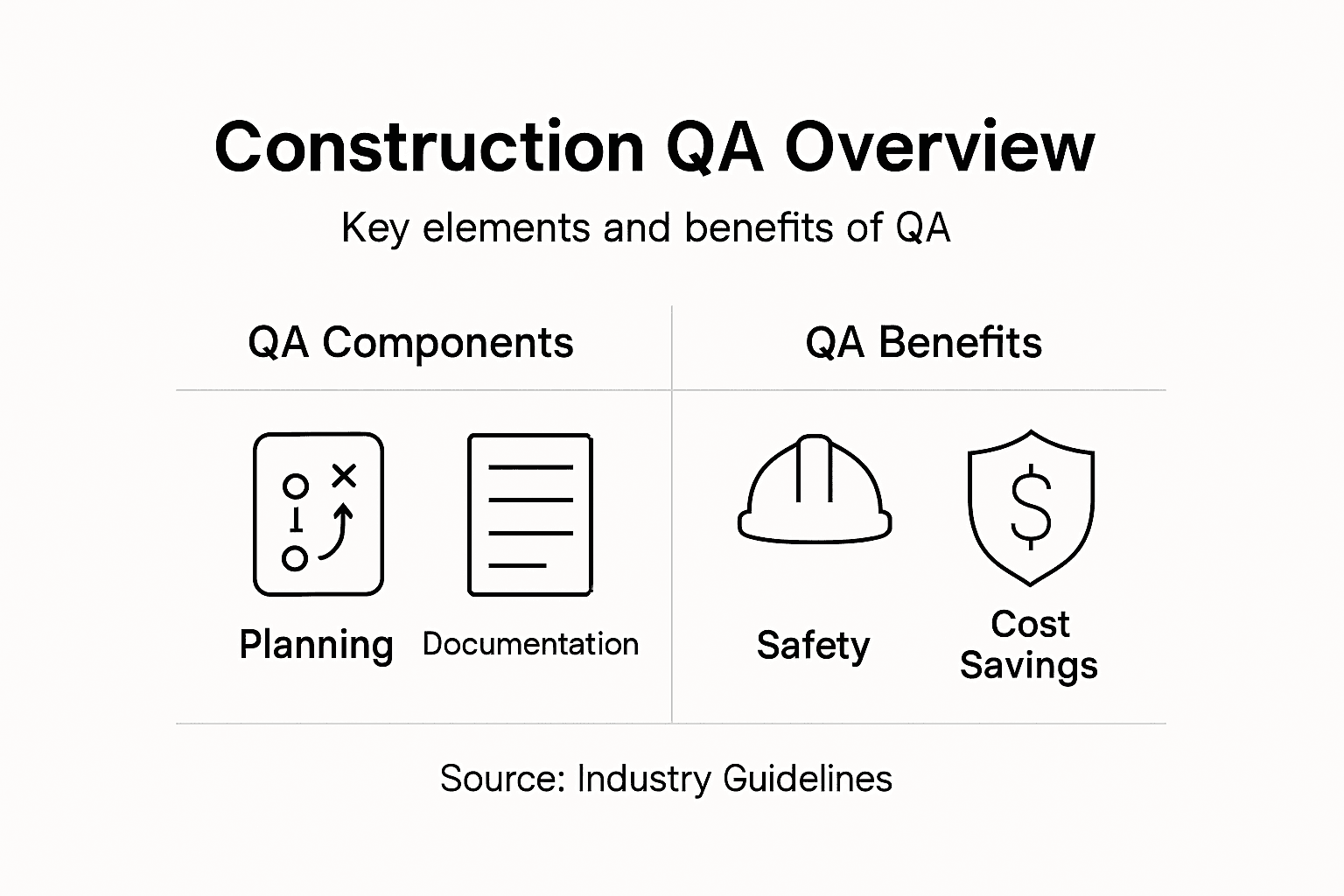
- Comprehensive project planning and documentation
- Regular technical inspections and evaluations
- Compliance verification with building codes and regulations
- Systematic tracking of construction standards
- Continuous performance monitoring
The primary objective of quality assurance extends beyond merely completing a project. It aims to create structures that are safe, durable, and aligned with client expectations. By implementing robust quality control mechanisms, construction teams can significantly reduce the risk of structural defects, safety hazards, and potential future repairs.
Quality assurance transforms construction from a reactive process into a strategic, preventative approach that protects both builders and property owners.
Proactive quality management involves multiple stages of intervention. These stages start during initial project design, continue through material selection, persist during construction phases, and conclude with final project validation. Each phase requires meticulous attention to detail and adherence to established industry standards.
Pro tip: Always request a detailed quality assurance plan from your construction team that outlines specific inspection points and compliance verification methods.
Types and Key Elements of QA Systems
Construction Quality Assurance (QA) systems represent sophisticated frameworks designed to systematically manage and maintain project quality throughout every development stage. Total Quality Management strategies provide comprehensive approaches that go beyond traditional inspection methods, integrating multiple critical elements to ensure optimal project outcomes.
Key components of effective QA systems typically include:
- Strategic project planning and documentation
- Continuous performance monitoring
- Technical compliance verification
- Risk management protocols
- Client expectation alignment
- Ongoing training and skill development
- Systematic documentation and reporting
Modern QA systems often employ multiple specialized approaches, each targeting specific project needs. Total Quality Management (TQM) represents one prominent methodology, emphasizing holistic quality integration across all organizational processes. This approach focuses not just on identifying problems, but on creating systematic prevention mechanisms that reduce potential errors from the project’s inception.
Effective Quality Assurance transforms construction from a reactive problem-solving model to a proactive quality management strategy.
Constructors typically implement QA systems through structured stages that ensure comprehensive oversight. These stages include initial planning, continuous monitoring, periodic technical assessments, and final validation. Quality management approaches help organizations develop robust frameworks that minimize risks, control costs, and maintain consistently high standards throughout project lifecycles.
Pro tip: Request a comprehensive quality assurance plan that outlines specific inspection checkpoints, verification processes, and accountability measures for your construction project.
Quality Assurance vs. Quality Control
Quality Assurance (QA) and Quality Control (QC) are complementary but distinctly different approaches to managing construction project quality. Quality management principles reveal critical differences in their fundamental approaches and objectives, helping construction professionals understand their unique roles in ensuring project excellence.
Key distinctions between Quality Assurance and Quality Control include:
- QA is proactive, QC is reactive
- QA focuses on process prevention, QC concentrates on defect detection
- QA involves systematic planning, QC involves technical inspection
- QA aims to prevent errors, QC identifies existing errors
- QA covers entire project lifecycle, QC targets specific product outcomes
In construction, Quality Assurance operates as a comprehensive, strategic approach that establishes systematic processes to prevent potential issues before they emerge. Systematic quality management techniques involve creating robust frameworks that guide every stage of project development, ensuring compliance with predefined standards and client requirements.
Quality Control serves as the final checkpoint, validating that the completed work meets all established quality criteria and project specifications.
Quality Control, in contrast, functions as a targeted verification process. Its primary objective is to systematically examine finished work, identifying and documenting any deviations from original project specifications. QC professionals use precise measurement tools, technical inspections, and detailed checklists to assess the final product’s alignment with predetermined quality standards.
Pro tip: Integrate both QA and QC strategies into your construction project to create a comprehensive quality management approach that prevents errors and validates final outcomes.
Here’s a side-by-side look at how Quality Assurance (QA) and Quality Control (QC) differ in construction:
| Aspect | Quality Assurance (QA) | Quality Control (QC) |
|---|---|---|
| Approach | Preventative, process-focused | Reactive, outcome-focused |
| Timing | Starts at project initiation | Final verification stage |
| Main Objective | Avoid errors before they occur | Detect and correct defects |
| Who is Involved | Whole project team participation | Dedicated inspectors, engineers |
| Scope | Entire project lifecycle | Specific project deliverables |
Legal Requirements and Industry Standards
Construction quality management is governed by a complex network of legal requirements and industry standards that ensure project safety, reliability, and compliance. Construction industry standards provide comprehensive frameworks that guide professionals in maintaining high-quality outcomes across various project types and scales.
Key legal and regulatory considerations for construction quality assurance include:
- Building code compliance
- Safety regulation adherence
- Environmental protection requirements
- Structural integrity standards
- Licensing and professional certification mandates
- Insurance and liability regulations
- Workplace safety protocols
Professional organizations play a critical role in establishing and maintaining these standards. Engineering and construction codes developed by organizations like the American Society of Civil Engineers (ASCE) create standardized guidelines that help construction professionals navigate complex legal and technical requirements.
Industry standards are not just recommendations – they are legally binding protocols that protect public safety and ensure consistent quality across construction projects.
The legal landscape for construction quality management is multifaceted, involving federal, state, and local regulations. Contractors must navigate intricate requirements that cover everything from material specifications and structural design to worker safety and environmental impact. Compliance requires continuous education, rigorous documentation, and proactive risk management strategies.

Pro tip: Consult with a legal professional specializing in construction law to ensure your quality assurance processes fully meet all applicable regulatory requirements.
Roles, Responsibilities, and Common Mistakes
In construction quality management, clear delineation of roles and responsibilities is crucial for project success. Quality management frameworks establish comprehensive guidelines that define specific responsibilities for each stakeholder involved in the construction process.
Key stakeholder roles typically include:
- Project Managers: Overall project coordination
- Quality Professionals: Implementing QA protocols
- Site Engineers: Technical compliance verification
- Contractors: Executing quality standards
- Owners: Final approval and validation
- Inspectors: Independent quality assessment
- Safety Coordinators: Ensuring workplace safety standards
Construction quality supervision requires meticulous attention to potential pitfalls that can compromise project integrity. Common mistakes often stem from communication breakdowns, inadequate documentation, and insufficient staff training.
Effective quality management is less about blame and more about creating systematic approaches that prevent errors before they occur.
Most frequent quality assurance mistakes include poor communication, inconsistent documentation, inadequate staff training, and reactive instead of proactive problem-solving. These errors can lead to significant project delays, increased costs, and potential safety risks. Successful quality management demands a collaborative approach where each team member understands their specific role and contributes to maintaining high standards.
Pro tip: Develop a comprehensive responsibility matrix that clearly outlines each team member’s specific quality assurance duties and accountability measures.
Risks, Costs, and Impact on Project Outcomes
Quality assurance in construction directly influences project financial performance, safety, and long-term sustainability. Risk management strategies demonstrate that proactive quality control can significantly mitigate potential financial and operational risks throughout project development.
Key risk and cost considerations include:
- Potential budget overruns
- Schedule disruptions
- Structural integrity challenges
- Compliance and regulatory penalties
- Reputation damage
- Litigation risks
- Rework and repair expenses
Construction quality supervision reveals that poor quality management can lead to exponential cost increases. A minor defect detected early might cost hundreds of dollars to correct, while the same issue discovered during later project stages could result in thousands or even tens of thousands in unexpected expenses.
Effective quality assurance is an investment that prevents costly failures, not an expense to be minimized.
The financial impact of quality assurance extends beyond immediate project costs. Rigorous quality management processes reduce long-term maintenance expenses, minimize potential legal disputes, and enhance overall project value. Organizations that prioritize comprehensive quality control typically experience lower total project costs, improved client satisfaction, and enhanced professional reputation.
Pro tip: Allocate approximately 3-5% of your total project budget specifically for comprehensive quality assurance activities to prevent potential costly failures.
This table summarizes the financial and operational implications of investing in construction quality assurance:
| Benefit | Short-Term Impact | Long-Term Impact |
|---|---|---|
| Cost Savings | Fewer corrective actions needed | Reduced maintenance and repairs |
| Risk Management | Lower likelihood of rework | Fewer legal or liability claims |
| Project Reputation | Smoother project delivery | Enhanced client trust |
| Regulatory Compliance | Fewer inspection delays | Less risk of penalties |
| Safety Outcomes | Immediate hazard mitigation | Consistently safer environments |
Ensure Your Construction Projects Meet the Highest Quality Standards Today
Quality assurance in construction is essential to prevent costly errors, comply with regulations, and achieve long-lasting results. If you want to avoid budget overruns, rework, and safety risks discussed in the article, choosing a construction partner who prioritizes systematic quality management is critical. At Astrotech Construction, we specialize in delivering residential and commercial renovation projects across the Dallas – Fort Worth Metroplex with an unwavering commitment to quality from start to finish.

Experience peace of mind knowing your remodeling, roofing, or storm damage repair project is managed by experts who adhere to robust quality assurance protocols. Visit our full service offerings page and see how our team’s attention to detail ensures your structure is safe, durable, and tailored to your expectations. Don’t wait until problems arise — schedule your consultation with Astrotech Construction now and take the first proactive step toward a successful and worry-free project.
Frequently Asked Questions
What is the role of quality assurance in construction?
Quality assurance in construction ensures that rigorous standards are maintained throughout the building process, focusing on preventing errors, ensuring safety, and delivering high-quality results.
How does quality assurance differ from quality control?
Quality assurance is a proactive process aimed at preventing errors before they happen, while quality control is a reactive method that focuses on detecting and correcting defects after they occur.
What are the main components of an effective quality assurance system in construction?
Key components include comprehensive project planning and documentation, continuous performance monitoring, technical compliance verification, risk management protocols, and ongoing training and skill development.
Why is compliance with legal requirements important for construction quality assurance?
Compliance with legal requirements and industry standards is crucial as it protects public safety, ensures reliability, and maintains high-quality outcomes across construction projects.
Recommended
- Importance of Quality Assurance in Remodeling Projects – Astrotech Construction
- Role of Contractor Licensing – Protecting Homeowners’ Interests – Astrotech Construction
- What Is a General Contractor and Why It Matters – Astrotech Construction
- Role of Remodeling Warranties – Protecting Your Renovation – Astrotech Construction
- Ultimate Commercial Building Maintenance Checklist 2025 – Mats4U USA