
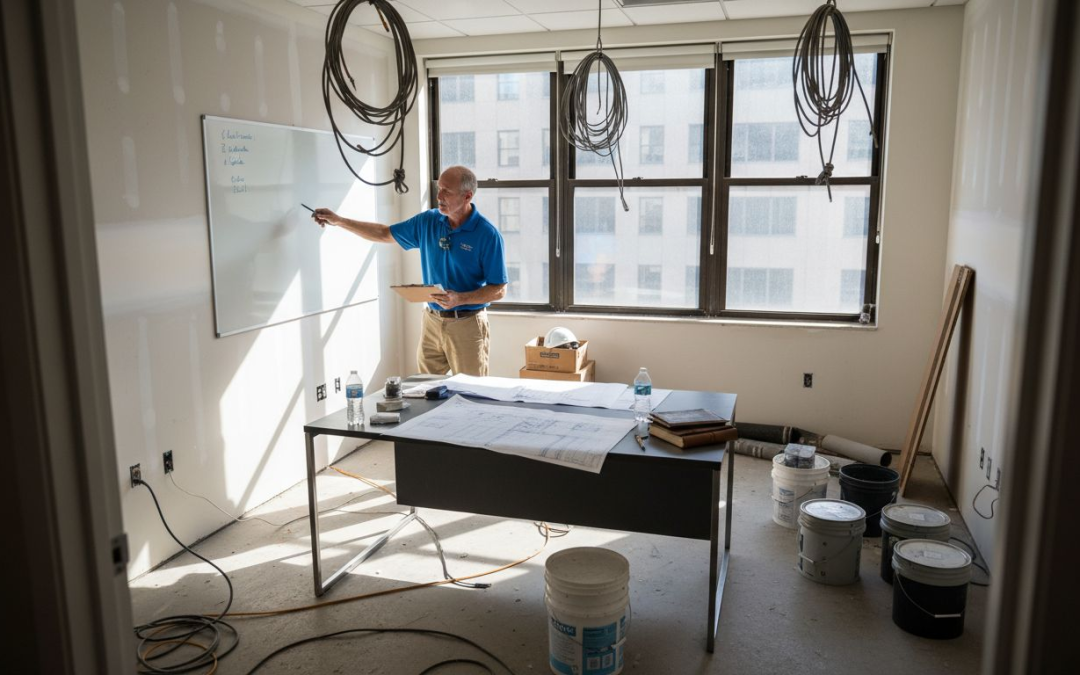
Renovating a Dallas-Fort Worth property can bring both excitement and confusion, especially when planning changes that go beyond basic repairs. Many owners hear about tenant improvements and wonder what actually qualifies as a long-term upgrade and how this process impacts lease agreements and property value. Understanding the facts about these strategic renovations and separating common myths about tenant improvements is key to making informed decisions that benefit both property owners and tenants.
Table of Contents
- Tenant Improvement Defined and Common Myths
- Types of Tenant Improvements in Leased Spaces
- How Tenant Improvement Projects Are Managed
- Cost Responsibilities and Lease Agreements
- Legal Aspects and Local Building Codes
Key Takeaways
| Point | Details |
|---|---|
| Tenant Improvements are Custom Modifications | Tenant improvements are specific renovations that adapt commercial spaces to meet business needs, going beyond cosmetic updates. |
| Financial Responsibilities Must Be Clearly Defined | Cost allocations for tenant improvements should be explicitly outlined in lease agreements to avoid misunderstandings. |
| Regulatory Compliance is Essential | Adhering to local building codes and regulations is crucial for the safety and legality of tenant improvement projects. |
| Planning and Coordination are Key | Successful tenant improvement projects require thorough planning, stakeholder engagement, and clear communication throughout the process. |
Tenant Improvement Defined and Common Myths
Tenant improvements represent customized modifications made to commercial rental spaces, transforming empty structures into functional business environments. These strategic renovations go beyond simple cosmetic updates, involving complex structural and operational enhancements tailored to specific tenant requirements.
According to leading property management experts, tenant improvements encompass a wide range of permanent modifications including:
- Structural changes to interior layouts
- HVAC system upgrades
- Electrical and plumbing reconfigurations
- Custom flooring installations
- Lighting system enhancements
- Specialized workspace configurations
Contrary to popular misconceptions, tenant improvements are not temporary fixes or standard building upgrades. These carefully negotiated modifications are legally defined within lease agreements, creating mutually beneficial arrangements for both property owners and business tenants. Commercial renovation architects emphasize that these improvements represent strategic investments in creating functional, branded spaces.
Most tenants misunderstand several key aspects of tenant improvements. Common myths include believing landlords will automatically cover all renovation costs, assuming improvements can be made without explicit lease permissions, or thinking modifications can be easily reversed. In reality, these improvements require detailed negotiations, precise planning, and often substantial financial commitment from both parties.
Pro tip: Always draft a comprehensive tenant improvement clause in your lease agreement that clearly outlines financial responsibilities, approved modification scope, and restoration expectations.
Types of Tenant Improvements in Leased Spaces
Tenant improvements represent strategic modifications tailored to specific business needs, spanning a diverse range of renovation types designed to transform commercial spaces into functional, efficient environments. These customizations are far more than simple aesthetic updates, representing critical investments in operational infrastructure.
Comprehensive commercial renovation research reveals several primary categories of tenant improvements:
-
Cosmetic Improvements:
- Wall painting and color schemes
- Decorative lighting installations
- Flooring replacements
- Interior design enhancements
-
Functional Improvements:
- HVAC system upgrades
- Layout reconfigurations
- Plumbing system installations
- Electrical infrastructure modifications
-
Structural Improvements:
- Wall additions or removals
- Complete electrical system overhauls
- Major plumbing reconfigurations
- Significant spatial restructuring
Different commercial sectors demand unique improvement strategies. Commercial space experts highlight sector-specific approaches: office spaces prioritize technological infrastructure and flexible layouts, retail environments focus on custom fixtures and customer flow optimization, while industrial facilities emphasize durability, safety enhancements, and operational efficiency.

Understanding these improvement categories allows businesses to strategically plan renovations that align with their operational requirements, brand identity, and long-term growth objectives. Each improvement type offers distinct advantages, transforming generic rental spaces into customized, high-performance work environments.
Pro tip: Conduct a comprehensive needs assessment before initiating tenant improvements to ensure precise alignment between renovation investments and your specific business operational requirements.
How Tenant Improvement Projects Are Managed
Tenant improvement projects require meticulous planning and coordination, transforming complex renovation goals into successful commercial space transformations. These multifaceted initiatives demand strategic management that balances architectural vision, budgetary constraints, and operational requirements.
Comprehensive project management research reveals critical stages of tenant improvement project management:
-
Initial Planning Phase:
- Conduct thorough space evaluation
- Define precise project objectives
- Establish realistic budget parameters
- Identify potential design constraints
-
Stakeholder Coordination:
- Engage landlords and property managers
- Select qualified architectural and construction teams
- Develop clear communication protocols
- Establish mutual expectations and timelines
-
Regulatory Compliance:
- Acquire necessary building permits
- Ensure zoning regulation adherence
- Document all modification specifications
- Maintain detailed project documentation
The tenant improvement process involves intricate coordination between multiple professionals, each playing a crucial role in transforming conceptual designs into functional commercial spaces. Successful management requires continuous communication, proactive problem-solving, and a collaborative approach that anticipates potential challenges before they emerge.
Effective tenant improvement management is less about perfection and more about adaptability and strategic communication.
Navigating the complexities of tenant improvement projects demands exceptional organizational skills, technical expertise, and interpersonal diplomacy. Each project represents a unique challenge, requiring tailored strategies that balance aesthetic goals, functional requirements, and budgetary limitations.
Pro tip: Create a comprehensive project management matrix that tracks every aspect of the tenant improvement project, from initial concept to final inspection, ensuring no critical detail falls through the cracks.
Cost Responsibilities and Lease Agreements
Tenant improvement costs represent a critical negotiation point in commercial leasing, with financial responsibilities carefully delineated through comprehensive lease agreements. Understanding these complex financial arrangements is essential for both landlords and tenants seeking mutually beneficial renovation strategies.
Commercial lease financial dynamics reveal multiple cost allocation approaches:
-
Tenant Improvement Allowance (TIA):
- Landlord provides predetermined renovation budget
- Typically calculated per square foot
- Covers partial project expenses
- Excess costs absorbed by tenant
-
Cost Sharing Models:
- Proportional expense division
- Negotiated percentage splits
- Performance-based reimbursement structures
- Incentive-driven financial arrangements
-
Landlord-Managed Build-Outs:
- Complete renovation funded by property owner
- Predetermined design specifications
- Tenant limited to approved modification parameters
- Reduced tenant financial risk
Lease agreement experts emphasize that transparent cost allocation depends on several crucial factors: market conditions, property type, lease duration, and specific tenant requirements. Successful negotiations balance financial considerations with practical space transformation needs.
Effective tenant improvement agreements transform potential financial disputes into collaborative opportunities for mutual property enhancement.
The complexity of cost responsibilities demands careful documentation, with lease agreements serving as fundamental frameworks that protect both parties’ interests. Strategic negotiation requires understanding market standards, individual property characteristics, and each party’s long-term objectives.
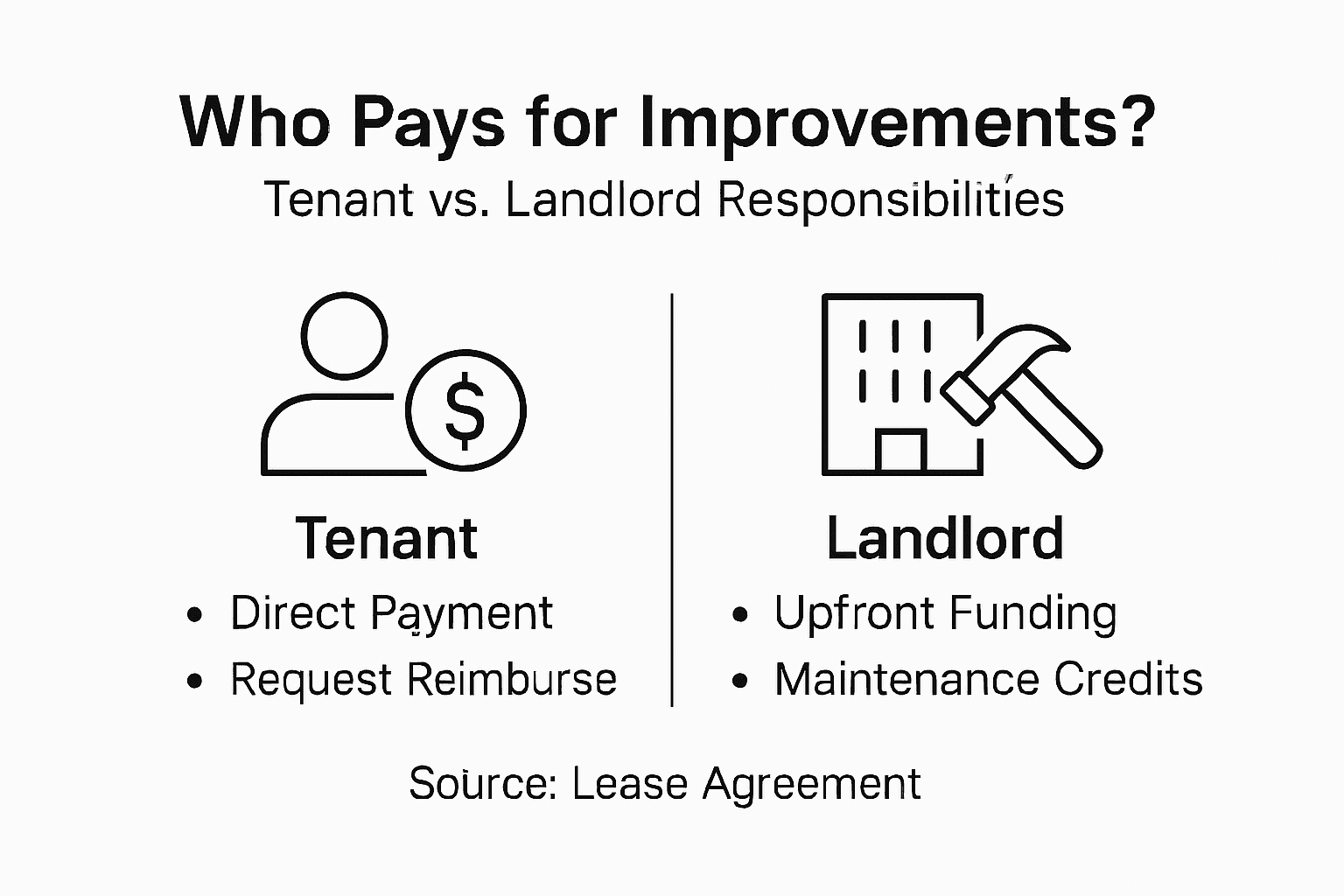
Here’s a comparison of tenant improvement cost allocation models and their primary implications for tenants and landlords:
| Cost Allocation Model | Who Initiates Improvements | Financial Impact on Tenant | Typical Landlord Benefit |
|---|---|---|---|
| Tenant Improvement Allowance | Tenant-led customization | May pay costs above allowance | Gains upgraded premises |
| Cost Sharing Model | Shared planning and execution | Pays agreed proportion | Reduces outlay, shares upgrade risk |
| Landlord-Managed Build-Out | Landlord managed renovations | Lower upfront costs | Controls project scope and standards |
Pro tip: Engage a commercial real estate attorney to thoroughly review tenant improvement clauses, ensuring comprehensive protection and clearly defined financial expectations before signing any lease agreement.
Legal Aspects and Local Building Codes
Tenant improvement projects navigate a complex legal landscape governed by intricate regulatory frameworks that ensure safety, functionality, and compliance across commercial spaces. Understanding these multifaceted legal requirements is crucial for successful renovation initiatives that meet both business needs and municipal standards.
Building code compliance research highlights critical regulatory considerations:
-
National Construction Standards:
- Structural integrity requirements
- Minimum safety specifications
- Accessibility guidelines
- Universal design principles
-
Local Municipal Regulations:
- Specific zoning restrictions
- Permit application processes
- Inspection protocol requirements
- Geographic-specific building limitations
-
Permit Documentation Requirements:
- Detailed architectural plans
- Engineering specifications
- Professional certification documents
- Comprehensive scope of work descriptions
Tenant improvement legal frameworks demonstrate that regulatory compliance extends beyond simple checklist completion. These regulations create protective mechanisms ensuring that modifications respect existing infrastructure, maintain public safety standards, and protect both tenant and landlord interests.
Legal compliance in tenant improvements is not merely about following rules, but creating sustainable, safe, and functional commercial environments.
The intricate nature of building codes demands meticulous attention to detail, requiring collaboration between architects, contractors, municipal officials, and legal professionals. Each modification must be carefully evaluated against multiple layers of regulatory requirements to ensure comprehensive compliance.
This table summarizes key regulatory considerations for tenant improvements and their business consequences:
| Regulatory Area | Business Relevance | Typical Challenge |
|---|---|---|
| National Construction Codes | Defines safety and accessibility | Must meet universal compliance |
| Local Zoning Regulations | Restricts use types and space changes | Navigating changing local requirements |
| Permit Documentation | Ensures project legality and approval | Gathering accurate, timely paperwork |
Pro tip: Consult a local building code specialist early in your tenant improvement planning to identify potential regulatory challenges and streamline the approval process.
Transform Your Commercial Space with Expert Tenant Improvements
Navigating tenant improvements can feel overwhelming when faced with complex lease agreements, cost responsibilities, and strict building codes. If you want to turn your leased property into a functional, branded, and safe commercial environment, understanding these challenges is just the first step. At Astrotech Construction, we specialize in helping businesses in the Dallas – Fort Worth Metroplex overcome these common hurdles with tailored construction and remodeling solutions designed to meet your specific operational needs and regulatory requirements.
Why choose us for your tenant improvement project?
- Expert guidance through planning and permits
- Skilled craftsmanship in structural and functional improvements
- Transparent communication to align budget and goals
Explore our comprehensive renovation services and discover how we can enhance your commercial space into a strategic business asset.
Ready to start your tenant improvement journey with a trusted partner? Visit Astrotech Construction today to schedule your free consultation. Let us help you create a commercial space that works for your business now and grows with you through every lease term.
Frequently Asked Questions
What are Tenant Improvements?
Tenant improvements are custom modifications made to commercial rental spaces, transforming them into functional environments based on tenant needs. They include structural changes, HVAC upgrades, and specialized workspace configurations.
Who is responsible for Tenant Improvement costs?
The responsibility for tenant improvement costs is typically outlined in lease agreements. Common models include tenant improvement allowances, cost-sharing arrangements, and landlord-managed build-outs, each affecting how expenses are divided between landlords and tenants.
Are Tenant Improvements temporary or permanent changes?
Tenant improvements are generally considered permanent modifications. They involve significant renovations that can change the layout or functionality of a space, often specified in lease agreements as legally binding.
How are Tenant Improvement projects managed?
Tenant improvement projects require careful planning and management. Key stages include initial planning, stakeholder coordination, and ensuring regulatory compliance. Ongoing communication among all parties is crucial for successful project execution.
Recommended
- Why Renovate Commercial Property: Boost Value and Success – Astrotech Construction
- Why Remodel Commercial Spaces: Complete Guide – Astrotech Construction
- 7 Smart Commercial Renovation Ideas for Modern Spaces – Astrotech Construction
- How to Plan Commercial Renovations for Lasting Value – Astrotech Construction
- Commercial Building Design | 3D Cityplanner