Many owners in Dallas and Fort Worth struggle with vacant properties that drain resources and limit potential. Adaptive reuse offers a creative path to transform these overlooked spaces into modern, valuable assets while addressing sustainability concerns. By focusing on conserving resources and enriching the built environment, adaptive reuse allows you to breathe new life into aging structures, turning challenges into opportunities for growth, character, and environmental impact.
Table of Contents
- What Is Adaptive Reuse And Why It Matters
- Types Of Adaptive Reuse Projects Explained
- Key Steps In An Adaptive Reuse Process
- Legal, Zoning, And Safety Considerations
- Benefits, Risks, And Common Mistakes To Avoid
Key Takeaways
| Point | Details |
|---|---|
| Adaptive Reuse Significance | Adaptive reuse revitalizes underutilized buildings, addressing sustainability and community needs while preserving historical character. |
| Environmental Benefits | This approach significantly reduces construction waste and carbon emissions, contributing to a circular economy and urban resilience. |
| Key Steps to Success | Thorough structural assessments, community engagement, and careful planning are essential for successful adaptive reuse projects. |
| Navigating Regulations | Understanding zoning laws and compliance with building codes are crucial to overcoming challenges in adaptive reuse initiatives. |
What Is Adaptive Reuse and Why It Matters
Adaptive reuse represents a powerful urban regeneration strategy that transforms underutilized buildings into vibrant, functional spaces. By reimagining existing structures, property owners can breathe new life into aging buildings while simultaneously addressing sustainability challenges and community needs.
The core concept of adaptive reuse goes beyond simple renovation. It involves strategically repurposing buildings to serve entirely new functions, preserving their historical character while meeting contemporary requirements. Adaptive reuse is not just about maintaining physical structures, but about creating dynamic urban environments that evolve with changing social and economic landscapes.
Key benefits of adaptive reuse include:
- Significant reduction in construction waste
- Conservation of embodied energy in existing buildings
- Preservation of architectural heritage
- Lower carbon emissions compared to new construction
- Cost-effective alternative to demolition and rebuilding
Environmental Impact matters significantly in this approach. By supporting circular economy principles, adaptive reuse helps cities minimize their carbon footprint and create more resilient urban spaces. The strategy acknowledges that every existing building represents an investment of materials, energy, and craftsmanship that should be respected and maximized.
Here’s how adaptive reuse compares to new construction:
| Dimension | Adaptive Reuse | New Construction |
|---|---|---|
| Environmental Impact | Lower emissions, less waste | Higher emissions, more waste |
| Project Timeline | Often shorter due to existing structures | Typically longer, starts from scratch |
| Cost Efficiency | Can be more affordable with fewer materials | Costs can rise due to new materials |
| Heritage Preservation | Maintains historical architecture | Usually lacks historical character |
| Design Flexibility | Limited by existing structure | More flexibility in layout and features |
Pro tip: Before starting an adaptive reuse project, conduct a comprehensive structural assessment to understand the building’s potential and limitations.
Types of Adaptive Reuse Projects Explained
Adaptive reuse encompasses a diverse range of project types that breathe new life into existing structures across urban landscapes. Transforming old buildings involves creative reimagining of spaces to meet contemporary needs while preserving architectural heritage.
Residential Conversions represent one of the most popular adaptive reuse strategies. These projects typically involve transforming abandoned industrial buildings, warehouses, or historic structures into modern living spaces. By repurposing these structures, developers can create unique housing options that combine historical character with contemporary amenities.
Key types of adaptive reuse projects include:
- Factory to loft apartment conversions
- Warehouse to mixed-use commercial spaces
- Historic building to boutique hotel
- Church to community center
- Industrial complex to office park
Commercial Transformations offer another significant avenue for adaptive reuse. Collaborative governance strategies enable property owners to reimagine spaces that might otherwise be abandoned. These projects often involve converting obsolete structures into vibrant workspaces, retail centers, or multi-purpose commercial environments.
Cultural and Community Projects play a crucial role in urban regeneration. By transforming underutilized buildings into museums, art galleries, performance spaces, or educational centers, communities can preserve architectural heritage while creating meaningful public spaces that serve contemporary needs.
Pro tip: Always conduct a comprehensive structural assessment and historical evaluation before initiating an adaptive reuse project to understand the building’s potential and limitations.
The following table provides real-world examples of adaptive reuse project types and their typical benefits:
| Project Example | New Use | Typical Community Benefit |
|---|---|---|
| Abandoned warehouse | Multi-use retail/office space | Job creation, area revitalization |
| Historic church | Community or arts center | Preserved heritage, local engagement |
| Old factory | Modern loft apartments | Affordable housing, unique living |
| Industrial facility | Technology hub or start-up park | Economic diversification, innovation |
Key Steps in an Adaptive Reuse Process
Adaptive reuse is a complex process that requires meticulous planning and strategic execution. Identifying potential buildings represents the critical first phase of transforming underutilized structures into vibrant, functional spaces that meet contemporary needs.
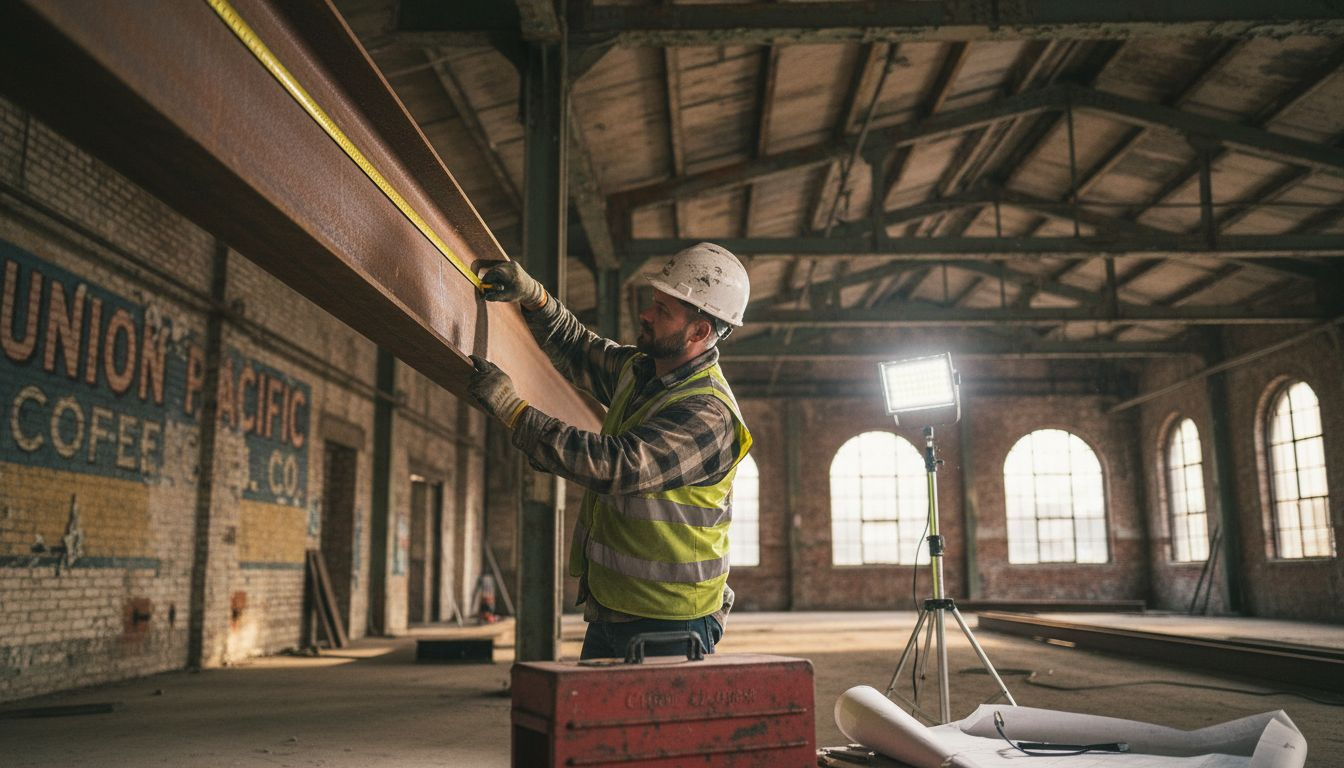
Initial Assessment involves a comprehensive evaluation of the existing structure. Professionals conduct detailed structural inspections, historical research, and potential use analysis to determine the building’s adaptability and potential for transformation. This stage requires carefully examining the building’s physical condition, architectural significance, and compatibility with proposed new functions.
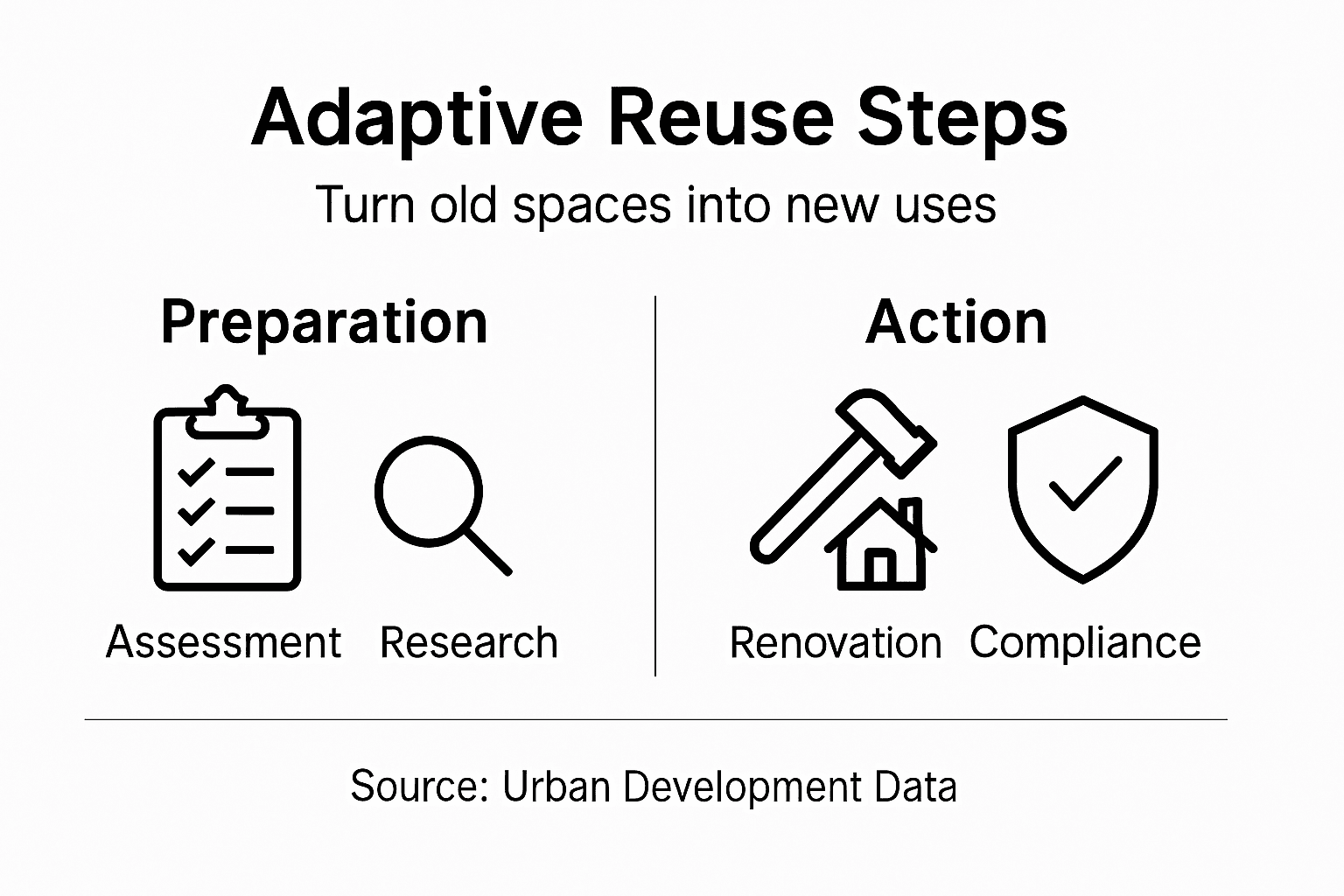
Key steps in the adaptive reuse process include:
- Comprehensive structural evaluation
- Historical and architectural significance assessment
- Feasibility and economic viability study
- Compliance with current building codes
- Sustainable design integration
- Community and stakeholder engagement
Design and Planning emerge as crucial next stages. Stakeholder engagement strategies play a vital role in developing concepts that respect the building’s original character while meeting modern functional requirements. This phase involves collaborative design approaches that balance preservation, innovation, and practical usability.
The technical implementation requires careful navigation of regulatory requirements, preservation guidelines, and sustainable design principles. Architects and engineers must develop creative solutions that maintain structural integrity, improve energy efficiency, and create spaces that are both functional and aesthetically compelling.
Pro tip: Engage preservation experts and local historians early in the process to uncover unique architectural details that can become distinctive features in your adaptive reuse project.
Legal, Zoning, and Safety Considerations
Adaptive reuse projects demand careful navigation of complex legal and regulatory landscapes. Zoning flexibility is crucial for transforming existing structures while maintaining community standards and safety requirements.
Regulatory Compliance represents the foundational layer of any adaptive reuse initiative. Property owners must meticulously assess current building codes, safety regulations, and local ordinances to ensure their proposed transformation meets all legal requirements. This involves comprehensive evaluation of structural integrity, fire safety standards, accessibility guidelines, and potential environmental impact.
Key legal considerations include:
- Building code compliance
- Zoning use restrictions
- Historic preservation requirements
- Environmental regulation adherence
- Accessibility standards
- Structural safety assessments
Zoning Challenges often present significant obstacles in adaptive reuse projects. Municipal ordinances frequently limit building use conversions, requiring developers to seek special permits or variances. Successful projects demand proactive engagement with local planning departments, demonstrating how proposed transformations align with community development goals and maintain neighborhood character.
Safety considerations extend beyond immediate structural concerns. Developers must integrate modern safety systems, upgrade electrical and mechanical infrastructure, and ensure the repurposed building meets contemporary life safety standards while preserving its original architectural significance.
Pro tip: Consult with local zoning officials and preservation experts early in your project to identify potential regulatory challenges and develop collaborative solutions.
Benefits, Risks, and Common Mistakes to Avoid
Adaptive reuse represents a multifaceted strategy that offers significant potential alongside substantial challenges. Benefits extend beyond simple renovation, encompassing environmental, economic, and social dimensions that can transform urban landscapes.
The most compelling advantages include substantial environmental sustainability. By repurposing existing structures, developers can dramatically reduce construction waste, minimize carbon emissions, and conserve embodied energy that would otherwise be lost through demolition and new construction.
Key benefits of adaptive reuse include:
- Reduced carbon footprint
- Preservation of architectural heritage
- Lower construction costs
- Enhanced community character
- Faster project completion times
- Economic revitalization of urban areas
Potential Risks require careful consideration. Complex policy challenges can undermine project success if not managed strategically. These risks include potential gentrification, unexpected structural complications, regulatory compliance issues, and unforeseen renovation expenses that can significantly impact project feasibility.
Common mistakes can derail adaptive reuse projects, including insufficient initial assessments, underestimating renovation complexity, and failing to engage community stakeholders. Successful implementations demand comprehensive planning, thorough structural evaluations, and a nuanced understanding of both architectural potential and regulatory constraints.
Pro tip: Conduct a detailed financial and structural feasibility study before committing to an adaptive reuse project, including comprehensive risk assessment and contingency planning.
Unlock the Full Potential of Your Adaptive Reuse Project Today
Adaptive reuse projects come with unique challenges like structural assessments and zoning compliance that require expert renovation solutions tailored to preserving architectural character while upgrading to modern standards. If you are aiming to transform an old building into a stunning residential or commercial space in the Dallas – Fort Worth area trust Astrotech Construction for professional expertise in remodeling, roof replacement, and comprehensive renovation services designed to meet these precise needs.
Whether you need a full home remodeling or commercial space upgrade you deserve quality workmanship that respects heritage and ensures sustainability. Our team understands the importance of balancing preservation with innovation so you can achieve cost-effective results without compromising safety or aesthetic appeal.
Take the first step now to revitalize your property and create a vibrant, functional space. Explore our detailed construction and remodeling services and connect with us for a personalized consultation. Don’t wait—turn your adaptive reuse vision into reality with trusted local professionals ready to guide you through each phase of your project.
Frequently Asked Questions
What is adaptive reuse?
Adaptive reuse is the process of repurposing existing buildings for new functions while preserving their historical character, thereby providing sustainable urban regeneration.
What are the benefits of adaptive reuse?
Benefits of adaptive reuse include reduced construction waste, lower carbon emissions, cost savings compared to new construction, preservation of architectural heritage, and faster project completion times.
How does adaptive reuse compare to new construction?
Adaptive reuse typically results in lower emissions and waste, a shorter project timeline, cost-effectiveness with fewer materials, preservation of historical architecture, but it may offer less design flexibility than new construction.
What are the common mistakes to avoid in adaptive reuse projects?
Common mistakes include insufficient initial assessments, underestimating the complexity of renovations, and failing to engage community stakeholders, all of which can derail the success of an adaptive reuse project.
Recommended
- Modernize Your Living Space: Real Value for Homeowners – Astrotech Construction
- Why Remodel Commercial Spaces: Complete Guide – Astrotech Construction
- 7 Inspiring Commercial Renovation Examples for DFW Owners – Astrotech Construction
- 7 Smart Commercial Renovation Ideas for Modern Spaces – Astrotech Construction
- Transforming Modern Spaces for Maximum Cleanliness and Durability