
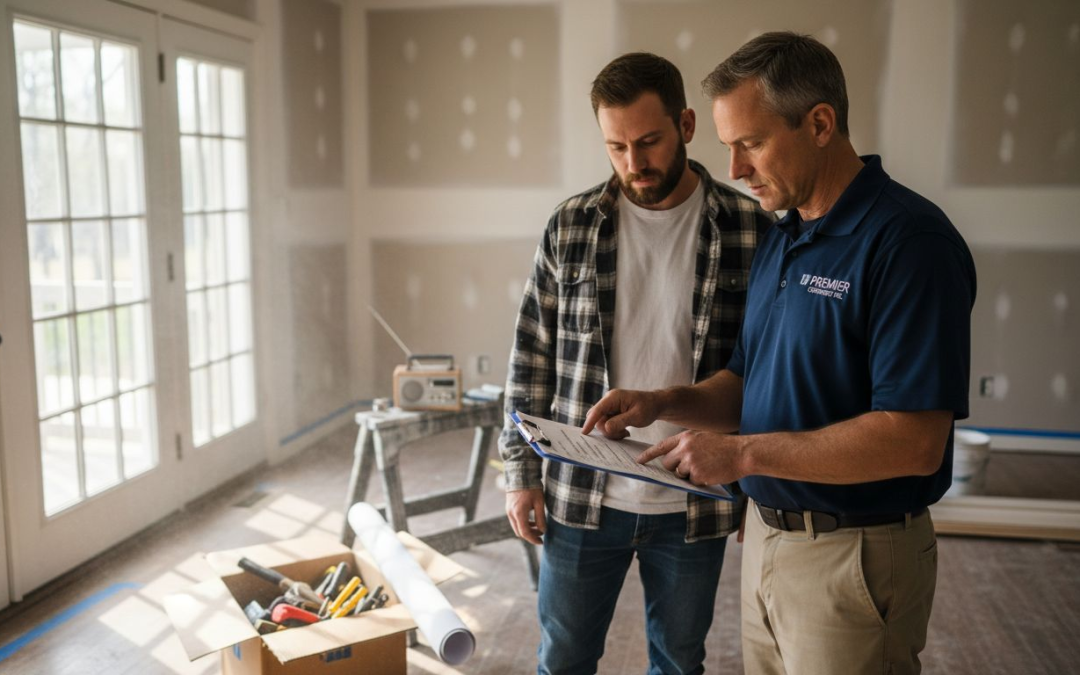
Over 60 percent of American homeowners experience unexpected expenses during major remodeling projects in the Dallas-Fort Worth area. Renovating your home is a major investment, and skipping steps in quality assurance can turn dreams into headaches. Understanding how structured oversight protects against costly mistakes helps homeowners secure lasting value and peace of mind while planning their renovation.
Table of Contents
- Quality Assurance In Remodeling Explained
- Types And Stages Of Quality Assurance
- Key Elements Of Effective Qa Programs
- Risks And Costs Of Ignoring Quality Assurance
- Common Mistakes To Avoid In Remodeling
Key Takeaways
| Point | Details |
|---|---|
| Implement Quality Assurance | Establish comprehensive quality control processes to ensure high standards in remodeling projects. |
| Utilize PDCA Framework | Employ the Plan-Do-Check-Act methodology for continuous improvement in project execution. |
| Document and Communicate | Maintain clear documentation and communication to prevent misunderstandings and project delays. |
| Avoid Common Pitfalls | Plan for budgets and timelines carefully to mitigate unexpected expenses and structural issues. |
Quality assurance in remodeling explained
Quality assurance in remodeling represents a systematic approach to maintaining exceptional standards throughout home renovation projects. By implementing comprehensive quality control processes, homeowners can ensure their investment results in superior outcomes that meet or exceed expectations. Systematic monitoring techniques help prevent potential defects and maintain project integrity from initial planning through final completion.
At its core, quality assurance involves carefully tracking every stage of a renovation project to guarantee precision, durability, and alignment with design specifications. This means establishing clear benchmarks for materials, workmanship, and performance metrics before work begins. Digital technologies now support QA processes by enabling real-time documentation, collaborative communication, and transparent progress tracking across all project phases.
Effective quality assurance goes beyond simple compliance checks. It requires a holistic approach that considers energy efficiency, indoor environmental quality, and long-term structural performance. Homeowners benefit from partnering with remodeling professionals who demonstrate robust quality management systems, including detailed inspections, material verification, and documented quality control protocols.
Pro Tip: Request comprehensive quality assurance documentation from your remodeling contractor, including detailed inspection checklists, material certifications, and performance guarantees before signing any project agreements.
Types and stages of quality assurance
Quality assurance in remodeling encompasses multiple systematic approaches designed to maintain high standards throughout home renovation projects. Internal quality monitoring cycles involve comprehensive evaluations at different project stages, ensuring every aspect of the renovation meets predefined performance criteria. These stages typically include initial planning, material selection, implementation, and post-project assessment.
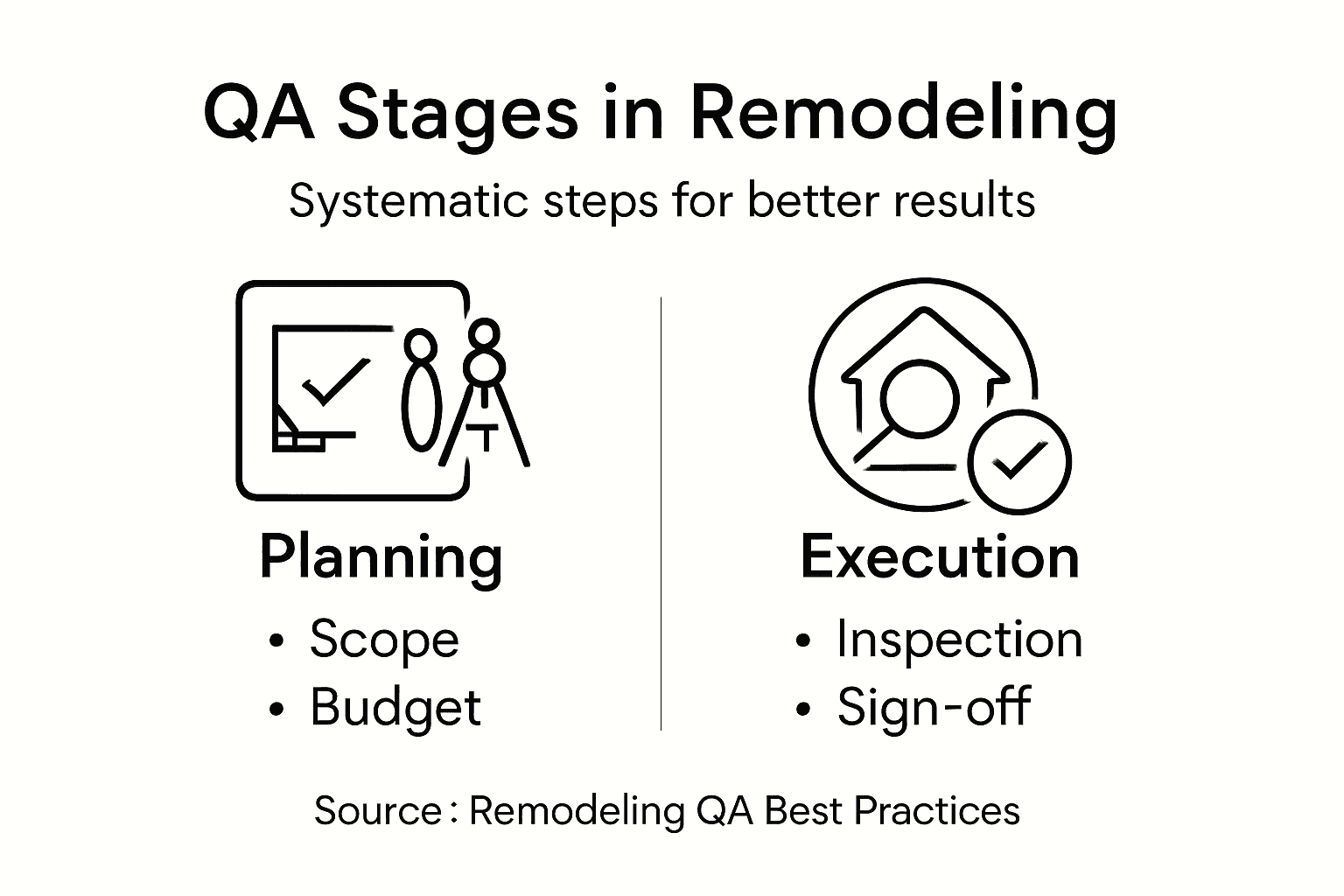
The most effective quality assurance strategies utilize a Plan-Do-Check-Act (PDCA) framework, which provides a structured methodology for continuous improvement. Systematic quality frameworks break down quality control into distinct phases: planning renovation specifications, executing the project according to those specifications, checking performance against established standards, and adjusting processes to address any identified gaps.
Remodeling quality assurance can be categorized into several key types: pre-project quality planning, in-progress quality control, material verification, workmanship assessment, and final project validation. Each type serves a specific purpose in maintaining project integrity, from selecting high-quality materials to ensuring precise installation techniques and confirming that the completed renovation meets all design and functional requirements.
Here’s a comparison of quality assurance stages and their main objectives in remodeling projects:
| Stage | Primary Objective | Success Indicator |
|---|---|---|
| Planning | Define project scope and standards | Clear specifications established |
| Material Selection | Ensure use of certified products | Verified material certifications |
| Implementation | Monitor installation quality | Adherence to design requirements |
| Post-Project Review | Evaluate overall project outcome | Achievement of performance goals |
Pro Tip: Create a comprehensive checklist that outlines specific quality benchmarks for each stage of your remodeling project, and review this document regularly with your contractor to ensure ongoing alignment and transparency.
Key elements of effective QA programs
Building an effective quality assurance program for remodeling projects requires a comprehensive approach that addresses multiple critical components. Integrated quality management strategies emphasize creating a structured framework that encompasses clear objectives, documented standards, and systematic processes to ensure consistent project excellence.
The core elements of a robust quality assurance program include detailed documentation, regular performance inspections, and comprehensive stakeholder collaboration tools. Key components typically involve establishing precise quality benchmarks, implementing rigorous inspection protocols, and developing transparent non-conformance reporting mechanisms. These systems enable contractors and homeowners to track project progress, identify potential issues early, and maintain accountability throughout the renovation process.

Successful quality assurance programs integrate several critical elements: qualified personnel training, detailed documentation systems, regular performance audits, and continuous improvement processes. These components work together to create a comprehensive approach that goes beyond basic compliance, focusing instead on delivering superior results that meet or exceed client expectations. By establishing clear communication channels, implementing advanced technological tracking tools, and maintaining a proactive quality management mindset, remodeling projects can consistently achieve exceptional outcomes.
Pro Tip: Request a comprehensive quality assurance plan from your contractor that outlines specific inspection checkpoints, documentation procedures, and escalation protocols for addressing potential project deviations.
Risks and costs of ignoring quality assurance
Systematic risk management reveals that neglecting quality assurance in remodeling projects can lead to substantial financial and structural consequences. Homeowners who bypass comprehensive quality control measures expose themselves to significant potential damages, ranging from minor installation errors to catastrophic structural failures that can dramatically increase overall project costs and compromise home safety.
The financial implications of poor quality assurance extend far beyond immediate repair expenses. Neglecting quality control processes can result in compounded costs through repeated renovations, decreased property value, potential legal disputes, and loss of contractor credibility. Critical risks include structural deficiencies, code violations, improper material installations, and long-term performance issues that may require complete project reconstruction.
Beyond direct monetary impacts, ignoring quality assurance undermines the fundamental trust between homeowners and contractors. Potential consequences include safety hazards, compromised structural integrity, energy inefficiency, and significant long-term maintenance challenges. Unaddressed quality issues can transform what should be an investment in home improvement into a costly and potentially dangerous renovation nightmare that requires extensive remediation and potentially reduces overall property value.
Pro Tip: Always request detailed documentation of quality assurance protocols and request proof of inspections at each critical stage of your remodeling project to protect your investment and ensure compliance with safety standards.
Common mistakes to avoid in remodeling
Remodeling projects can quickly become complicated without proper planning and awareness of potential pitfalls. Documentation and communication errors frequently undermine project success, leading to misunderstandings, budget overruns, and unsatisfactory renovation outcomes. Homeowners must be vigilant about identifying and avoiding common mistakes that can derail their remodeling goals.
Structural documentation practices reveal several critical mistakes homeowners often make during renovation projects. These include inadequate budget planning, failing to obtain necessary permits, choosing contractors without thorough vetting, neglecting to establish clear communication channels, and not developing comprehensive project specifications. Skipping critical steps like detailed design documentation, professional assessment of structural requirements, and comprehensive material selection can lead to significant project complications.
Additional common mistakes involve underestimating project timelines, overlooking potential structural challenges, and making impulsive design choices without considering long-term functionality. Homeowners often fail to account for unexpected expenses, do not maintain sufficient contingency funds, and neglect to thoroughly understand the scope of proposed renovation work. These oversights can result in incomplete projects, financial strain, and potential safety hazards that compromise the entire remodeling investment.
To help homeowners avoid the most common remodeling pitfalls, here is a summary of frequent mistakes and their impact:
| Mistake Type | Typical Impact | Prevention Strategy |
|---|---|---|
| Poor Budget Planning | Unexpected expenses, financial strain | Set realistic budget, add buffers |
| Lack of Clear Documentation | Misunderstandings, errors | Keep detailed records throughout |
| Skipping Permits | Legal issues, costly corrections | Obtain all required approvals |
| Choosing Unvetted Contractor | Subpar workmanship, project delays | Vet and check references |
Pro Tip: Create a comprehensive project binder that includes all contracts, design plans, material specifications, and communication records to maintain clear documentation and accountability throughout your remodeling project.
Ensure Top-Quality Results with Expert Remodeling Services
The article highlights the importance of comprehensive quality assurance throughout every stage of a remodeling project. Homeowners and business owners face challenges such as avoiding costly mistakes, ensuring material verification, and maintaining clear documentation to protect their investments. Astrotech Construction understands these crucial pain points and offers tailored solutions that prioritize rigorous quality control, detailed inspections, and transparent communication to deliver results that meet or exceed your expectations.
Partnering with a remodeling expert who embraces a thorough quality assurance process helps prevent structural issues, code violations, and unexpected costs. From full home remodeling to kitchen and bathroom upgrades, Astrotech Construction applies industry best practices to every project. Discover how our skilled team leverages proven quality management strategies that align with the standards discussed in the article. Explore our comprehensive remodeling services and see the difference professional oversight makes.
Take control of your remodeling project now and avoid common pitfalls. Schedule your free consultation today to get a detailed quality assurance plan designed specifically for your needs.
Ready to invest confidently in your home or commercial renovation? Visit Astrotech Construction to start your project with trusted quality assurance and unmatched expertise. Don’t wait until problems arise; act now to protect your investment and achieve the lasting results you deserve.
Frequently Asked Questions
What is quality assurance in remodeling projects?
Quality assurance in remodeling refers to a systematic approach to maintaining high standards throughout home renovation projects by tracking every stage to ensure precision and durability.
Why is quality assurance important in home renovations?
Quality assurance helps prevent defects, ensures project integrity, and results in superior outcomes that meet or exceed homeowner expectations, safeguarding their investment.
What are the key elements of an effective quality assurance program in remodeling?
An effective quality assurance program includes detailed documentation, regular performance inspections, collaboration among stakeholders, qualified personnel training, and processes for continuous improvement.
What risks are associated with ignoring quality assurance in remodeling?
Ignoring quality assurance can lead to significant financial losses, structural failures, safety hazards, and decreased property value, ultimately transforming a renovation project into a costly nightmare.
Recommended
- Role of Project Management in Remodeling: Complete Guide – Astrotech Construction
- Remodeling Project Checklist: Step-by-Step Guide for Success – Astrotech Construction
- Remodeling Scope Explained: Complete Project Breakdown – Astrotech Construction
- How to Schedule Remodeling Projects for Optimal Results – Astrotech Construction
- Understanding the Benefits of a House with Insulation – WorkWearComfort