

Sorting through a roofing quote can leave Dallas-Fort Worth homeowners puzzled by unfamiliar words and technical jargon. When it comes time to repair or replace your roof, understanding the difference between a rafter, truss, or underlayment is more than just vocabulary—it’s the key to making confident, informed decisions about your home’s protection. This guide breaks down the most important roofing terms so you can clearly compare service options and identify the true value in every estimate.
Table of Contents
- Roofing Terms Defined For Homeowners
- Types Of Roofs And Materials Explained
- Roof Components And How They Work
- How Roofing Terms Affect Your Costs
- Common Roofing Estimate Mistakes To Avoid
Key Takeaways
| Point | Details |
|---|---|
| Understanding Roofing Terms | Familiarize yourself with key roofing terminology to make informed decisions on quotes. |
| Choose the Right Materials | Consider local conditions and budget when selecting roofing materials for better outcomes. |
| Get Multiple Estimates | Obtain detailed quotes from several contractors to avoid unexpected expenses and misunderstandings. |
| Clarify All Costs | Ensure transparency by requesting a line-by-line breakdown of your roofing estimate. |
Roofing Terms Defined For Homeowners
Understanding roofing terminology is essential when reviewing construction quotes, as it helps homeowners make informed decisions about their roof construction project. Roofing professionals use specific technical terms that can seem complex and overwhelming, but breaking down these key definitions transforms mysterious jargon into clear information.
At the core of roofing terminology are structural components like rafters, trusses, and decking. Rafters are the sloped structural elements that extend from the roof’s peak to its edges, forming the primary framework. Trusses represent pre-engineered triangular structures that provide roof support, often manufactured off-site and installed as complete units. Roof decking – typically made of plywood or oriented strand board (OSB) – creates the base surface onto which roofing materials are attached.
Beyond structural elements, homeowners should understand protective components like flashing and underlayment. Flashing consists of thin metal sheets installed around roof intersections, chimneys, and vents to prevent water penetration. Underlayment serves as a water-resistant barrier placed directly on the roof deck, providing an additional layer of protection against moisture and environmental damage. These components are critical in ensuring your roof’s long-term performance and durability.
Here’s a quick reference of core roof components and their primary function:
| Component | Main Function | Typical Material |
|---|---|---|
| Rafters | Support roof framework and shape | Wood or metal beams |
| Trusses | Provide engineered structural stability | Factory-made wood/metal |
| Decking | Base for attaching roof materials | Plywood or OSB panels |
| Underlayment | Water-resistant protection layer | Synthetic, felt, or rubber |
| Flashing | Prevent water leaks at joints | Thin metal sheets |
Pro tip: Always request a detailed explanation of each term in your roofing quote and don’t hesitate to ask contractors to clarify any technical language you don’t understand.
Types Of Roofs And Materials Explained
Homeowners have multiple options when selecting roof styles and materials, each with unique characteristics and performance considerations. Roof styles vary significantly across different regions, influenced by climate, architectural design, and local building practices. Understanding these variations helps homeowners make informed decisions about their roofing project.
Traditional residential roof styles include gable, hip, Mansard, and flat configurations. Gable roofs feature two sloping sides that meet at a central ridge, creating a classic triangular shape popular in many American neighborhoods. Hip roofs have slopes on all four sides, offering better wind resistance and a more sophisticated appearance. Mansard roofs – characterized by two slopes on each side with the lower slope significantly steeper – provide additional living space in the attic. Flat roofs, common in modern and commercial designs, require specialized materials to ensure proper water drainage and prevent leakage.
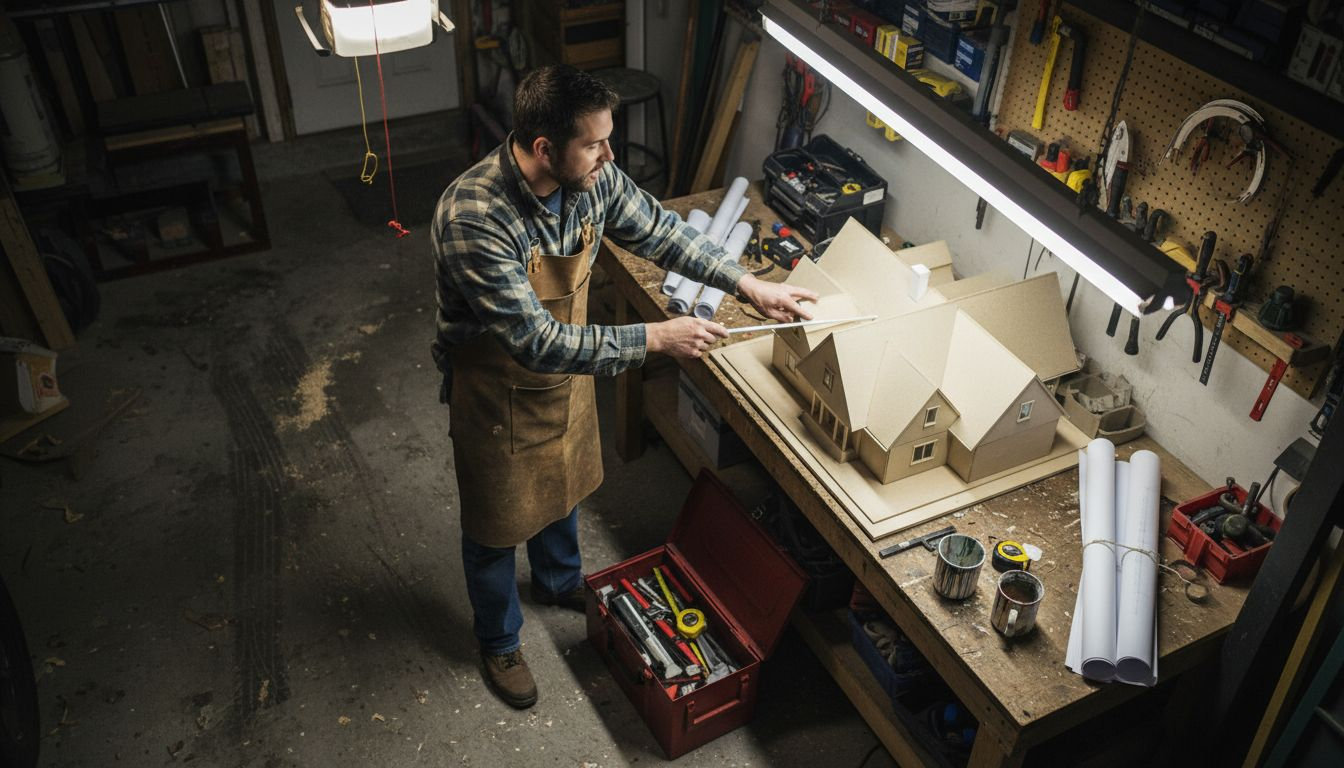
Roofing materials play a crucial role in durability, energy efficiency, and aesthetic appeal. Common options include asphalt composition shingles (the most affordable and widely used), metal roofing (known for longevity and energy efficiency), clay tiles (popular in southwestern regions), and slate (offering exceptional durability and a premium appearance). Residential roofing materials each have distinct performance characteristics, with costs ranging from budget-friendly to high-end investments.
Compare popular residential roof materials by cost, durability, and appearance:
| Material | Durability | Cost Level | Curb Appeal |
|---|---|---|---|
| Asphalt Shingle | 15–30 years | Budget-friendly | Wide style variety |
| Metal Roofing | 40–70 years | Moderate-High | Modern, sleek look |
| Clay Tile | 50+ years | High | Distinct southwest style |
| Slate | 75–100+ years | Very high | Classic, premium finish |
Pro tip: Consider your local climate, home architecture, and long-term budget when selecting roof materials, as the right choice can significantly impact your home’s protection and value.
Roof Components And How They Work
Understanding the intricate system of roof components is crucial for homeowners seeking to comprehend their roofing quotes and project complexity. Low-slope roof components form a sophisticated network of interconnected elements, each serving a critical function in protecting your home from environmental challenges.
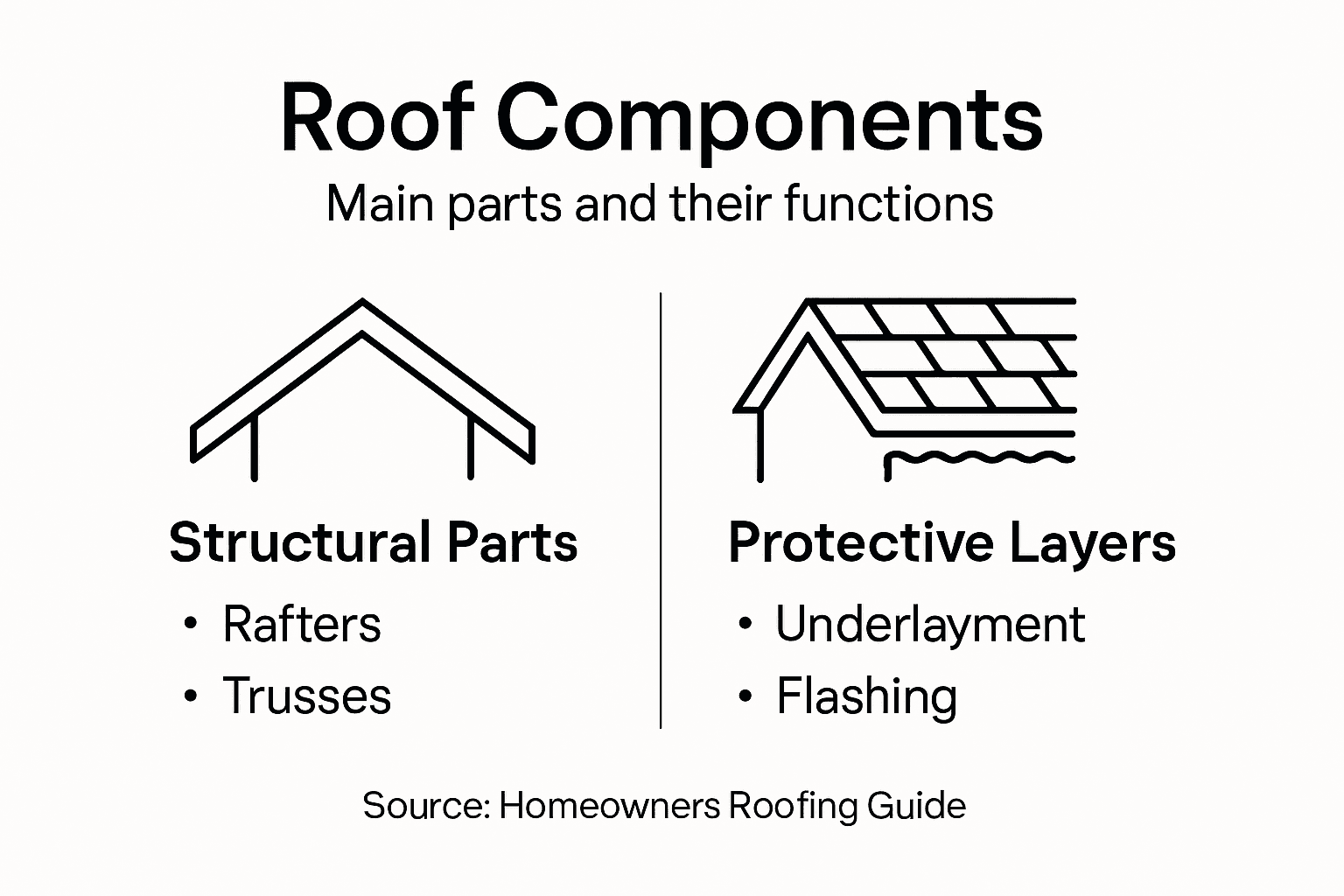
The structural foundation of any roof begins with rafters and trusses, which provide the primary support framework. Rafters are sloped wooden or metal beams that extend from the roof’s peak to its edges, creating the basic shape and pitch. Trusses – pre-engineered triangular structures – offer additional strength and stability, typically manufactured off-site and installed as complete units. Atop these structural elements sits the roof deck, usually constructed from plywood or oriented strand board (OSB), which creates a solid base for additional roofing materials.
Protective layers are equally important in roof construction. Underlayment serves as a water-resistant barrier directly applied to the roof deck, providing an additional shield against moisture infiltration. Flashing – thin metal sheets installed around chimneys, vents, and roof intersections – prevents water from penetrating critical junctures. Roof construction components also include thermal insulation and air/vapor retarders, which regulate temperature and minimize moisture buildup, ensuring the roof’s long-term performance and energy efficiency.
Pro tip: Request a detailed diagram or walkthrough of your roof’s components during your initial consultation to better understand the materials and craftsmanship involved in your roofing project.
How Roofing Terms Affect Your Costs
Deciphering roofing terminology is crucial for understanding how different components and specifications impact your overall project expenses. Roofing cost factors extend far beyond simple material prices, encompassing complex interactions between materials, labor, and project complexity that can significantly influence your final quote.
Material selection represents one of the most substantial cost drivers in roofing projects. Asphalt shingles, for instance, come in multiple quality grades – from basic three-tab options to premium architectural styles – with prices ranging dramatically based on durability and aesthetic characteristics. Labor costs typically account for over 50% of total project expenses, with more complex roof designs like steep pitches or intricate architectural features requiring additional time and specialized skills, thereby increasing overall project pricing.
Roofing quote terminology reveals critical cost components homeowners should understand. Terms like tear-off (removing existing roofing), flashing replacement, permit fees, and specific warranty classifications can dramatically alter project estimates. Class A fire resistance, multi-layer underlayment, and specialized installation techniques all contribute to higher costs but also provide enhanced protection and long-term value for your home.
Pro tip: Request an itemized breakdown of your roofing quote, asking contractors to explain each line item and how it impacts overall performance and durability.
Common Roofing Estimate Mistakes To Avoid
Navigating roofing estimates requires careful attention to detail and a strategic approach to avoid costly misunderstandings. Roofing estimate errors can lead to unexpected expenses, project delays, and potential disputes with contractors, making thorough preparation crucial for homeowners.
One of the most significant mistakes homeowners make is failing to obtain comprehensive documentation and multiple bids. Photographic documentation of existing roof damage, detailed damage assessments, and considering local weather and building code requirements are essential for accurate estimates. Different contractors may offer vastly different pricing structures, so comparing at least three detailed written estimates helps ensure fair pricing and comprehensive service coverage. Pay close attention to variations in material quality, labor costs, and potential additional fees that might not be immediately apparent.
Contractor verification strategies are critical in preventing estimate-related problems. Homeowners should thoroughly investigate contractor credentials, including checking licenses, insurance coverage, and professional references. Hidden costs like permit fees, disposal charges, and cleanup expenses can significantly inflate project expenses if not explicitly discussed upfront. Be wary of estimates that seem unusually low, as they might indicate potential shortcuts or future unexpected charges.
Pro tip: Request a line-by-line breakdown of your roofing estimate and ask contractors to explain each cost component, ensuring complete transparency and avoiding surprise expenses.
Make Sense of Your Roofing Quote with Expert Guidance
Decoding roofing terms like flashing, underlayment, and trusses can feel overwhelming when reviewing your roofing estimate. At Astrotech Construction, we understand that clarity is key to making confident decisions about your home or commercial roofing project in the Dallas – Fort Worth Metroplex. Whether you are considering roof replacement or storm damage repair, our team breaks down complex roofing jargon into simple, transparent information to protect your investment and avoid unexpected costs.
Take control of your roofing project today by partnering with professionals who value clear communication and quality craftsmanship. Visit Astrotech Construction to explore how our comprehensive services in roof replacement, siding, and home remodeling can help you navigate your roofing needs with confidence. Schedule a consultation now and get a detailed walkthrough of your roofing options and costs to ensure your home or business gets the protection it deserves.
Frequently Asked Questions
What are the main structural components of a roof?
The primary structural components of a roof include rafters, trusses, and decking. Rafters provide the sloped framework, trusses are pre-engineered triangular structures for support, and decking serves as the base for roofing materials.
What is the role of flashing in roofing?
Flashing consists of thin metal sheets installed around roof intersections, chimneys, and vents to prevent water penetration, ensuring the roof remains watertight and protected from leaks.
How do different roofing materials affect my home’s energy efficiency?
Roofing materials such as metal roofing and asphalt shingles vary in energy efficiency. Metal roofing reflects heat, which can reduce energy costs, while asphalt shingles are cost-effective but may have lower energy efficiency. Selecting the right material can impact your home’s overall energy performance.
Why should I ask for an itemized breakdown in my roofing quote?
Requesting an itemized breakdown allows you to understand how each component of the quote contributes to the overall cost. This transparency helps avoid hidden fees and ensures that you are paying for quality materials and labor.