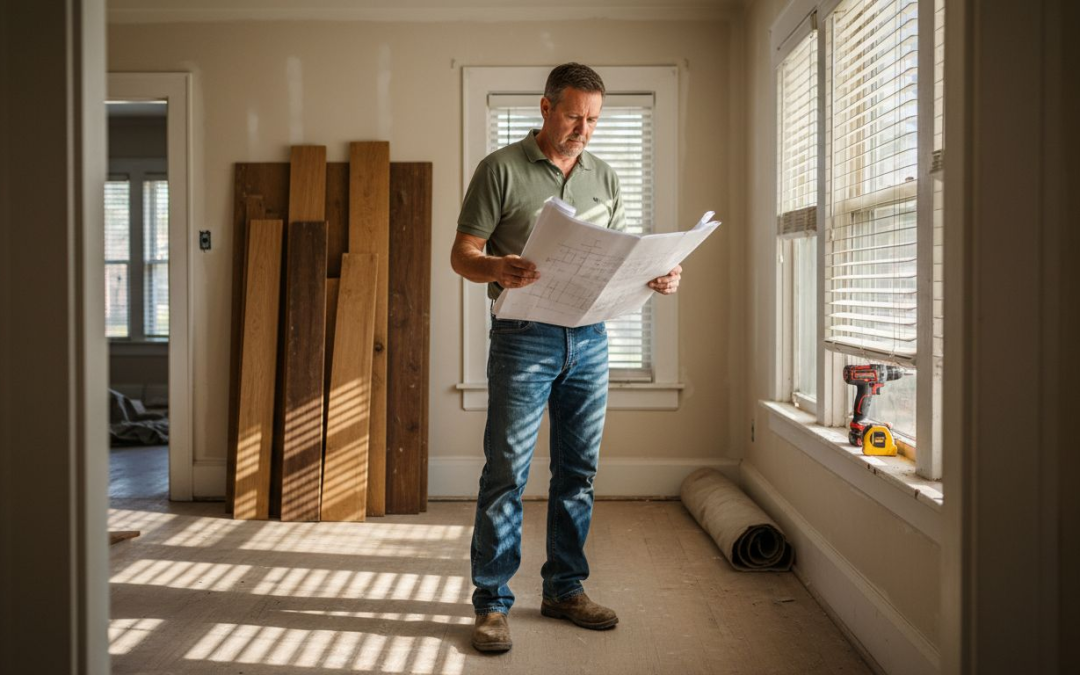
Choosing the right materials for your Dallas-Fort Worth renovation can dramatically reduce your property’s environmental impact while cutting long-term costs. Sustainable materials reduce embodied carbon by up to 30% compared to traditional options, making them a smart choice for homeowners and commercial property owners seeking both environmental responsibility and financial benefits. This guide explores how sustainable materials improve energy efficiency, property value, and occupant health in the unique Dallas-Fort Worth climate.
Table of Contents
- Introduction To Sustainable Materials
- Environmental Benefits Of Sustainable Materials
- Energy Efficiency Improvements From Sustainable Materials
- Economic Advantages Of Using Sustainable Materials
- Health And Occupant Comfort Benefits
- Common Misconceptions About Sustainable Materials
- How To Select And Source Sustainable Materials In Dallas-Fort Worth
- Summary And Next Steps For Sustainable Renovations
- Explore Sustainable Renovation Services With Astrotech Construction
- Frequently Asked Questions
Key takeaways
| Point | Details |
|---|---|
| Carbon footprint reduction | Sustainable materials cut embodied carbon by 30-60% compared to conventional options. |
| Energy cost savings | Proper sustainable insulation and materials reduce cooling costs by 20-50% annually. |
| Property value increase | Sustainable renovations can boost property values by 5-10% while qualifying for local rebates. |
| Health improvements | Low-VOC materials reduce indoor pollutants by up to 50%, improving air quality. |
| Local economic support | Regional sourcing cuts transport emissions by 20% and supports Dallas-Fort Worth suppliers. |
Introduction to sustainable materials
Sustainable materials are products derived and manufactured to minimize environmental impact while promoting resource efficiency throughout their lifecycle. These materials prioritize renewable sources, reduced energy consumption during production, and minimal waste generation.
For Dallas-Fort Worth renovations, sustainable materials address both environmental goals and practical climate needs. The region’s hot summers and occasional severe weather demand materials that perform well under stress while reducing energy demands. Common sustainable options include:
- Bamboo flooring and structural elements that regenerate rapidly
- Reclaimed wood from demolished structures, reducing demand for virgin timber
- Low-VOC paints and finishes that minimize harmful chemical emissions
- Cellulose insulation made from recycled paper products
- Recycled steel and composite materials for structural applications
These materials help property owners reduce their carbon footprint while improving durability and performance. In Dallas-Fort Worth’s climate, selecting materials that handle heat and humidity efficiently creates comfortable indoor environments with lower operational costs. Understanding which materials qualify as sustainable and how they perform locally empowers you to make informed renovation decisions that benefit both your property and the broader environment.
Environmental benefits of sustainable materials
Embodied carbon represents the total greenhouse gas emissions generated during material extraction, manufacturing, transportation, and installation. Construction materials account for a significant portion of global carbon emissions, making material selection crucial for environmental impact.
Sustainable materials reduce embodied carbon substantially compared to conventional options. Bamboo and reclaimed wood can cut embodied carbon by 30-60% versus new lumber or concrete. For Dallas-Fort Worth properties, this reduction becomes even more meaningful when combined with local sourcing that eliminates long-distance transportation emissions.
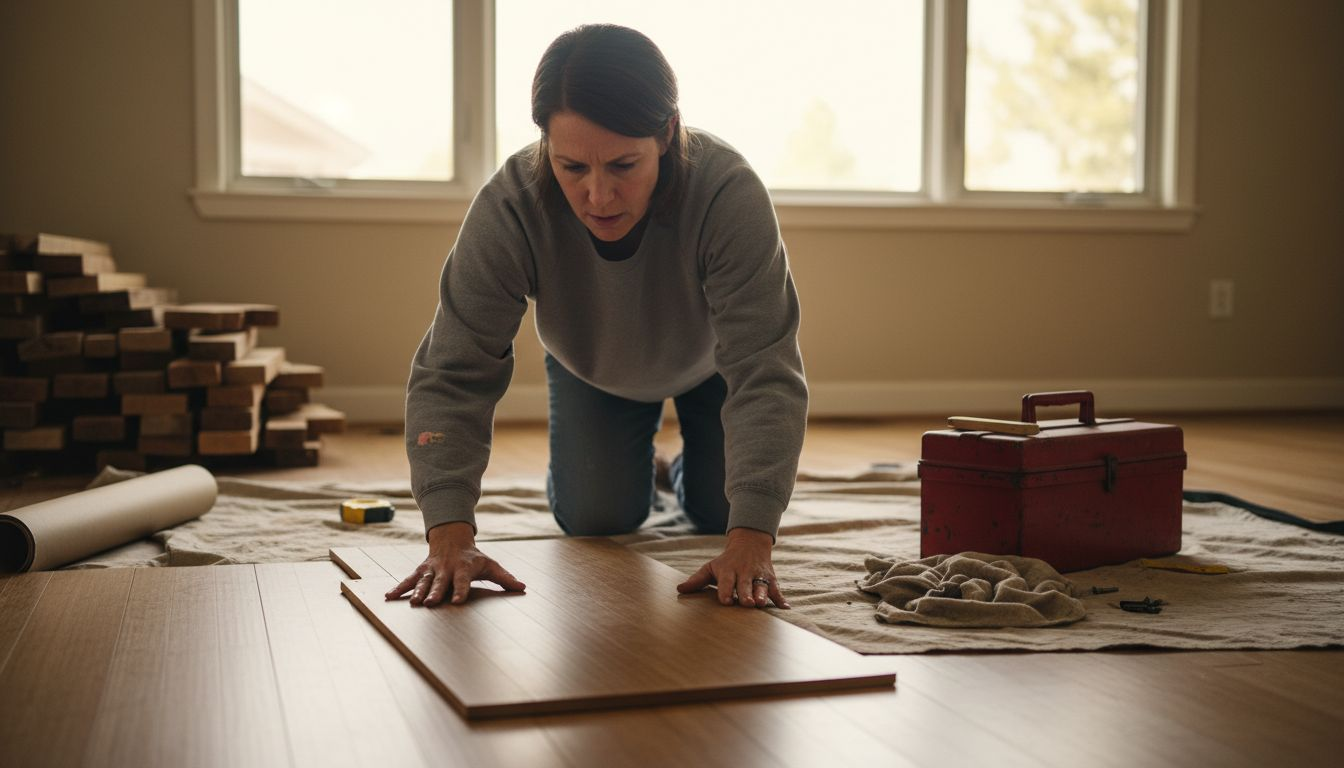
The environmental advantages extend beyond production. Sustainable materials often require less energy-intensive maintenance and last longer, reducing replacement frequency. When incorporated into green building practices, these materials create structures that adapt better to local climate conditions, reducing operational energy needs.
Consider these embodied carbon comparisons for common building materials:
- Bamboo flooring: 30-40% lower embodied carbon than hardwood
- Reclaimed wood: 60-70% lower embodied carbon than new lumber
- Recycled steel: 50-60% lower embodied carbon than virgin steel
- Cellulose insulation: 40-50% lower embodied carbon than fiberglass
Switching from concrete to sustainable alternatives in a typical 2,000 square foot Dallas-Fort Worth renovation can eliminate 8-12 tons of CO2 emissions, equivalent to taking two cars off the road for a year.
These reductions matter for Dallas-Fort Worth property owners committed to environmental stewardship. The region’s growing focus on sustainability makes material choices increasingly important for both ecological responsibility and market positioning.
Energy efficiency improvements from sustainable materials
Sustainable insulation materials deliver superior thermal performance that directly translates to lower cooling costs in Dallas-Fort Worth’s hot climate. Cellulose insulation and spray foam options provide high R-values while sealing air leaks that force air conditioning systems to work harder.
Proper sustainable material selection can reduce annual energy costs by 20-50%. For a typical Dallas-Fort Worth home, this represents $600-1,500 in yearly savings. Commercial properties see even larger reductions due to their greater square footage and cooling demands.
Pro Tip: Choose insulation materials with R-values of R-30 or higher for attics and R-13 to R-15 for walls to maximize cooling efficiency in Texas heat. Spray foam provides excellent air sealing that reduces infiltration by up to 40%.
Sustainable materials contribute to energy efficiency through multiple mechanisms:
- Superior insulation properties that maintain consistent indoor temperatures
- Reflective roofing materials that deflect solar heat rather than absorbing it
- Thermal mass materials like adobe or concrete that store coolness overnight
- Advanced window films and glazing that block heat while allowing natural light
- Breathable wall systems that manage moisture without trapping humidity
These improvements create more comfortable indoor environments while reducing strain on HVAC systems. Equipment lasts longer when it operates less frequently, adding maintenance savings to energy cost reductions. The compounding benefits make sustainable materials a practical investment for Dallas-Fort Worth property owners facing rising energy costs and increasingly hot summers.
Economic advantages of using sustainable materials
Sustainable renovations increase property values by 5-10% according to real estate market analysis. Buyers increasingly prioritize energy efficiency and environmental responsibility, making sustainable features attractive selling points. This appreciation helps offset initial material costs while providing long-term financial benefits.
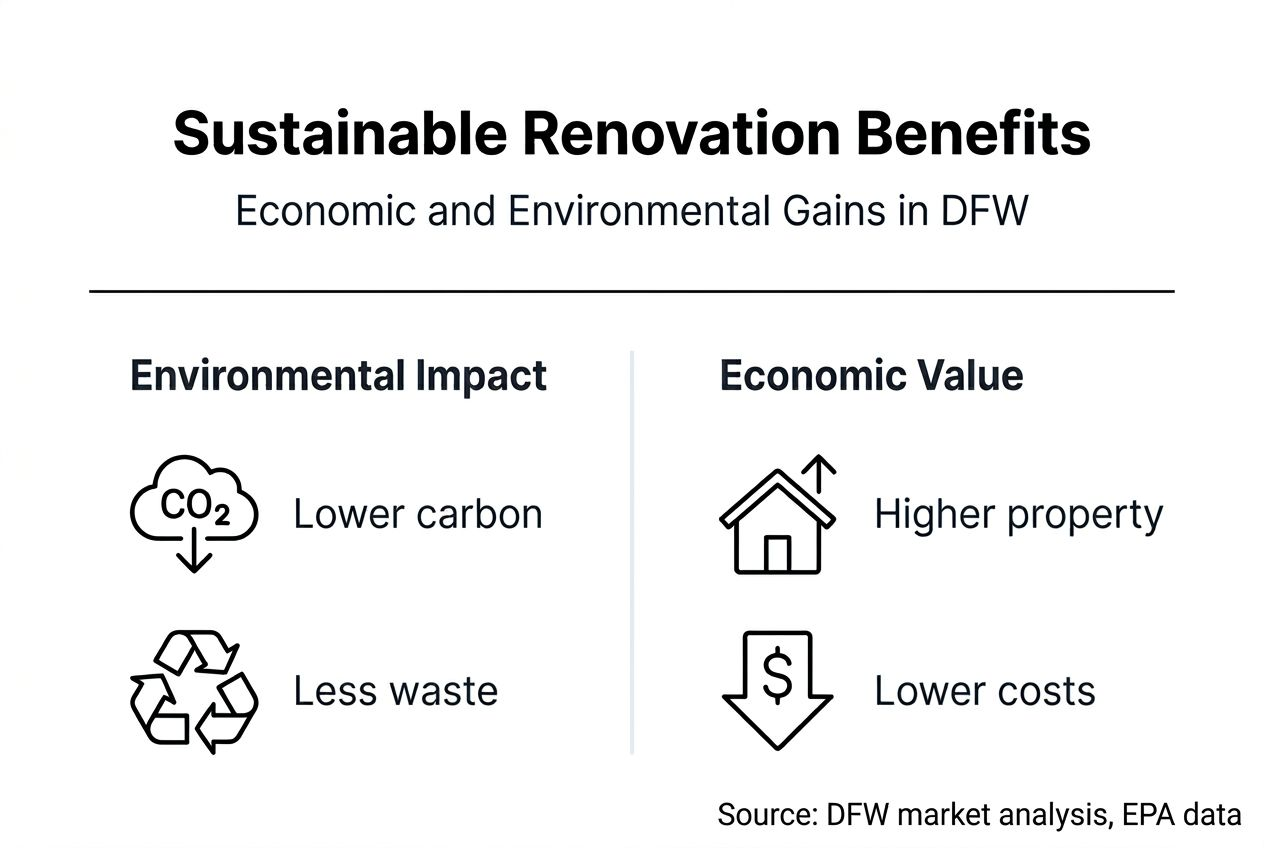
Dallas-Fort Worth offers substantial incentives for sustainable renovations. Property owners can access rebates up to $2,500 for ENERGY STAR certified materials and energy-efficient upgrades. These programs reduce upfront costs and improve project return on investment significantly.
Follow these steps to maximize financial benefits:
- Research available rebates and incentives before finalizing material selections
- Choose ENERGY STAR certified products that qualify for the highest rebate tiers
- Document all purchases and installations with receipts and contractor certifications
- Submit rebate applications within specified timeframes, typically 60-90 days post-completion
- Track energy bills before and after renovation to quantify actual savings
Lifecycle cost analysis reveals the true economic picture. While sustainable materials may cost 10-20% more initially, their durability and performance create savings over 10-15 years:
| Material Type | Upfront Cost | 15-Year Maintenance | Energy Savings | Total Lifecycle Cost |
|---|---|---|---|---|
| Sustainable | $25,000 | $2,000 | $18,000 | $9,000 |
| Conventional | $22,000 | $5,500 | $0 | $27,500 |
Pro Tip: Factor incentives into your initial budget calculations rather than treating them as bonuses. This approach provides accurate cost comparisons and demonstrates the true affordability of sustainable remodeling options.
The combination of property value increases, reduced operating costs, and available incentives makes sustainable materials financially competitive even before considering environmental benefits. For Dallas-Fort Worth property owners planning renovations, these economic advantages strengthen the case for sustainable material selection.
Health and occupant comfort benefits
Indoor air quality improves dramatically when you choose low-VOC paints, finishes, and adhesives. Traditional building materials release volatile organic compounds that accumulate in enclosed spaces, causing respiratory irritation, headaches, and long-term health concerns. Low-VOC sustainable materials reduce indoor pollutants by up to 50%, creating healthier environments for residents and workers.
The health improvements extend beyond pollutant reduction. Better air quality enhances sleep quality, reduces allergy symptoms, and decreases sick building syndrome effects. Studies show occupant productivity can improve 5-10% in spaces with superior air quality, making sustainable materials valuable for commercial properties where employee performance directly impacts business outcomes.
Dallas-Fort Worth’s climate creates unique indoor air challenges. High humidity periods promote mold growth, while sealed buildings trap pollutants. Sustainable materials address both issues through natural moisture management and minimal off-gassing.
Key health benefits include:
- Reduced respiratory irritation from chemical emissions in paints and finishes
- Lower allergen levels through materials that resist mold and dust accumulation
- Improved sleep quality from better air circulation and temperature regulation
- Decreased headaches and fatigue linked to poor indoor air quality
- Better cognitive function in work and study environments with clean air
Choose materials certified by Green Guard or similar organizations that verify low emissions. Natural fiber carpets, solid wood rather than particleboard, and water-based adhesives all contribute to healthier indoor environments. For Dallas-Fort Worth property owners concerned about occupant wellbeing, sustainable material selection represents a practical investment in health that pays dividends through improved quality of life and potentially lower healthcare costs.
Common misconceptions about sustainable materials
Myth: Sustainable materials always cost significantly more than conventional options. Reality shows lifecycle costs often favor sustainable choices when you account for durability, maintenance, and energy savings. Initial premiums of 10-20% disappear within 5-7 years through reduced operating expenses and longer replacement cycles.
Myth: Sustainable materials lack durability compared to traditional building products. Many sustainable options actually outlast conventional materials. Bamboo flooring resists moisture better than hardwood, recycled steel matches virgin steel strength, and sustainable composite decking requires less maintenance than wood while lasting 25-30 years.
Myth: Finding sustainable materials locally is difficult or impossible. Dallas-Fort Worth has numerous suppliers specializing in sustainable building products. Regional sourcing reduces transportation emissions while supporting the local economy, making sustainable choices more accessible than many property owners realize.
Debunking these myths with facts:
- Lifecycle analysis proves sustainable materials cost less over time despite higher upfront prices
- Third-party testing shows many sustainable materials exceed conventional product performance standards
- Local supplier networks in Dallas-Fort Worth provide ready access to certified sustainable products
- Warranties on sustainable materials often match or exceed conventional product guarantees
- Installation processes for sustainable materials mirror traditional methods, requiring no special training
Pro Tip: Verify sustainability claims by checking for certifications from Forest Stewardship Council, Green Guard, or ENERGY STAR. These third-party validations ensure materials meet rigorous environmental and performance standards. Review manufacturer warranties to confirm durability claims match your project timeline.
Understanding the reality behind these misconceptions empowers Dallas-Fort Worth property owners to make informed decisions based on facts rather than assumptions. Sustainable materials deliver proven performance that meets or exceeds conventional options while providing environmental and health benefits conventional products cannot match.
How to select and source sustainable materials in Dallas-Fort Worth
Sourcing materials regionally reduces transport emissions by 20% while supporting the Dallas-Fort Worth economy. Local suppliers understand regional climate demands and stock products suited for Texas conditions. This expertise helps you avoid materials that perform poorly in heat and humidity.
Recommended sustainable materials for Dallas-Fort Worth climate include bamboo for flooring and structural elements, reclaimed wood for aesthetic features, cellulose insulation for superior thermal performance, and low-VOC paints for healthier indoor air. These options handle the region’s weather patterns while delivering environmental benefits.
Compare common sustainable materials for Dallas-Fort Worth renovations:
| Material | Performance Rating | Cost vs. Conventional | Durability (Years) | Environmental Impact |
|---|---|---|---|---|
| Bamboo flooring | Excellent for heat | +15% | 25-30 | Very Low |
| Reclaimed wood | Good moisture resistance | +10% | 50+ | Minimal |
| Cellulose insulation | Superior R-value | +5% | 30+ | Very Low |
| Recycled steel | Excellent structural | Equal | 50+ | Low |
When selecting vendors and contractors, prioritize these criteria:
- Certification from recognized sustainability organizations and trade associations
- Experience with sustainable materials in Dallas-Fort Worth climate conditions
- References from recent projects using similar materials and approaches
- Transparent pricing that breaks down material and labor costs separately
- Knowledge of local building codes and compliance requirements
Pro Tip: Partner with contractors certified in sustainable building practices to ensure proper installation. Even superior materials underperform when installed incorrectly. Ask potential contractors about their experience with specific sustainable materials before committing to ensure they understand installation requirements.
Choosing appropriate materials for Dallas renovations requires balancing performance, cost, and environmental impact. Focus on materials proven in local conditions rather than products optimized for other climates. This practical approach ensures your sustainable renovation delivers promised benefits while avoiding costly mistakes.
Summary and next steps for sustainable renovations
Sustainable materials deliver measurable benefits across environmental, economic, and health dimensions. They reduce carbon emissions by 30-60%, cut energy costs by 20-50% annually, and improve indoor air quality by eliminating up to 50% of harmful pollutants. These advantages make sustainable materials practical choices for Dallas-Fort Worth renovations rather than purely idealistic options.
Local climate adaptation through sustainable material selection addresses the region’s specific challenges. Hot summers demand superior insulation and reflective materials that reduce cooling loads. Available incentives up to $2,500 improve project economics while supporting environmental goals.
Take these steps to begin your sustainable renovation:
- Research available rebates and incentive programs to understand financial benefits
- Consult with local contractors experienced in sustainable building practices
- Request material samples and certifications to verify sustainability claims
- Develop a phased approach if budget constraints prevent complete sustainable renovation
- Document your project to qualify for incentives and track actual performance versus projections
Dallas-Fort Worth property owners planning renovations should prioritize sustainable materials that align with local climate conditions and available incentive programs. The combination of environmental responsibility, financial benefits, and improved occupant health creates compelling reasons to choose sustainable options. Working with experienced local professionals ensures proper material selection and installation that maximizes these benefits while avoiding common pitfalls.
Explore sustainable renovation services with Astrotech Construction
Astrotech Construction specializes in sustainable home remodeling and renovation throughout the Dallas-Fort Worth Metroplex. Our team helps property owners navigate material selection, maximize available incentives, and ensure compliance with local building codes for environmentally responsible projects.
We provide comprehensive support from initial planning through project completion, including material sourcing assistance and coordination with local suppliers. Our experience with sustainable renovations in Dallas-Fort Worth climate conditions ensures your project delivers promised energy savings and environmental benefits. Access our material selection resources and green building expertise to plan your sustainable renovation effectively.
Pro Tip: Schedule an early consultation to identify which sustainable materials qualify for current incentive programs and how to structure your project timeline for maximum rebate eligibility. This planning accelerates approvals and ensures you capture all available financial benefits.
Frequently asked questions
What are the most common sustainable materials used in Dallas-Fort Worth renovations?
Bamboo flooring, reclaimed wood, low-VOC paints, and cellulose insulation are the most popular choices. These materials suit the local climate while delivering environmental benefits and performance that matches or exceeds conventional options.
How do sustainable materials impact my renovation budget?
Upfront costs run 10-20% higher than conventional materials, but lifecycle savings and rebates up to $2,500 offset these expenses. Energy savings of 20-50% annually and property value increases of 5-10% provide strong financial returns over 10-15 years.
Are sustainable materials durable enough for Texas weather?
Many sustainable materials outperform conventional options in Texas conditions. Bamboo resists moisture better than hardwood, while recycled steel and sustainable composites handle heat and humidity effectively. Selecting materials tested for hot climates ensures optimal performance.
What incentives are available for sustainable renovations in Dallas-Fort Worth?
Property owners can access rebates and tax credits up to $2,500 for ENERGY STAR certified materials and energy-efficient upgrades. Programs require proper documentation and certified installations to qualify for maximum benefits.
Recommended
- How to choose materials for Dallas home renovations – Astrotech Construction
- Green building guide for Dallas-Fort Worth renovations – Astrotech Construction
- 7 Key Home Improvement Trends 2025 for Dallas Owners – Astrotech Construction
- 7 Key Residential Remodeling Trends 2025 for DFW Homes – Astrotech Construction