Many believe green building means skyrocketing costs and complicated renovations, but energy efficiency measures often pay back costs within 5-10 years reducing overall expenses. Green building integrates sustainable practices throughout your property’s lifecycle, from design through renovation. This guide clarifies green building basics, local Dallas-Fort Worth regulations, certifications, energy and water efficiency strategies, debunks common myths, explains financial incentives, and provides practical implementation steps for homeowners and commercial property owners.
Table of Contents
- Understanding Green Building: Definition And Lifecycle
- Local Green Building Codes And Compliance In Dallas-Fort Worth
- Energy Efficiency Strategies Tailored For DFW Homes And Businesses
- Water Conservation In Green Building: Techniques And Local Requirements
- Comparing Green Building Certifications: LEED, Green Built Texas, And IgCC
- Common Misconceptions About Green Building Debunked
- Financial Incentives And Practical Steps For Green Renovations In Dallas-Fort Worth
- Summary And Next Steps For Sustainable Property Owners
- Ready To Transform Your Dallas-Fort Worth Property Sustainably?
- Frequently Asked Questions About Green Building In Dallas-Fort Worth
Key takeaways
| Point | Details |
|---|---|
| Green building lifecycle | Sustainable practices cover design, construction, operation, maintenance, renovation, and deconstruction phases focusing on resource efficiency. |
| DFW regulations | Dallas Green Construction Ordinance mandates energy efficiency and water conservation for renovations, targeting net zero energy buildings by 2030. |
| Energy and water savings | LEED-certified buildings use 35% less energy; water-efficient fixtures and landscaping reduce utility costs significantly. |
| Certification options | LEED, Green Built Texas, and IgCC offer third-party verification with different focus areas suited to local climate needs. |
| Financial benefits | Rebates, tax credits, and PACE financing support green renovations while lifecycle savings offset upfront investments. |
Understanding green building: definition and lifecycle
Green building encompasses environmentally responsible and resource-efficient practices throughout a building’s entire life cycle including design, construction, operation, and renovation. This holistic approach distinguishes green building from simple energy upgrades by addressing multiple sustainability dimensions simultaneously. True green building considers how materials are sourced, how efficiently energy and water flow through spaces, how waste gets minimized during construction, and how the structure performs over decades.
The lifecycle perspective matters because decisions made during renovation affect environmental impact for years. Choosing durable materials reduces replacement frequency. Installing efficient HVAC systems cuts energy consumption for 15 to 20 years. Water-conserving fixtures lower bills indefinitely. Each phase presents opportunities: design phase establishes efficiency targets, construction implements sustainable methods, operation maintains performance, and renovation upgrades aging systems to modern standards.
Key sustainability goals include:
- Minimizing energy consumption through insulation, efficient appliances, and smart building systems
- Reducing water use via low-flow fixtures, rainwater harvesting, and drought-tolerant landscaping
- Selecting sustainable materials with recycled content, local sourcing, and low environmental footprint
- Decreasing waste through careful planning, material reuse, and construction recycling programs
Property owners who adopt this comprehensive view maximize both environmental benefits and long-term cost savings. Green building isn’t just about adding solar panels or switching light bulbs. It’s about creating spaces that function efficiently throughout their operational lifespan while respecting natural resources.
Local green building codes and compliance in Dallas-Fort Worth
Dallas-Fort Worth property owners must navigate specific local ordinances when planning sustainable renovations. Dallas’ Green Construction Ordinance mandates energy efficiency, water conservation, and heat island effect reduction for all residential and commercial new constructions and major renovations. This ordinance rolled out in phases, with compliance requirements now fully active for projects across the metroplex.
The ordinance affects both residential homes and commercial buildings undergoing substantial renovations. Major remodels triggering permit requirements must demonstrate compliance through third-party certification. Acceptable certification programs include Green Built Texas, LEED, or the International Green Construction Code (IgCC). Each certification requires documented compliance verified by qualified inspectors, ensuring projects meet established sustainability benchmarks.
Dallas established ambitious climate targets driving these regulations. Dallas aims for 100% of new construction to be net zero energy by 2030, with existing homes reducing energy use by 10% and 25% by 2030 and 2050 respectively. These goals shape renovation planning for forward-thinking property owners. Meeting current codes positions your property ahead of future requirements while capturing immediate efficiency benefits.
Compliance involves several steps:
- Consulting compliance tips for remodels dallas fort worth during early planning stages
- Selecting appropriate certification path based on project scope and budget
- Working with certified professionals who understand local code requirements
- Scheduling mandatory third-party inspections at key construction milestones
- Documenting all efficiency measures for verification and future reference
Understanding these local requirements prevents costly mid-project corrections and ensures your renovation contributes to regional sustainability goals while maintaining full legal compliance.
Energy efficiency strategies tailored for DFW homes and businesses
Energy efficiency delivers the fastest payback among green building investments. LEED-certified buildings use on average 35% less energy than comparable buildings without certification, translating directly to lower utility bills. Dallas-Fort Worth’s hot summers and mild winters create specific opportunities for strategic efficiency improvements.
Effective energy upgrades for local properties include:
- Enhanced insulation in attics, walls, and crawl spaces to combat summer heat gain and winter heat loss
- High-efficiency HVAC systems sized correctly for your space with programmable thermostats and zoned controls
- LED lighting throughout interior and exterior spaces reducing electricity consumption by 75% compared to incandescent bulbs
- Energy-efficient windows with low-E coatings blocking heat transfer while maintaining natural light
- Air sealing around doors, windows, and penetrations eliminating drafts and reducing conditioned air loss
Local government programs support these improvements. Dallas and surrounding municipalities offer free energy audits identifying your property’s biggest efficiency opportunities. Weatherization assistance programs help qualifying property owners implement recommended upgrades at reduced costs. These programs prioritize measures delivering maximum energy savings for the investment.
Implementing energy efficient remodeling ideas for homes starts with understanding your baseline consumption. Review utility bills to identify seasonal patterns and high-usage periods. Professional energy audits use blower door tests and thermal imaging to pinpoint air leaks and insulation gaps invisible to homeowners.
Pro Tip: Focus first on air sealing and insulation before upgrading HVAC equipment. Reducing your heating and cooling load allows you to install smaller, less expensive systems while achieving better comfort and lower energy bills. Many DFW homeowners overlook this sequence and overspend on oversized equipment compensating for poor building envelope performance.
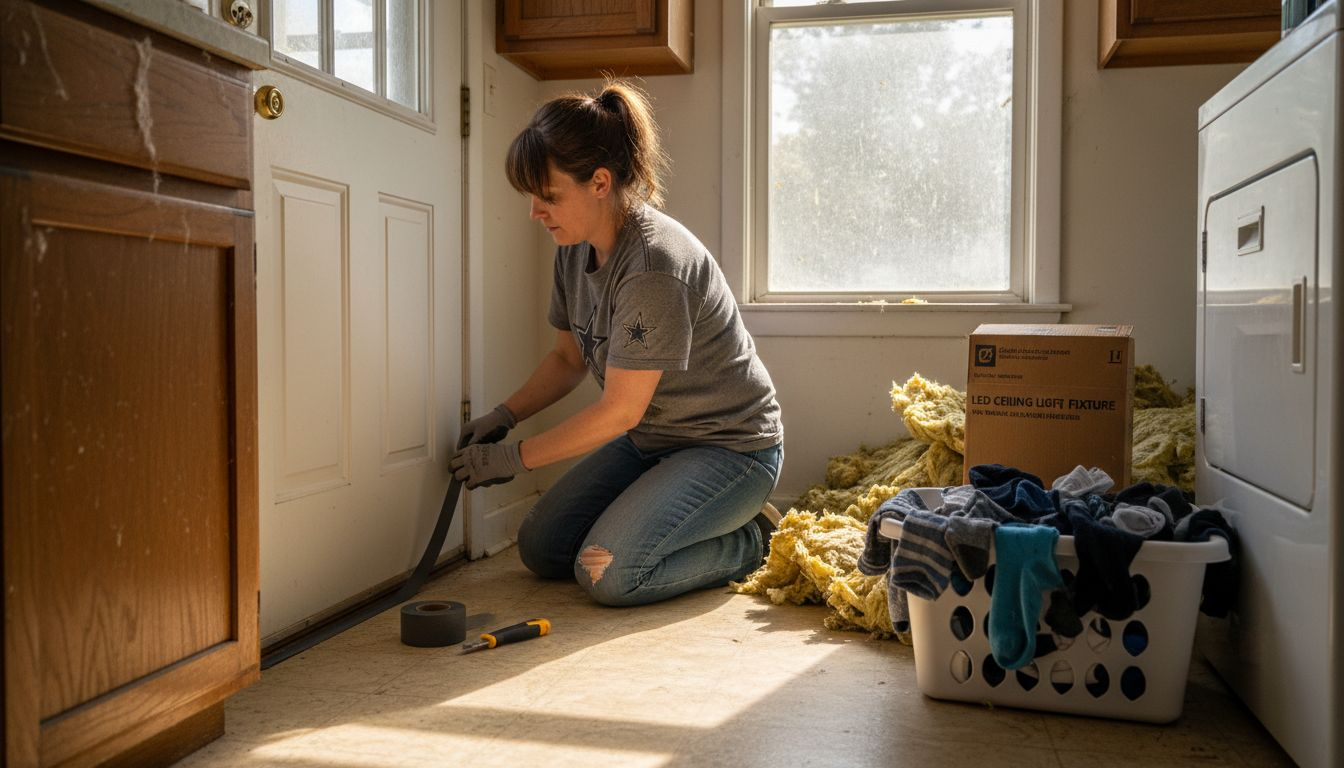
Explore smart energy-efficient home improvements that match your budget and timeline. Small changes accumulate significant savings over time, while comprehensive renovations deliver immediate dramatic reductions in energy consumption.
Water conservation in green building: techniques and local requirements
Water efficiency complements energy savings in comprehensive green building strategies. Dallas-Fort Worth’s periodic droughts and water supply challenges make conservation both environmentally responsible and financially smart. Local green building codes recognize this reality by mandating water efficiency measures alongside energy requirements.
Indoor water conservation focuses on fixture efficiency. WaterSense labeled faucets, showerheads, and toilets reduce water consumption without sacrificing performance. Modern low-flow toilets use 1.28 gallons per flush compared to older models using 3.5 to 7 gallons. A family of four saves roughly 16,000 gallons annually by upgrading bathroom fixtures alone. These savings translate directly to lower water and wastewater bills.
Outdoor water use presents larger conservation opportunities. Water conservation requirements for landscaping under Dallas green building code include drip irrigation and drought-tolerant plants to reduce landscape water use by 20%. Traditional spray irrigation wastes water through evaporation and overspray. Drip systems deliver water directly to plant roots with 90% efficiency compared to 65% for conventional sprinklers.
Effective outdoor strategies include:
- Installing drip irrigation or soaker hoses for garden beds and foundation plantings
- Selecting native Texas plants adapted to local rainfall patterns requiring minimal supplemental watering
- Grouping plants by water needs to avoid overwatering drought-tolerant species
- Adding mulch around plants to retain soil moisture and reduce evaporation
- Collecting rainwater in barrels or cisterns for landscape irrigation during dry periods
These measures reduce both water consumption and landscape maintenance costs. Native plants require less fertilizer, pruning, and pest control than non-adapted species. Efficient irrigation systems lower water bills while maintaining healthy attractive landscapes year-round.
Property owners combining indoor fixture upgrades with outdoor efficiency improvements typically reduce total water use by 30% to 50%. These savings compound annually while supporting regional water conservation goals and reducing strain on municipal water systems.
Comparing green building certifications: LEED, Green Built Texas, and IgCC
Understanding certification options helps you select the program best suited to your renovation goals and budget. Three primary certifications dominate the Dallas-Fort Worth market, each offering distinct advantages for different property types and owner priorities.
| Certification | Focus Areas | Verification | Best For |
|---|---|---|---|
| LEED | Energy, water, materials, indoor air quality, innovation | Third-party inspection and documentation review | Commercial buildings, large residential projects seeking national recognition |
| Green Built Texas | Texas climate adaptation, energy efficiency, water conservation | Third-party inspection at key milestones | Residential and small commercial projects prioritizing local climate fit |
| IgCC | Minimum mandatory standards, energy and water baselines | Code compliance inspection | Projects requiring basic code compliance without premium certification costs |
LEED-certified buildings use on average 35% less energy than comparable buildings, making LEED valuable for properties where operational savings justify certification costs. LEED certification involves detailed documentation, professional fees, and registration costs, but delivers nationally recognized credentials appealing to tenants and buyers. Multiple certification levels (Certified, Silver, Gold, Platinum) allow scaling investment to match project ambitions.
Green Built Texas tailors requirements to Texas climate conditions, emphasizing strategies effective in hot, humid environments. This program costs less than LEED while providing rigorous third-party verification. Green Built Texas suits residential renovations and smaller commercial projects where local market recognition matters more than national credentials.
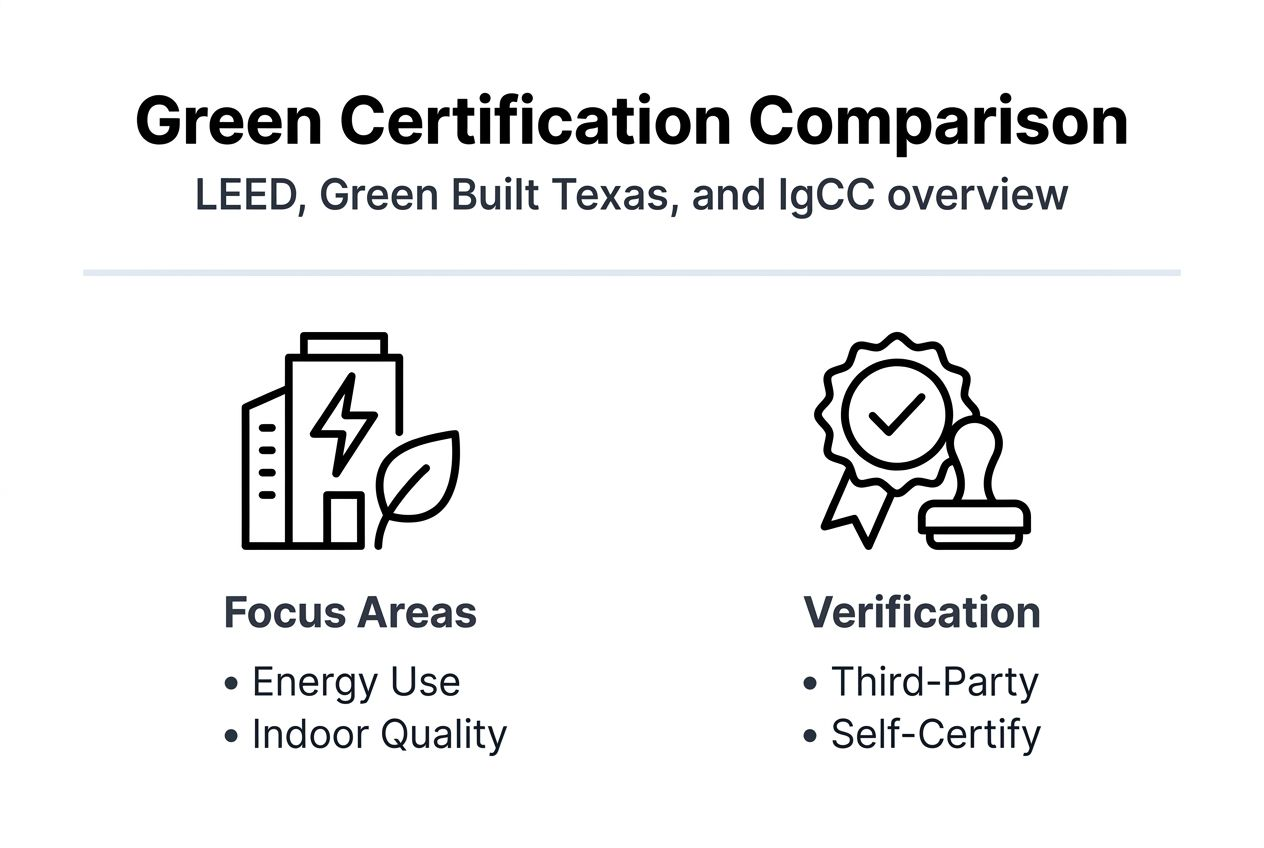
IgCC establishes mandatory minimums increasingly adopted by Texas municipalities. Dallas’ Green Construction Ordinance mandates compliance with Green Built Texas, LEED, or IgCC including third-party inspections. IgCC compliance meets legal requirements without pursuing premium certification levels, making it the most economical option for budget-conscious projects.
Key considerations when selecting certification:
- Project scale and budget available for certification fees and documentation
- Target market expectations for residential resale or commercial tenant attraction
- Desired recognition level: local community versus national sustainability leadership
- Specific sustainability priorities: energy focus versus comprehensive environmental performance
Consult with experienced green building professionals early in planning to choose the certification path maximizing value for your specific renovation goals and property type.
Common misconceptions about green building debunked
Several persistent myths discourage property owners from pursuing sustainable renovations. Understanding the reality behind these misconceptions removes barriers to implementing beneficial green building strategies.
-
Green building always costs prohibitively more upfront. While some green materials and systems carry premium prices, many energy efficiency measures often pay back costs within 5-10 years. LED lighting pays back in 2 to 3 years. Enhanced insulation recovers costs through reduced HVAC bills in 5 to 7 years. Lifecycle cost analysis often shows green buildings cost less to own and operate than conventional construction when you account for 20 to 30 years of utility savings, maintenance reductions, and higher resale values.
-
Green buildings look unusual or unattractive. Modern green building techniques integrate seamlessly with any architectural style. Energy-efficient windows appear identical to standard windows. High-performance insulation hides within walls. Solar panels now come in low-profile designs matching roof colors. Green building focuses on performance, not aesthetics. You control your property’s appearance while achieving sustainability goals invisible to observers.
-
Green building only applies to new construction, not renovations. Renovation projects offer excellent green building opportunities. Upgrading insulation, replacing old HVAC systems, installing efficient fixtures, and improving air sealing deliver immediate benefits in existing structures. Many certification programs specifically accommodate renovation projects with adjusted requirements recognizing existing building constraints. Green retrofits often achieve 40% to 60% energy reductions without changing building footprints or exterior appearances.
Pro Tip: Evaluate renovation investments using lifecycle cost analysis rather than just upfront price tags. Calculate total cost of ownership including purchase price, installation, energy consumption, maintenance, and expected lifespan. Green options frequently win this analysis even when initial costs run higher, because ongoing savings and extended equipment life offset the premium.
These myths persist because conventional thinking focuses on first costs while ignoring operational expenses. Property owners who understand total economic value make informed decisions benefiting both their finances and environmental impact.
Financial incentives and practical steps for green renovations in Dallas-Fort Worth
Multiple financial incentives reduce the cost barrier for sustainable renovations. Federal tax credits cover energy-efficient windows, insulation, HVAC systems, and renewable energy installations. State and local rebate programs offer cash back for specific efficiency upgrades. Property Assessed Clean Energy (PACE) financing allows repaying improvement costs through property tax assessments spread over 15 to 20 years, making major upgrades immediately affordable.
Dallas demonstrates strong commitment to green building. Dallas ranks second nationally among local governments for green power usage, with solar PV installations on 11 municipal buildings totaling over 422 kilowatts capacity. This leadership translates to resident programs including weatherization assistance, efficiency education workshops, and streamlined permitting for green renovations.
Implementing your green renovation follows a logical sequence:
- Schedule a professional energy audit to identify your property’s specific efficiency opportunities and prioritize improvements by return on investment.
- Review available incentives and financing options, calculating total project costs after rebates and tax credits to determine affordability.
- Develop a phased renovation plan if budget constraints prevent comprehensive upgrades, tackling highest-impact measures first.
- Research and interview qualified contractors experienced in green building using resources like hiring contractors dallas fort worth to vet candidates thoroughly.
- Obtain necessary permits following guidance in remodeling permit guide dfw to ensure code compliance and smooth inspections.
- Monitor project progress closely, verifying that specified green materials and techniques get implemented as planned.
- Conduct post-renovation performance testing to confirm achieved efficiency improvements match projections.
Qualified contractors make the difference between successful green renovations and disappointing results. Look for professionals holding relevant certifications, demonstrating local code knowledge, and providing references from similar projects. Ask detailed questions about material selections, installation techniques, and expected performance outcomes.
Monitor utility bills after renovation completion to verify predicted savings materialize. Many efficiency improvements deliver immediate measurable reductions in energy and water consumption. Track these savings to calculate actual payback periods and inform future renovation decisions.
Summary and next steps for sustainable property owners
Green building aligns environmental responsibility with financial benefits while satisfying local regulatory requirements. Dallas-Fort Worth property owners gain multiple advantages through sustainable renovations:
- Reduced utility bills from energy and water efficiency improvements
- Enhanced property values appealing to environmentally conscious buyers and tenants
- Improved indoor comfort through better insulation, air quality, and temperature control
- Compliance with current and anticipated future building codes
- Contribution to regional climate goals and resource conservation
Local codes and available certifications provide clear roadmaps for implementation. Whether pursuing LEED, Green Built Texas, or IgCC compliance, established standards guide material selections, system specifications, and verification procedures. Third-party inspections ensure quality and performance meet sustainability objectives.
Qualified contractors experienced in green building translate your sustainability goals into reality. Their expertise in local codes, efficient installation techniques, and performance optimization protects your investment. Start by requesting energy audits, researching incentives, and interviewing professionals to build your renovation team.
Sustainable renovations require upfront planning but deliver lasting benefits. Each efficiency improvement reduces environmental impact while lowering operating costs for decades. Property owners who embrace green building position themselves ahead of regulatory trends while enjoying immediate comfort and savings.
Ready to transform your Dallas-Fort Worth property sustainably?
Astrotech Construction brings deep expertise in energy-efficient renovations for residential and commercial properties throughout the Dallas-Fort Worth metroplex. Our team understands local green building codes, certification requirements, and climate-specific strategies that maximize your investment’s performance and value. We guide you through every step, from initial energy assessments through final inspections, ensuring your project meets sustainability goals while staying on schedule and budget.
Our comprehensive approach integrates sustainable practices into every project phase. Whether you’re planning kitchen upgrades with energy-efficient appliances, bathroom renovations featuring water-conserving fixtures, or whole-property transformations improving insulation and HVAC systems, we deliver results that reduce your environmental footprint and operating costs. Explore our home improvement workflow seamless remodeling process to understand how we transform your vision into reality.
Discover the full range of sustainable renovation possibilities through our full home remodeling services DFW and learn about specific types of remodeling services homeowners can leverage to achieve green building goals. Contact Astrotech Construction today for a consultation on making your property more sustainable, efficient, and valuable.
Frequently asked questions about green building in Dallas-Fort Worth
What local green building codes should DFW renovators know?
Dallas Green Construction Ordinance mandates energy efficiency, water conservation, and heat island reduction for major renovations of residential and commercial properties. Compliance requires third-party certification through Green Built Texas, LEED, or IgCC with documented inspections at key construction phases.
How do I qualify for green building incentives in Dallas?
Federal tax credits cover qualifying energy-efficient equipment like HVAC systems, windows, and insulation. Local utility rebate programs offer cash back for specific upgrades. PACE financing allows repaying improvement costs through property tax assessments. Check with local energy providers and city programs for current available incentives.
Can I apply green building principles to existing homes?
Existing homes offer excellent green building opportunities through renovation. Upgrade insulation, replace aging HVAC systems, install efficient fixtures, seal air leaks, and improve windows to achieve 40% to 60% energy reductions. Many certification programs accommodate renovations with requirements adjusted for existing structure constraints.
What certifications best fit commercial renovations in DFW?
LEED suits larger commercial projects seeking national recognition and tenant appeal. Green Built Texas works well for smaller commercial properties prioritizing Texas climate adaptation at lower certification costs. IgCC provides mandatory minimum compliance meeting local code requirements economically. Choice depends on project scale, budget, and market positioning goals.
How do I find contractors experienced in green building locally?
Seek contractors holding green building certifications like LEED AP or Green Built Texas credentials. Request references from similar sustainable renovation projects. Verify knowledge of local codes and certification requirements. Ask detailed questions about material selections, installation techniques, and expected performance outcomes. Interview multiple candidates before selecting your renovation team.
Recommended
- How to choose materials for Dallas home renovations – Astrotech Construction
- 7 Essential Home Improvement Tips 2025 for Dallas Owners – Astrotech Construction
- DFW Home Improvement Checklist: Boost Success 30% – Astrotech Construction
- How to Plan Building Upgrades in Dallas-Fort Worth: Cut Delays 40% – Astrotech Construction