

Poor planning causes 40% of Dallas-Fort Worth building upgrades to miss deadlines and exceed budgets by thousands. Whether you manage a commercial property or own a home, navigating permits, contractors, and timelines feels overwhelming without a roadmap. This guide walks you through each planning phase to help you control costs, stay compliant, and complete your project on schedule with confidence.
Table of Contents
- Understanding Your Building Upgrade Needs
- Navigating Permits and Regulations in Dallas-Fort Worth
- Budgeting, Financing, and Timeline Expectations
- Step-by-Step Process for Executing Building Upgrades
- Risk Management and Common Mistakes to Avoid
- Expected Outcomes and Post-Upgrade Maintenance
- Professional Support for Your Dallas-Fort Worth Building Upgrades
Key Takeaways
| Point | Details |
|---|---|
| Conduct thorough needs assessment | Identify structural versus cosmetic issues early to set realistic upgrade goals and prevent scope creep. |
| Secure permits early in Dallas-Fort Worth | Obtaining proper permits reduces renovation delays by over 40% and avoids legal fines. |
| Budget with contingency funds | Include 15-20% contingency to absorb unexpected costs and prevent budget overruns. |
| Use phased project planning | Phased approaches reduce delays by 25% compared to ad-hoc methods. |
| Hire licensed professionals only | Licensed contractors cut safety incidents by 30% and code violations by 45% in DFW renovations. |
Understanding Your Building Upgrade Needs
Before contacting contractors or comparing quotes, assess your building’s current state. Walk through every room and exterior surface, noting structural issues like foundation cracks, roof damage, or HVAC failures. Separate these from cosmetic wants such as updated paint or fixtures. Setting detailed upgrade objectives that distinguish between structural and cosmetic needs improves project focus and keeps your budget realistic.
Define your goals clearly. Do you need more space, better energy efficiency, code compliance, or aesthetic updates? Write down measurable targets: “Reduce energy bills by 25% within one year” or “Add 500 square feet for office expansion.” Clear goals prevent scope creep, where unplanned changes inflate costs mid-project. They also help contractors provide accurate bids and timelines.
Consider energy efficiency improvements early. Upgrading insulation, windows, or HVAC systems during major renovations delivers long-term savings and may qualify for rebates or tax credits. Prioritize upgrades by impact: fix structural problems first, then systems, then finishes. Document everything with photos and notes to share with contractors during consultations.
Pro Tip: Create a priority matrix ranking upgrades by urgency and budget impact. This keeps decision-making clear when unexpected costs arise.
Key steps to assess your building needs:
- Inspect foundation, roof, plumbing, electrical systems for safety hazards
- List cosmetic updates separately from structural repairs
- Set measurable goals aligned with budget and timeline
- Research energy efficiency rebates available in Dallas-Fort Worth
- Document all issues with photos and measurements for contractor quotes
With your needs and goals defined, you can now tackle Dallas-Fort Worth’s regulatory requirements confidently.
Navigating Permits and Regulations in Dallas-Fort Worth
Dallas-Fort Worth requires permits for most structural, electrical, plumbing, and HVAC work. Even minor projects can legally require permits, and skipping them leads to fines, project shutdowns, or problems selling your property later. Obtaining proper permits reduces renovation delays by over 40% and keeps you compliant with city codes.
Common permits include building permits for structural changes, electrical permits for wiring updates, plumbing permits for pipe work, and mechanical permits for HVAC installations. Each city and county in the Metroplex has slightly different requirements and fees. Check with your local building department early to understand what you need. Many minor upgrades legally require permits, so consult the remodeling permit guide for Dallas-Fort Worth before starting work.

Local building codes govern everything from fire safety to energy standards. Your design must meet these rules or face rejection during inspections. Codes change periodically, so verify you’re following the current version. Non-compliance risks stop-work orders, expensive rework, and liability if accidents occur. Insurance may not cover damages from unpermitted work.
Apply for permits as soon as your design is finalized. Approval can take two to six weeks depending on project complexity and department workload. Plan this into your timeline to avoid delays. Some jurisdictions offer expedited reviews for a fee. Keep all permit documentation on-site during construction for inspector access.
Permit types and typical approval timelines:
- Building permit (structural changes): 2 to 4 weeks
- Electrical permit (wiring, panel upgrades): 1 to 2 weeks
- Plumbing permit (pipe modifications): 1 to 2 weeks
- Mechanical permit (HVAC installation): 1 to 2 weeks
- Zoning or variance approval (if needed): 4 to 6 weeks
Understanding DFW building permit requirements protects your investment and keeps your project moving. Next, focus on budgeting and financing to manage costs effectively.
Budgeting, Financing, and Timeline Expectations
Building upgrades cost thousands to hundreds of thousands depending on scope. Residential kitchen remodels in Dallas-Fort Worth average $25,000 to $60,000, while full home renovations range from $100,000 to $300,000. Commercial tenant improvements vary widely based on square footage and systems. Get multiple contractor quotes to benchmark realistic costs for your project.
Typical building upgrade projects in Dallas-Fort Worth experience budget overruns exceeding 15% without proper planning. Common causes include scope changes, hidden damage discovered during demolition, material price increases, and permit delays. Always include a 15 to 20 percent contingency fund to absorb surprises without halting work.
Financing options include home equity loans, personal loans, contractor financing, or government programs for energy upgrades. Home equity typically offers lower interest rates but uses your property as collateral. Compare loan terms and fees carefully. Some contractors offer in-house financing with flexible payment schedules, which can simplify budgeting.
Project timelines depend on size and complexity. Small bathroom remodels take four to six weeks, while whole-home renovations span three to six months. Permit approval adds two to six weeks upfront. Weather, material availability, and inspector schedules can shift dates, so build buffer time into your plan. Phased projects let you spread costs and disruption over months or years.
Steps to create a budget and timeline plan:
- Define project scope and list all required work and materials
- Obtain three to five detailed contractor quotes for comparison
- Add 15 to 20 percent contingency for unexpected costs
- Research financing options and secure pre-approval if needed
- Map project phases with start and end dates, including permit time
- Identify potential delays (weather, inspections) and plan buffer weeks
- Track actual spending weekly against budget and adjust as needed
For guidance on selecting reliable professionals, review our hiring contractors in Dallas-Fort Worth resource. With budget and timeline set, you’re ready to execute your upgrade efficiently.
Step-by-Step Process for Executing Building Upgrades
Successful upgrades follow a clear sequence: assessment, design, permitting, construction, and final inspection. Start by documenting your building’s condition and defining goals as covered earlier. Next, hire an architect or designer if needed to create plans that meet your vision and local codes. Submit permit applications with these plans and wait for approval before starting demolition or construction.
Phased planning breaks large projects into manageable chunks. For example, complete structural repairs first, then rough-in systems (electrical, plumbing), then finishes. This approach reduces risk and allows inspections at logical milestones. Phased project planning reduces delays by 25% compared to ad-hoc approaches and integrates permit compliance early, improving overall outcomes.
| Approach | Average Delay | Cost Overrun | Compliance Rate |
|---|---|---|---|
| Phased Planning | 10 to 15 days | 8 to 12% | 95% |
| Ad-Hoc Renovation | 30 to 40 days | 18 to 25% | 70% |
Hiring licensed contractors is non-negotiable. Verify every contractor’s license, insurance, and references before signing contracts. Licensed professionals understand codes, pull permits correctly, and carry liability coverage protecting you from accidents. Unlicensed workers may offer lower bids but expose you to legal and financial risk.
Steps to select and manage contractors:
- Request licenses and insurance certificates from each bidder
- Check references and review past project photos
- Compare detailed written quotes, not just total prices
- Sign contracts specifying scope, timeline, payment schedule, and warranties
- Use project management software or apps to track progress and communicate daily
- Schedule inspections at key milestones (framing, rough-in, final) as required by permits
Project management tools like BuilderTrend, CoConstruct, or even shared spreadsheets help you monitor tasks, budgets, and schedules in real time. Regular communication prevents misunderstandings and keeps everyone accountable. Our step-by-step remodeling success plan offers deeper insights into phased execution.
Pro Tip: Schedule inspections at mandated milestones immediately after completing each phase. Waiting until the end risks costly rework if inspectors find code violations buried in walls or ceilings.
For more on phased project planning benefits, explore industry best practices. With execution underway, focus next on avoiding common pitfalls that derail projects.
Risk Management and Common Mistakes to Avoid
Most upgrade failures stem from preventable mistakes. Skipping permits ranks highest, leading to fines, stop-work orders, and difficulty selling your property. Always confirm permit requirements before starting work, even for seemingly minor changes. Poor scope definition causes budget overruns when homeowners add tasks mid-project without adjusting budgets or timelines.
Weather impacts Dallas-Fort Worth projects significantly. Summer heat can delay concrete curing and exterior painting, while winter freezes halt roofing and foundation work. Plan outdoor tasks for spring or fall when conditions are stable. Store materials indoors to prevent warping or moisture damage. Communicate with contractors about weather contingencies in your contract.
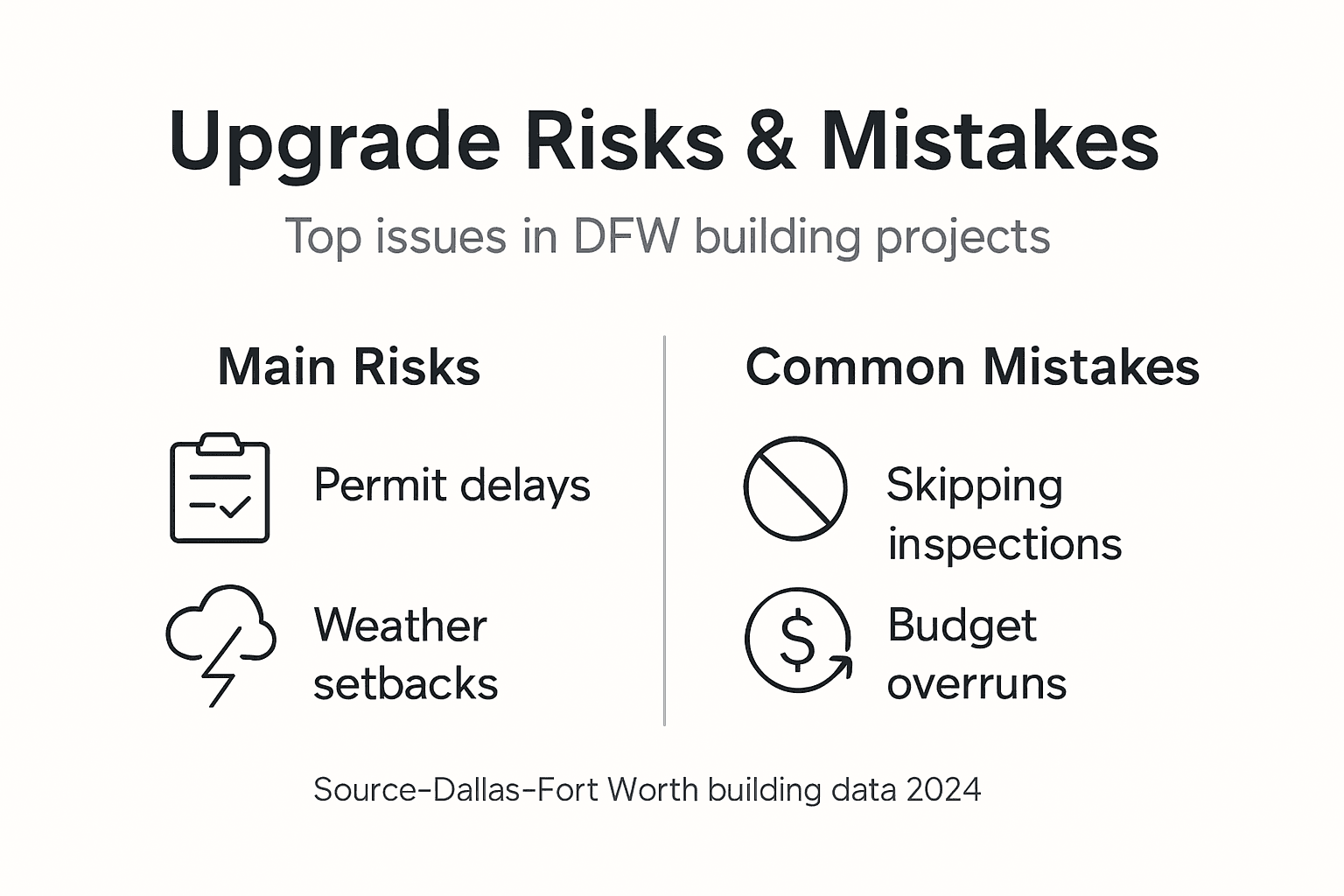
Unlicensed contractors increase safety incidents by 30% and code violations by 45% in DFW renovations. They lack proper training, insurance, and accountability. If an unlicensed worker gets injured on your property, you may face lawsuits and medical bills. Always verify credentials and never hire based solely on low bids.
Top mistakes and how to avoid them:
- Skipping permits: Consult local building departments early and budget for permit fees
- Poor scope definition: Write detailed contracts specifying all work, materials, and exclusions
- Ignoring weather: Schedule weather-sensitive tasks for optimal seasons and plan buffer days
| Hiring unlicensed contractors: Verify licenses, insurance, and references before signing any agreement - Neglecting inspections: Schedule mandatory inspections at each phase to catch issues early
- Inadequate budgeting: Include 15 to 20 percent contingency for hidden repairs and price changes
For more strategies, review our compliance tips for Dallas remodels. With risks managed, ensure your project delivers lasting value through proper verification and maintenance.
Expected Outcomes and Post-Upgrade Maintenance
Successful projects finish within 10 percent of budget, stay on schedule within two weeks, and pass all inspections on first attempt. Successful projects complete within 10% of budget, adhere to schedule +/- 2 weeks, and achieve at least 20% energy savings when efficiency upgrades are included. Track these benchmarks throughout your project to measure performance.
Energy efficiency improvements lower utility bills and increase property value. Upgraded insulation, windows, and HVAC systems can cut heating and cooling costs by 20 to 30 percent annually. Document baseline energy usage before starting and compare bills after completion to quantify savings. Many Dallas-Fort Worth utilities offer rebates for qualifying upgrades, further improving return on investment.
| Upgrade Type | Expected Outcome | Maintenance Frequency |
|---|---|---|
| HVAC Replacement | 20 to 30% energy savings | Filter change monthly, pro service annually |
| Window Upgrades | 15 to 25% heating/cooling reduction | Clean and inspect seals twice yearly |
| Roof Replacement | 20+ year lifespan, leak elimination | Inspect after storms, clean gutters quarterly |
| Plumbing Updates | Reduced water waste, fewer leaks | Check fixtures annually, flush water heater yearly |
Post-upgrade inspections verify work meets codes and contract terms. Walk through with your contractor before final payment, noting any defects or incomplete items. Request copies of inspection reports and warranties for all materials and workmanship. Keep these documents with your property records for future reference or resale.
Maintenance best practices to extend upgrade benefits:
- Schedule annual professional inspections for HVAC, plumbing, and electrical systems
- Clean and seal exterior surfaces (siding, decks) every two years
- Replace air filters monthly and check weatherstripping seasonally
- Document all maintenance and repairs in a home or building log
- Address minor issues immediately to prevent expensive damage later
Our home improvement success tips provide additional guidance on maximizing upgrade value. Now let’s explore how expert support simplifies your entire upgrade journey.
Professional Support for Your Dallas-Fort Worth Building Upgrades
Planning and executing building upgrades requires coordination, expertise, and local knowledge. Astrotech Construction specializes in residential and commercial renovations throughout Dallas-Fort Worth, managing every phase from permits to final inspections. Our team handles budgeting, contractor coordination, and compliance so you avoid costly mistakes and delays.
We offer customized project management with transparent pricing and phased scheduling that fits your timeline and budget. Whether you need a full home remodel, kitchen update, or commercial tenant improvement, our licensed professionals ensure code compliance and quality craftsmanship. Our seamless remodeling workflow integrates planning, permitting, and construction for stress-free upgrades. Explore our full home remodeling in DFW services to see how we bring your vision to life on schedule and within budget. Contact us today for a consultation and detailed quote tailored to your project.
FAQ
How do I know if my building upgrade requires a permit in Dallas-Fort Worth?
Most structural, electrical, plumbing, and HVAC work requires permits from your local building department. Cosmetic changes like painting or flooring replacement typically don’t need permits, but wall removal, window installation, or system upgrades do. Check the building permit requirements in DFW before starting any project to avoid fines and delays.
What are the best ways to stay on budget during a major building upgrade?
Define a detailed project scope in writing before signing contracts, and include 15 to 20 percent contingency for unexpected costs. Hire licensed contractors with transparent pricing and track expenses weekly against your budget. Our guides to manage upgrade budgets help you control spending and avoid common overruns.
How long does a typical building upgrade project take in Dallas-Fort Worth?
Small projects like bathroom remodels take four to six weeks, while whole-home renovations span three to six months. Permit approval adds two to six weeks upfront. Phased scheduling and proactive communication keep timelines on track despite weather or material delays. Review typical upgrade timelines in DFW for planning guidance.
Why should I hire licensed contractors for my building upgrades?
Licensed contractors understand building codes, carry liability insurance, and deliver work that passes inspections on first attempt. Unlicensed workers increase safety incidents by 30 percent and code violations by 45 percent, exposing you to legal and financial risk. Learn more about the advantages of working with licensed contractors in Dallas-Fort Worth for safe, compliant upgrades.
Recommended
- 7 Essential Home Improvement Tips 2025 for Dallas Owners – Astrotech Construction
- How to Budget Renovation: Essential Steps for DFW Homeowners – Astrotech Construction
- 7 Common DFW Remodeling Mistakes and How to Avoid Them – Astrotech Construction
- Siding Replacement Guide: Avoid 40% Moisture Damage in DFW – Astrotech Construction
- Mastering Time Management for Coaches: Boost Efficiency – Hoop Mentality
- Analisi Rischi Edilizia: Riduci Incidenti del 30% con Metodi Digitali – Sikuro