

Most Dallas property owners believe value engineering is just a polite term for cutting corners and slashing budgets. In reality, it’s a strategic methodology that systematically optimizes renovation value by balancing cost, function, quality, and performance. For homeowners and commercial property owners planning remodels in the Dallas-Fort Worth Metroplex, understanding true value engineering means unlocking smarter investments that enhance both immediate functionality and long-term returns without sacrificing quality or safety.
Table of Contents
- Understanding Value Engineering: Beyond Cost Cutting
- When And How To Apply Value Engineering For Best Results
Key takeaways
| Point | Details |
|---|---|
| Strategic optimization | Value engineering improves renovation value through systematic analysis, not budget cuts. |
| Timing matters | Early implementation during planning maximizes savings and functional improvements significantly. |
| Team collaboration | Cross-disciplinary input ensures quality, safety, and cost goals align throughout the project. |
| Local advantages | Dallas property owners can leverage Oncor rebates and address aging infrastructure proactively. |
| Long-term ROI | Proper value engineering supports sustained property value and tenant satisfaction. |
Understanding value engineering: beyond cost cutting
Value engineering often gets confused with simple cost reduction, but the distinction matters enormously for your renovation outcomes. Value Engineering (VE) is a structured, team-oriented approach to analyzing the functions of a project to achieve them at the lowest life-cycle cost without compromising quality, reliability, performance, or safety. This methodology emerged during World War II at General Electric, where material shortages forced engineers to find substitute materials that often performed better than originals. That historical foundation reveals VE’s true nature: innovation under constraint, not desperate corner cutting.
The fundamental difference lies in intent and process. Cost cutting typically slashes line items without regard for long-term consequences or functional impact. You might choose cheaper materials or eliminate features to meet budget targets. Value engineering, conversely, asks deeper questions about what each element actually accomplishes and whether better alternatives exist. The primary goal of Value Engineering in construction is not simply to cut costs, but to increase value, where value equals function divided by cost.

Think about HVAC upgrades in an older Dallas commercial building. Cost cutting might mean installing the cheapest replacement unit available. Value engineering examines cooling loads, energy efficiency, rebate opportunities, maintenance costs, and tenant comfort over a 15-year horizon. The result might be a moderately priced high-efficiency system that costs more upfront but delivers superior value through lower operating costs and available utility rebates.
Core value engineering principles include:
- Function analysis to determine what components truly accomplish
- Life-cycle cost evaluation beyond initial purchase price
- Creative alternatives generation through collaborative brainstorming
- Quality and safety preservation as non-negotiable constraints
- Performance optimization aligned with actual usage patterns
The value engineering guide outlines a six-phase process: Pre-Study, Information, Creative, Evaluation, Development, and Presentation. Each phase builds systematically toward optimal solutions. Pre-Study establishes scope and assembles the team. Information gathering documents current designs and costs. Creative brainstorming generates alternatives. Evaluation ranks options by feasibility and impact. Development refines top choices into actionable proposals. Presentation delivers recommendations with supporting data.
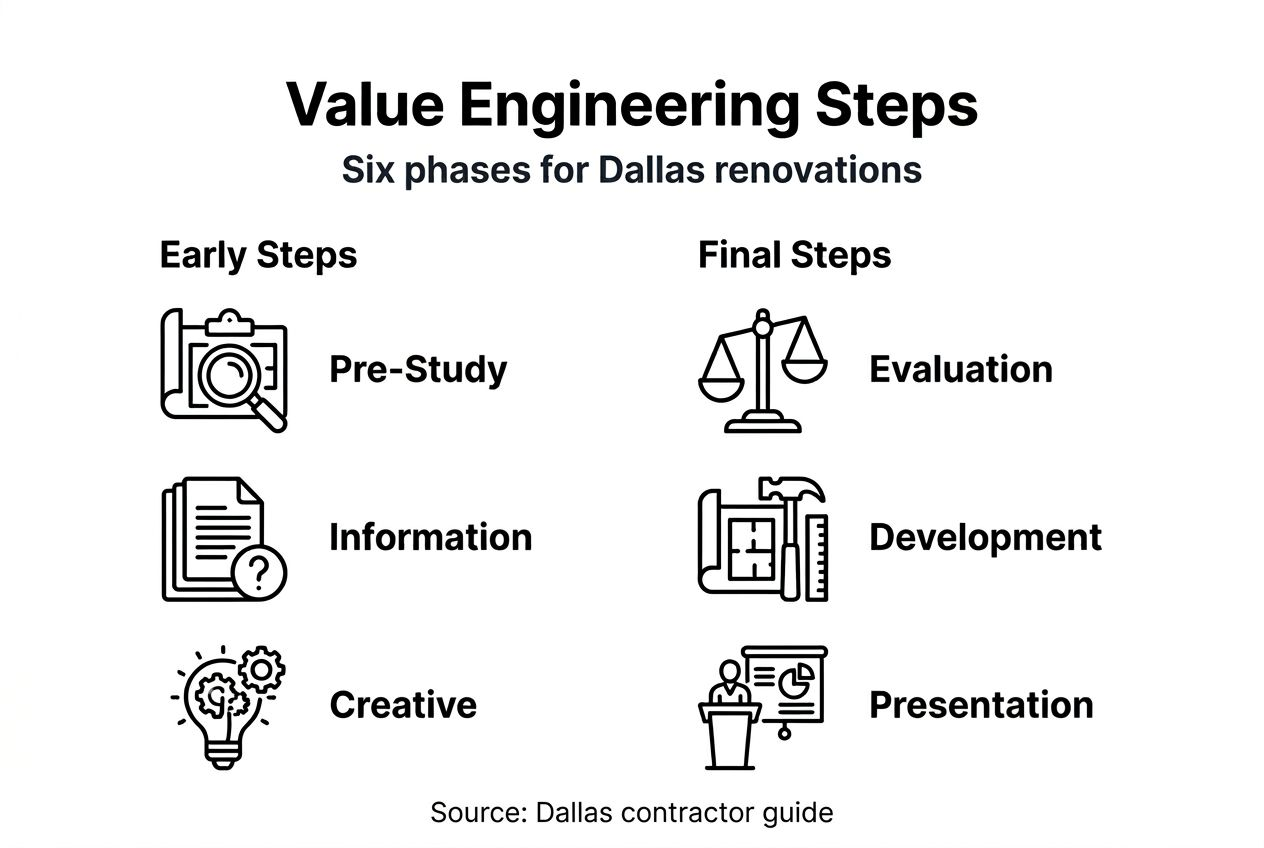
Understanding this framework helps Dallas property owners collaborate effectively with contractors during project scoping, ensuring renovation investments deliver maximum functional value per dollar spent. VE transforms budgeting from restrictive limitation into strategic optimization opportunity.
When and how to apply value engineering for best results
Timing determines whether value engineering enhances or disrupts your renovation project. The effectiveness of Value Engineering is greatest when implemented early in the construction cycle, specifically during conceptual design or early planning phases. At this stage, designs remain flexible and alternatives cost little to explore. You can evaluate material choices, system configurations, and layout options before committing resources to detailed drawings or procurement.
Applying VE late in the project lifecycle creates problems. Once designs are finalized, permits filed, and materials ordered, changes become expensive and disruptive. Teams face incomplete information and time pressure, leading to hasty decisions that compromise quality. The misconception that VE means emergency budget cutting often stems from this late application scenario. Property owners who wait until costs exceed budgets then demand
Recommended
- How to Plan Building Upgrades in Dallas-Fort Worth: Cut Delays 40% – Astrotech Construction
- 7 Essential Home Improvement Tips 2025 for Dallas Owners – Astrotech Construction
- Why use sustainable materials for Dallas-Fort Worth renovations – Astrotech Construction
- 7 Key Home Improvement Trends 2025 for Dallas Owners – Astrotech Construction