

More than 60 percent of American homeowners underestimate how long a typical remodel actually takes. Choosing to renovate can feel exciting, but timeline myths often lead to unexpected stress and delays. Television shows and online guides promise fast results, yet the reality is far more complex. By clearing up common misunderstandings, you can set realistic expectations and make smarter decisions before starting your next American remodeling project.
Table of Contents
- Defining Remodeling Timelines And Common Myths
- Project Types: What Influences Duration Most
- Key Phases In A Typical Remodeling Timeline
- Variables That Impact Residential And Commercial Schedules
- Common Delays And How To Minimize Them
Key Takeaways
| Point | Details |
|---|---|
| Understanding Remodeling Timelines | Kitchen renovations typically take 6-12 weeks, while whole-home remodels can extend to 3-6 months due to various factors. |
| Project Type Complexity | Factors such as structural modifications and design changes significantly impact remodeling durations, underscoring the need for careful planning. |
| Phases of Remodeling | Successful renovations follow structured phases, from initial consultation to final inspection, which help set realistic expectations for homeowners. |
| Minimizing Delays | Proactive planning and clear communication can mitigate common delays, such as supply chain issues and permit approvals, leading to smoother project execution. |
Defining Remodeling Timelines And Common Myths
Remodeling projects are complex undertakings with timelines that often surprise homeowners. Research from the National Association of Home Builders reveals that many misconceptions exist about how long renovations actually take. Understanding these realities helps set proper expectations and prevents frustration during home improvement projects.
Common myths about remodeling timelines stem from unrealistic television show portrayals and oversimplified renovation narratives. Most homeowners believe kitchen renovations take a couple of weeks, when in reality, comprehensive remodels can span 6-12 weeks. Small bathroom updates might require 3-4 weeks, while whole home renovations can extend 3-6 months depending on complexity. Project scope, material availability, contractor schedules, and unexpected structural discoveries significantly impact these timelines.
Critical factors influencing remodeling duration include:
- Permitting processes
- Material procurement
- Complexity of design changes
- Structural modifications
- Unexpected structural or electrical issues
- Coordination of multiple trade professionals
Research from the Joint Center for Housing Studies emphasizes that successful remodeling requires flexible planning and comprehensive understanding of potential timeline variables. Professional project management becomes crucial in navigating these complex renovation journeys, ensuring smoother execution and more accurate timeline predictions.
Project Types: What Influences Duration Most
Remodeling projects vary dramatically in complexity and duration, with certain project types presenting more intricate challenges than others. Key project complexity factors from Design Horizons reveal that renovation scope significantly impacts timeline predictability. Interior remodels like kitchen and bathroom renovations tend to have more controlled timelines, while structural modifications and whole-home transformations introduce substantially more variables.

Specific project types demonstrate unique duration characteristics. Kitchen remodels typically range from 6-12 weeks, depending on design complexity and material selections. Bathroom renovations generally require 3-6 weeks, with full bathroom overhauls potentially extending to 8 weeks. Whole home renovations represent the most extensive undertakings, potentially spanning 3-6 months and requiring comprehensive planning and coordination.
Critical project type considerations include:
- Structural modifications
- Electrical system upgrades
- Plumbing system reconfiguration
- Load-bearing wall alterations
- Historic home restoration requirements
- Custom design implementation
Engineering research highlights that project duration is not just about square footage, but involves intricate interactions between design complexity, regulatory compliance, and professional coordination. Homeowners should anticipate potential timeline extensions and maintain flexible expectations when undertaking significant renovation projects.
Key Phases In A Typical Remodeling Timeline
Research on construction project management reveals that successful remodeling follows a structured sequence of strategic phases. Each stage represents a critical component in transforming a homeowner’s vision into reality, with careful planning and execution determining project success. Understanding these phases helps set realistic expectations and enables smoother navigation through complex renovation processes.
The typical remodeling timeline encompasses several interconnected stages. Initial planning involves consultation, design conceptualization, and budget development, typically spanning 2-4 weeks. Design development follows, where architectural drawings and detailed project specifications are created, usually requiring an additional 3-6 weeks. Permit acquisition represents another crucial phase, with municipal review processes potentially extending 2-8 weeks depending on project complexity and local regulatory requirements.
Key phases in a typical remodeling timeline include:
- Initial consultation and vision development
- Architectural design and planning
- Permit and regulatory approval
- Material selection and procurement
- Demolition and site preparation
- Structural modifications
- Installation and construction
- Finishing and detailing
- Final inspection and project completion
Transportation Research Board studies highlight that comprehensive project planning significantly reduces potential delays and cost overruns. Homeowners who invest time in understanding each project phase and maintaining open communication with contractors can expect more predictable and successful remodeling experiences. Flexibility and proactive engagement remain key to navigating the intricate journey of home renovation.
Variables That Impact Residential and Commercial Schedules
Construction project duration research reveals a complex landscape of variables that dramatically influence remodeling timelines. Residential and commercial projects share fundamental challenges, but each presents unique considerations that can accelerate or delay project completion. Understanding these variables empowers property owners to develop more realistic expectations and strategic planning approaches.
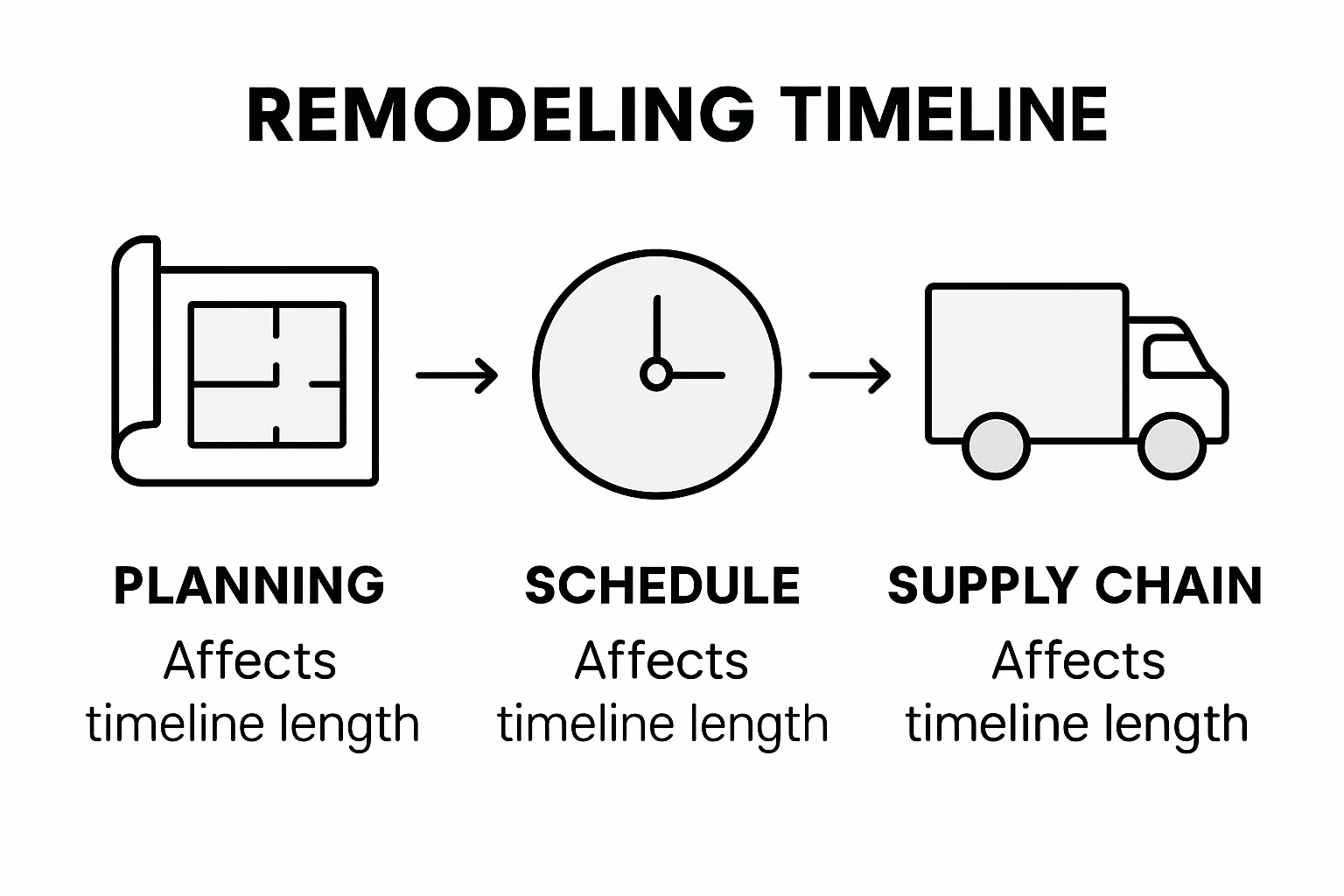
Major variables impacting project schedules include external and internal factors that extend far beyond simple square footage calculations. Weather conditions represent a significant external variable, with seasonal changes potentially introducing unexpected delays. Material procurement timelines, supply chain disruptions, and labor availability create additional complexity. Commercial projects often face more stringent regulatory requirements, potentially extending permit and approval processes compared to residential renovations.
Key variables affecting project schedules include:
- Seasonal weather conditions
- Supply chain availability
- Labor market dynamics
- Complexity of architectural design
- Permit and regulatory approval processes
- Unexpected structural discoveries
- Material lead times
- Site accessibility
- Equipment and resource coordination
- Specialized trade professional scheduling
Engineering research highlights that proactive planning and comprehensive assessment of these variables can significantly mitigate potential scheduling challenges. Successful project management requires continuous communication, flexible contingency planning, and a nuanced understanding of the dynamic factors that influence construction and renovation timelines.
Common Delays And How To Minimize Them
Research in Civil Engineering and Architecture identifies systematic patterns of delays that consistently challenge renovation projects. Understanding these common roadblocks provides homeowners and commercial property managers with strategic insights for proactive prevention. Delays are rarely random occurrences but typically stem from predictable sources that can be anticipated and mitigated through careful planning and professional management.
The most frequent sources of project delays include inadequate initial planning, unexpected structural complications, and supply chain disruptions. Material procurement challenges can extend project timelines by weeks or even months, particularly when specialized components or custom materials are required. Permit approval processes represent another significant bottleneck, with municipal review times varying dramatically based on project complexity and local regulatory environments. Skilled contractors minimize these risks through comprehensive pre-project assessments and establishing clear communication channels with regulatory authorities.
Strategies for minimizing common remodeling delays include:
- Conducting thorough initial site assessments
- Developing comprehensive contingency budgets
- Establishing clear communication protocols
- Securing necessary permits in advance
- Maintaining flexible project scheduling
- Selecting experienced contractors
- Anticipating potential supply chain interruptions
- Documenting all project specifications in detail
- Maintaining regular project status communications
- Creating realistic timeline expectations
Transportation Research Board analysis emphasizes that effective delay prevention requires a proactive approach. Successful projects demand continuous monitoring, transparent communication, and the ability to quickly adapt when unexpected challenges emerge. Homeowners who invest time in understanding potential complications and working collaboratively with their renovation team can significantly reduce the likelihood of substantial project delays.
Take Control of Your Remodeling Timeline with Astrotech Construction
Understanding the complexities and realistic timelines of remodeling projects can be overwhelming. The article highlights key challenges like permit delays, material procurement, and unexpected structural issues that extend your renovation duration. If you want to avoid costly surprises and ensure smooth progress, partnering with experienced professionals who prioritize clear communication and proactive planning is essential.
Astrotech Construction serves the Dallas – Fort Worth Metroplex with expert residential and commercial remodeling services, including full home renovations, kitchen and bathroom upgrades, and storm damage repairs. Our team is committed to setting realistic expectations and managing every phase with care — from initial design to final inspection. Visit our official website to explore how we turn complex remodeling timelines into successful projects tailored to your needs.
Ready to start your remodeling journey with confidence and clarity?

Schedule a consultation today at Astrotech Construction and experience remodeling managed the right way. Don’t let project delays or uncertainties hold you back. Take the first step toward your ideal home or business upgrade now.
Frequently Asked Questions
How long does a kitchen remodel typically take?
A kitchen remodel generally takes 6-12 weeks, depending on the complexity of the design and material selections.
What factors can delay a remodeling project?
Common delays can stem from inadequate planning, unexpected structural issues, supply chain problems, and prolonged permit approval processes.
How can I set realistic expectations for my remodeling timeline?
To set realistic expectations, consider factors such as project complexity, material availability, contractor schedules, and allow for some flexibility in your timeline.
What are the key phases in a typical remodeling timeline?
Key phases in a typical remodeling timeline include initial consultation, design development, permit acquisition, material selection, demolition, construction, and final inspection.
Recommended
- Role of Project Management in Remodeling: Complete Guide – Astrotech Construction
- Remodeling Scope Explained: Complete Project Breakdown – Astrotech Construction
- Remodeling Project Checklist: Step-by-Step Guide for Success – Astrotech Construction
- Why Plan a Remodeling Budget: Complete Guide – Astrotech Construction
- Role of Real-Time Scheduling: Complete Guide – WhenNOT Blog