
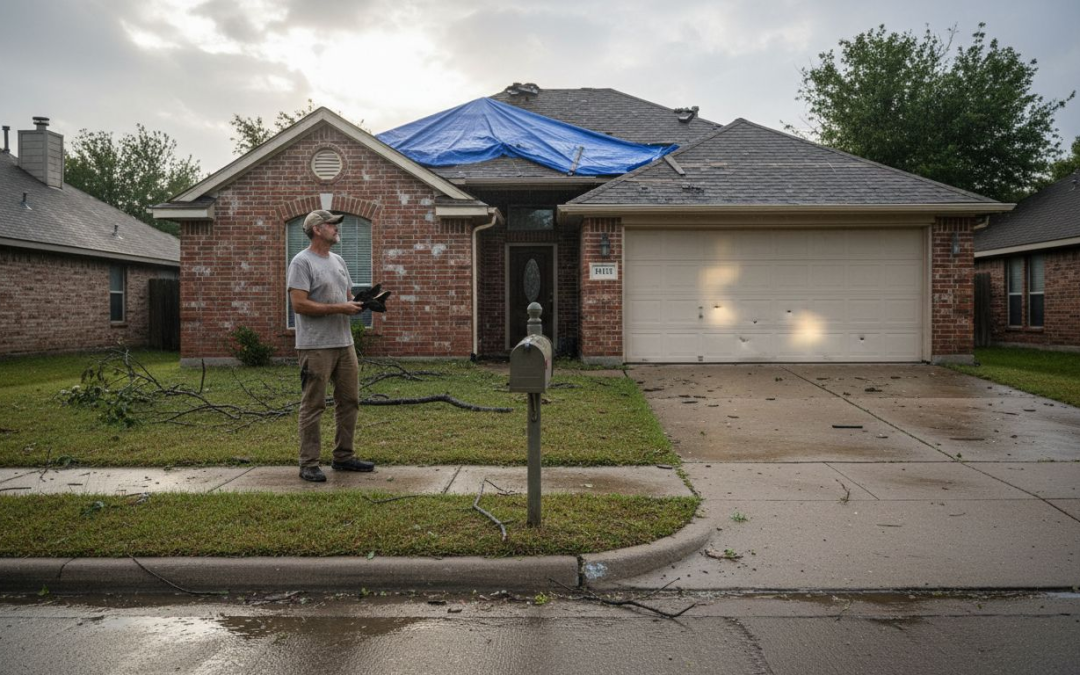
Storm damage accounts for a staggering reality many Texas property owners face yearly. With storm damage representing approximately 70% of property damage insurance claims in Texas, understanding what constitutes storm damage becomes essential for protecting your investment. Many homeowners and commercial property managers struggle to identify damage types and their severity, leading to delayed repairs and complicated insurance claims. This guide clarifies storm damage categories, assessment methods, common misconceptions, and actionable repair steps.
Table of Contents
- What Is Storm Damage? Defining and Categorizing Damage
- Types of Storm Damage: Detailed Impacts on Property
- Identifying Storm Damage: Signs and Assessment Techniques
- Common Misconceptions About Storm Damage
- Repair Approaches and Professional Services
- Insurance Considerations for Storm Damage
- Steps to Take After Storm Damage
- Preventive Measures and Mitigation
- Expert Storm Damage Repair in Dallas-Fort Worth
- Frequently Asked Questions About Storm Damage
Key Takeaways
| Point | Details |
|---|---|
| Storm damage types | Includes hail, wind, lightning, and flooding damage to roofs, siding, gutters, and structural components. |
| Professional inspection critical | Experts detect hidden micro-cracks, granule loss, and underlying damage that untrained eyes miss. |
| Misconceptions delay repairs | Believing only visible holes matter or ignoring flood risks leads to insurance claim denials. |
| Documentation drives claims | Timely professional assessments with photos and reports increase approval rates above 80%. |
| Prevention adds value | Impact-resistant materials and proper drainage reduce future damage and boost property resilience. |
What Is Storm Damage? Defining and Categorizing Damage
Storm damage refers to physical harm caused by severe weather events affecting residential and commercial properties. In the Dallas-Fort Worth Metroplex, where thunderstorms, hail, and occasional flooding occur regularly, understanding damage categories helps you respond effectively.
Four main types dominate storm damage claims:
- Hail damage: Creates dents on roofing materials, strips protective granules from shingles, and weakens overall roof integrity
- Wind damage: Tears or lifts shingles, deposits debris on roofs, applies stress to structural elements, and damages siding
- Lightning damage: Causes electrical system failures, creates fire hazards, and damages appliances through power surges
- Flooding damage: Forces water intrusion through foundations and walls, promotes rapid mold growth, and weakens structural supports
Local climate patterns influence which types occur most frequently. Dallas-Fort Worth experiences severe hailstorms during spring months, while summer brings intense wind events and flash flooding. Recognizing these patterns helps property owners prepare and respond appropriately when storms strike.
Types of Storm Damage: Detailed Impacts on Property
Each storm type creates distinct damage patterns affecting specific property components. Understanding these helps you identify problems quickly and communicate effectively with insurance adjusters and contractors.
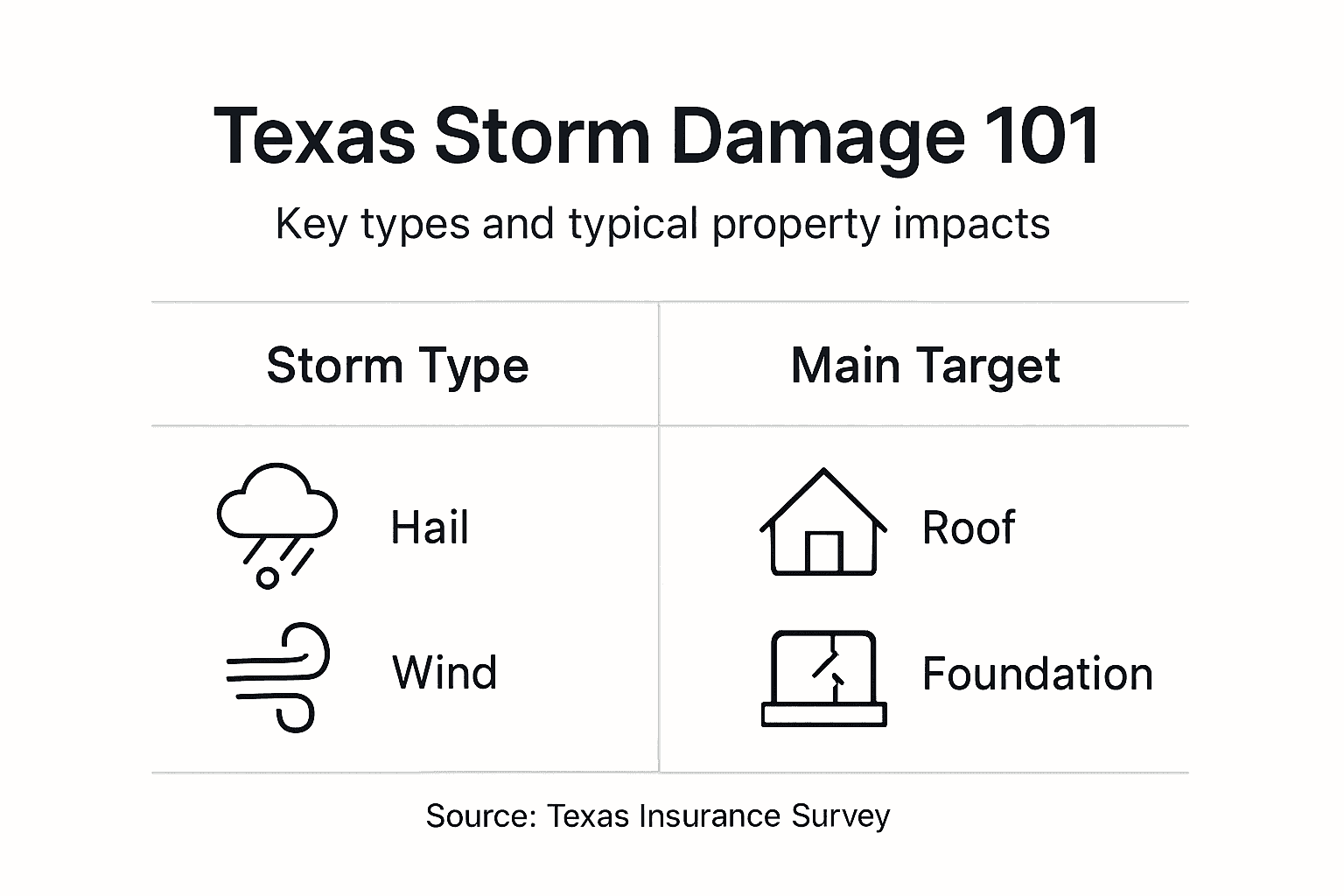
Hail damage often appears subtle at first but compromises long-term roof performance. Impacts create dents that trap moisture, strip away protective granules exposing underlying materials, and weaken shingle adhesion. Wind damage manifests more visibly through missing shingles, torn flashing, and debris accumulation. Strong gusts apply tremendous structural stress that can loosen fasteners and compromise roof decking.
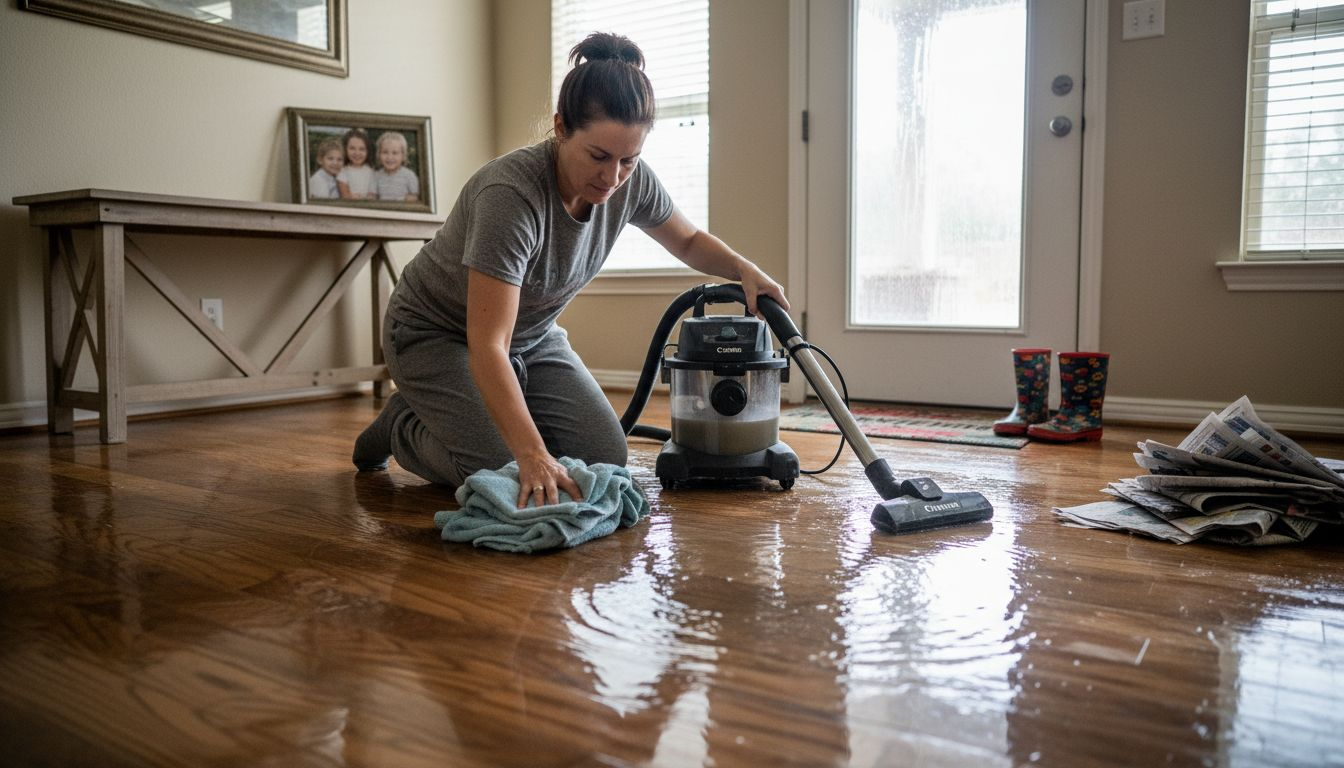
Flooding from storm runoff causes foundational damage and mold growth within 24-48 hours leading to long-term structural and health issues if untreated. Water intrusion through compromised moisture damage prevention systems creates breeding grounds for harmful microorganisms. Lightning strikes produce immediate electrical hazards and potential fire risks requiring urgent professional evaluation.
| Damage Type | Primary Targets | Secondary Effects | Typical Repair Timeline |
|---|---|---|---|
| Hail | Roofing shingles, gutters, skylights | Granule loss, water infiltration | 1-3 weeks |
| Wind | Shingles, siding, tree limbs | Structural stress, debris damage | 2-4 weeks |
| Flooding | Foundation, basement, crawl spaces | Mold growth, material degradation | 3-6 weeks |
| Lightning | Electrical systems, appliances | Fire risk, power surge damage | 1-2 weeks |
Pro Tip: If flooding occurs, begin water extraction and drying within the first 24 hours to prevent mold colonization, which significantly increases remediation costs and health risks.
The EPA mold mitigation guidance provides detailed protocols for managing water damage properly.
Identifying Storm Damage: Signs and Assessment Techniques
Spotting storm damage early prevents minor issues from becoming major expenses. Visible signs include missing or cracked shingles, dented gutters, damaged siding panels, and broken windows. However, many critical problems hide beneath surfaces where only trained professionals can detect them.
Professional assessments identify micro-cracks in roofing materials, subtle granule loss patterns, hidden water infiltration paths, and compromised structural connections. These hidden issues often determine whether delaying repairs after storm damage can increase restoration costs by up to 50%. Insurance companies typically require professional documentation to process claims successfully.
Follow this initial assessment checklist after storms:
- Conduct exterior walkarounds from ground level noting visible damage to roofs, siding, and gutters
- Check interior ceilings and walls for water stains, discoloration, or soft spots indicating leaks
- Inspect attic spaces for daylight penetration, wet insulation, or water staining on decking
- Document everything with dated photographs from multiple angles
- Schedule professional inspection within 24 hours for comprehensive evaluation
Pro Tip: Never climb on your roof for personal inspection after storms. Ground-level observations combined with professional assessments provide safer, more comprehensive damage documentation.
Contact specialists for roof replacement services, siding inspection and repair, and gutter assessment to ensure thorough evaluation.
Common Misconceptions About Storm Damage
Misunderstandings about storm damage prevent property owners from taking appropriate action, often resulting in claim denials or escalating repair costs. Correcting these myths protects your financial interests and property value.
- Only visible holes constitute roof damage: Reality shows that granule loss, micro-cracks, and compromised sealant represent serious damage requiring immediate attention even without obvious holes.
- Flooding just means wet materials that will dry: Water intrusion actually causes rapid structural degradation, mold colonization within 48 hours, and electrical hazards requiring professional remediation.
- Insurance automatically covers all storm damage: Successful claims require documented professional assessments proving damage severity and storm causation; unsubstantiated insurance claims without professional inspections often lead to denials or partial payouts.
Proper documentation and expert inspection are not optional luxuries but essential requirements for insurance claim success. Without professional validation, even legitimate storm damage claims face rejection or significantly reduced settlements.
Understanding the complete insurance restoration process helps you navigate claims effectively and secure appropriate compensation for repairs.
Repair Approaches and Professional Services
Engaging licensed professionals for storm damage repairs delivers superior outcomes compared to DIY attempts or unlicensed contractors. Experts bring specialized knowledge, proper equipment, and compliance with local building codes that protect your investment.
Professional repair approaches prioritize safety and damage severity through staged restoration. Critical issues like structural compromises and electrical hazards receive immediate attention, followed by water intrusion fixes, then cosmetic repairs. This systematic approach prevents further damage while ensuring occupant safety.
Comprehensive services include:
- Complete roof repair or replacement addressing shingle damage, decking issues, and flashing failures
- Siding replacement restoring weather barriers and aesthetic appeal
- Gutter repair ensuring proper drainage and preventing future water damage
- Mold remediation eliminating health hazards from water intrusion
- Electrical system repairs addressing lightning damage and surge protection
Advantages of professional repairs include:
- Full compliance with Dallas-Fort Worth building codes and permit requirements
- Improved property value through quality materials and expert workmanship
- Warranty coverage protecting your investment for years
- Professional repairs improve efficiency and safety, reducing total restoration time by up to 30%
Pro Tip: Verify contractor credentials by checking Texas licensing, insurance coverage, local references, and Better Business Bureau ratings before signing any agreements.
Trust expert storm damage repair specialists and professional remodeling services for comprehensive restoration.
Insurance Considerations for Storm Damage
Navigating insurance claims successfully requires understanding carrier expectations and documentation requirements. Professional damage assessments before filing claims significantly improve approval odds and settlement amounts.
Best practices for storm damage claims:
- Schedule professional inspection immediately after storms to document all damage comprehensively
- Photograph damage from multiple angles with date stamps showing progression if delays occur
- Obtain detailed written reports from licensed contractors explaining damage scope and repair costs
- File claims promptly within policy timeframes to avoid automatic denials
- Maintain all communication records with adjusters and contractors for dispute resolution
Common pitfalls sabotaging claims include incomplete damage documentation, waiting too long to file after storm events, lacking professional validation of damage severity, and accepting initial settlements without expert review. Timely and documented storm damage claims significantly increase approval rates to above 80%.
Collaborate closely with insurance adjusters and contractors throughout the process. Adjusters assess damage against policy coverage while contractors provide repair expertise and cost estimates. This three-way communication ensures accurate claims reflecting true restoration needs.
Learn more about successful storm damage insurance claims strategies.
Steps to Take After Storm Damage
Immediate action after storm events minimizes losses and supports successful restoration. Follow these prioritized steps to protect your property and financial interests.
- Conduct safety check within 24 hours: Visually inspect from ground level for obvious hazards like downed power lines, structural instability, or gas leaks requiring immediate utility company notification.
- Schedule professional assessment promptly: Contact licensed contractors for comprehensive damage evaluation before materials deteriorate further or secondary damage occurs.
- Document thoroughly: Take extensive photographs and videos of all visible damage from multiple angles, including close-ups of specific problem areas and wide shots showing context.
- File insurance claims with expert documentation: Submit claims with professional inspection reports, detailed photos, and contractor estimates within policy deadlines.
- Engage licensed contractors: Begin repairs with qualified professionals who understand local codes, permit requirements, and insurance restoration procedures.
Acting quickly on these steps prevents minor damage from escalating into major structural issues. Contact storm damage repair services immediately after severe weather events.
Preventive Measures and Mitigation
Proactive upgrades reduce future storm damage risk while protecting property value and lowering long-term repair costs. Strategic improvements target the most vulnerable components based on local weather patterns.
Impact-resistant roofing materials rated Class 4 withstand hail better than standard shingles. These products feature reinforced construction that absorbs impact energy without compromising protective layers. Similarly, engineered siding products resist wind uplift and projectile damage more effectively than traditional materials.
Reinforced structural elements improve wind resistance through enhanced fastening systems, upgraded sheathing materials, and hurricane straps connecting roof framing to walls. Proper gutter and drainage maintenance prevents flooding damage by directing water away from foundations through properly sized downspouts and grading.
Long-term benefits of preventive measures:
- Reduced insurance premiums through certified impact-resistant installations
- Lower lifetime repair costs from decreased damage frequency
- Increased property resale value from documented upgrades
- Enhanced occupant safety during severe weather events
Pro Tip: Schedule pre-season property assessments each spring before peak storm season arrives, allowing time for preventive upgrades and minor repairs that prevent major damage.
Explore comprehensive building upgrades planning and review water damage prevention strategies for additional protection.
Expert Storm Damage Repair in Dallas-Fort Worth
When storms damage your property, Astrotech Construction delivers comprehensive restoration services tailored for Dallas-Fort Worth weather challenges. Our licensed professionals bring decades of local experience and deep understanding of regional building codes ensuring compliant, lasting repairs.

We handle complete restoration from initial assessment through final inspection, including storm damage repair services, roof replacement, professional siding installation, gutter repair, and mold remediation. Our team works directly with insurance adjusters to document damage thoroughly and support your claims process.
Client testimonials consistently highlight our quality workmanship and efficient timelines. One recent customer noted our team completed full roof replacement and siding repair within three weeks while coordinating seamlessly with their insurance company. Contact Astrotech Construction today for free storm damage assessments and expert guidance on protecting your property investment.
Frequently Asked Questions About Storm Damage
What are the first signs of storm damage to look for on my roof?
Check for missing or lifted shingles, visible dents or dimples on roofing surfaces, and granule accumulation in gutters indicating shingle deterioration. Interior water stains on ceilings or attic spaces also signal roof compromise requiring professional evaluation.
How soon should I schedule a professional inspection after a storm?
Schedule inspection within 24 hours of severe weather events to document damage before additional weather exposure causes deterioration. Early professional assessment supports insurance claims and prevents minor damage from escalating into major structural issues.
Will my homeowner’s insurance cover all types of storm damage automatically?
Coverage depends on your specific policy terms, deductibles, and proper documentation of storm causation. Most policies cover wind and hail damage but may exclude flooding unless you carry separate flood insurance, making professional damage assessment critical for claim success.
Can minor storm damage be ignored if it looks cosmetic?
No, seemingly minor damage like granule loss or small cracks compromises protective barriers allowing water infiltration that leads to expensive structural repairs. Addressing cosmetic damage immediately prevents exponential cost increases and maintains property value.
What preventive upgrades best protect my home against Dallas hailstorms?
Install Class 4 impact-resistant roofing materials, upgrade to impact-rated windows, and ensure proper attic ventilation reducing thermal stress on roofing systems. These improvements significantly reduce hail damage severity and may qualify for insurance premium discounts.
Recommended
- Storm Damage Repair Colleyville Southlake Trophy Club Bedford TX
- Siding Replacement Guide: Avoid 40% Moisture Damage in DFW – Astrotech Construction
- Insurance Restoration: Transforming Storm Damage Recovery – Astrotech Construction
- Siding Repair Tutorial: Restore Your Home After Storms – Astrotech Construction
- Understanding Water Damage Risks For Homeowners – Legacy Plumbing & Drain – Emergency Plumbers Of Sacramento