

More than 60 percent of american homeowners underestimate the importance of permits when tackling remodeling projects. This oversight can lead to costly setbacks, legal trouble, and even issues when trying to sell a home. Understanding how permits work protects your investment, keeps your project on track, and helps you avoid surprises. Discover what every homeowner needs to know about permits and how they impact each stage of your renovation.
Table of Contents
- Defining Permits In Remodeling Projects
- Types Of Permits For Renovation Work
- Permit Process And Legal Requirements
- Risks Of Skipping Permit Approval
- Costs, Timelines, And Common Pitfalls
Key Takeaways
| Point | Details |
|---|---|
| Importance of Permits | Building permits are essential for ensuring compliance with local regulations and protecting both homeowners and communities. |
| Types of Permits | Various permits are required for different aspects of renovation, including structural, electrical, plumbing, and zoning modifications. |
| Permit Process | The permit application process involves detailed documentation and adherence to local building codes, which can take several weeks. |
| Risks of Skipping Permits | Not obtaining permits can lead to legal penalties, financial losses, and complications when selling a property. |
Defining Permits in Remodeling Projects
A building permit is an official authorization document required before starting significant home improvement or construction work. These legal approvals ensure that your remodeling project meets local government regulations, safety standards, and zoning requirements. When you obtain a permit, you’re essentially getting official permission to proceed with your planned renovations.
Permits serve critical functions in protecting both homeowners and communities. Compliance with local building codes guarantees that construction work adheres to established safety protocols. These regulations cover structural integrity, electrical systems, plumbing, and other essential aspects of home improvement. Without proper permits, homeowners risk potential legal complications, fines, and challenges when selling their property.
The permitting process typically involves submitting detailed project plans to local municipal authorities for review. Inspectors will examine your proposed work to verify it meets current building codes and zoning regulations. This might include reviewing architectural drawings, assessing structural changes, and ensuring all planned modifications align with community development standards. Different types of remodeling projects require varying levels of permitting – from minor interior updates to major structural renovations. Understanding which projects necessitate permits can save homeowners significant time, money, and potential legal headaches.
Key considerations when evaluating permit requirements include:
- Project scope and complexity
- Structural modifications
- Changes to electrical or plumbing systems
- Addition of new living spaces
- Exterior modifications affecting home’s footprint
Working with experienced professionals who understand local permitting processes can streamline your remodeling journey and ensure smooth, compliant project execution.
Types of Permits for Renovation Work
Renovation projects involve multiple permit types that address different aspects of home improvement work. Homeowners must understand these categories to ensure full legal compliance and smooth project execution. Renovation permit requirements vary depending on the specific modifications planned for a property.
Typically, renovation permits can be categorized into several key classifications. Structural modification permits cover significant changes to a building’s fundamental framework, including wall removals, foundation alterations, and load-bearing wall adjustments. Electrical permits are required for any substantial rewiring, electrical system upgrades, or major panel modifications. Plumbing permits address changes to water lines, drainage systems, and major fixture replacements. Mechanical permits cover heating, ventilation, and air conditioning (HVAC) system installations or significant modifications.

Some renovation projects might require specialized permits beyond standard classifications. Exterior modification permits are essential for changes affecting a home’s appearance or footprint, such as adding decks, changing roofing materials, or altering exterior siding. Zoning permits ensure that proposed renovations comply with local land use regulations and neighborhood development standards. Historic district permits become crucial for homes located in preserved architectural zones, where modifications must meet stringent preservation guidelines.
Key permit types homeowners should be aware of include:
- Structural modification permits
- Electrical system permits
- Plumbing system permits
- HVAC and mechanical permits
- Exterior renovation permits
- Zoning compliance permits
- Historic preservation permits
Working with experienced local contractors who understand regional permitting requirements can help streamline the approval process and ensure all necessary documentation is correctly prepared and submitted.
Permit Process and Legal Requirements
The legal framework for renovation permits involves a complex series of steps that homeowners must carefully navigate. Full home renovation processes typically require comprehensive documentation and adherence to local regulatory standards. Obtaining the necessary permits is not just a bureaucratic formality, but a critical protection mechanism ensuring construction meets safety and community development guidelines.
The permit application process generally involves several key stages. Homeowners must first prepare detailed project plans, including architectural drawings, structural specifications, and comprehensive project scopes. Municipal authorities will meticulously review these documents to verify compliance with building codes, zoning regulations, and local construction standards. This review process can take several weeks and may require multiple submissions or revisions to meet exact regulatory requirements.
Legal requirements for renovation permits extend beyond simple paperwork. Contractors must demonstrate professional licensing, provide proof of insurance, and show compliance with local safety regulations. Some jurisdictions require additional documentation such as environmental impact assessments, structural engineer certifications, or specialized inspections for complex renovation projects. Failure to obtain proper permits can result in significant consequences, including potential fines, mandatory project reversal, and challenges when selling the property.
Key steps in the permit application process include:
- Preparing comprehensive project documentation
- Submitting detailed architectural plans
- Obtaining required professional certifications
- Scheduling municipal plan reviews
- Completing necessary site inspections
- Paying required permit fees
- Maintaining ongoing compliance with local regulations
Working with experienced local professionals who understand the intricacies of municipal permitting can significantly streamline the approval process and help avoid potential legal complications.
Risks of Skipping Permit Approval
Skipping permit approval can create substantial legal and financial risks for homeowners undertaking renovation projects. Role of general contractors becomes critical in navigating these potential pitfalls, as professional guidance can help avoid costly mistakes. Unauthorized construction work exposes property owners to significant potential consequences that extend far beyond simple administrative penalties.
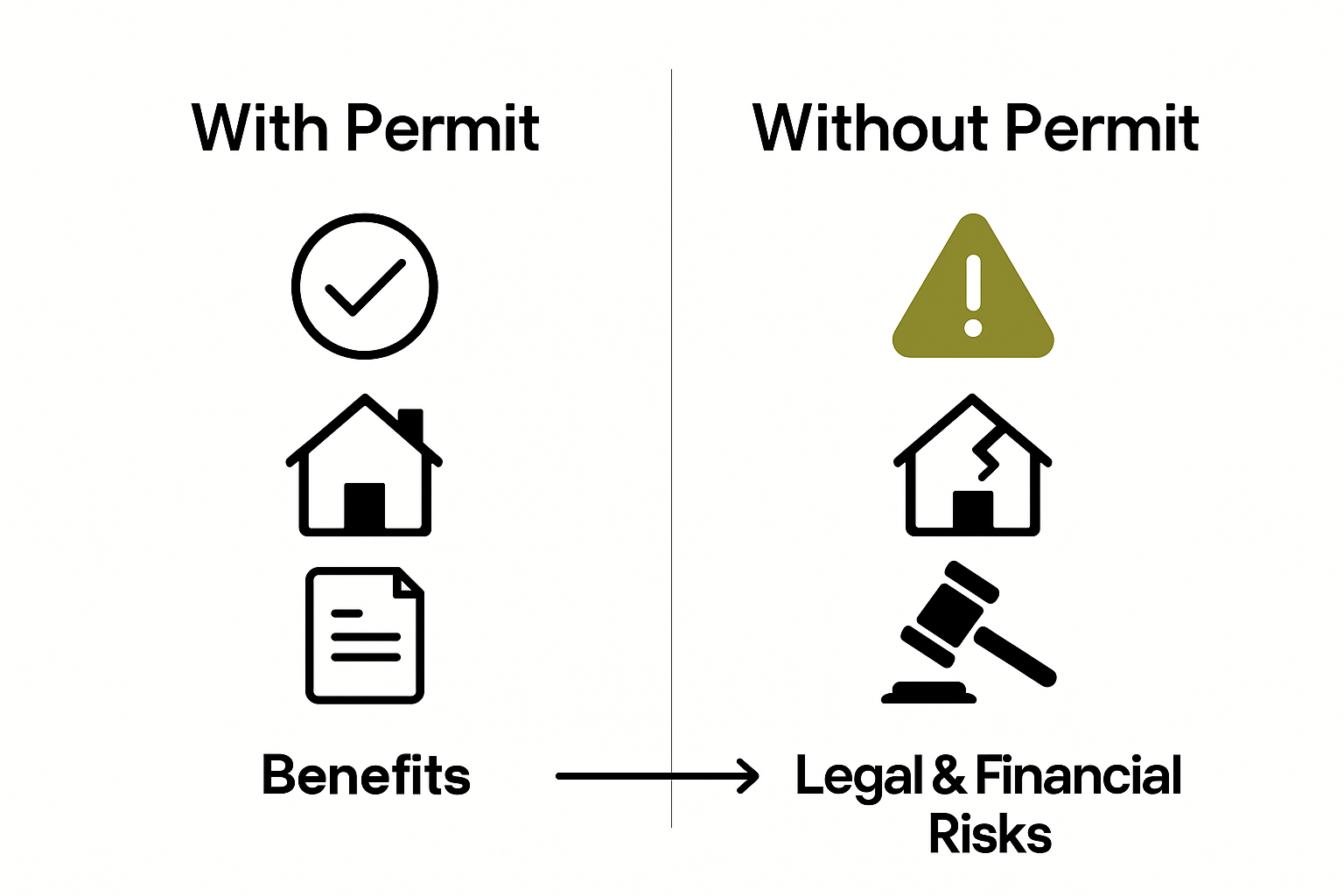
Permit violations can trigger severe legal repercussions. Unauthorized construction may result in mandatory demolition of completed work, forcing homeowners to destroy recent renovations at their own expense. Municipal authorities can issue substantial fines, potentially amounting to thousands of dollars, and may require complete removal of unpermitted modifications. Insurance companies frequently deny claims related to work completed without proper permitting, leaving homeowners financially vulnerable in case of accidents or structural failures.
Beyond immediate financial risks, skipping permit approvals can create long-term complications. When selling a property, unpermitted renovations become a significant legal obstacle. Potential buyers may refuse to purchase the home, or lending institutions might decline mortgage approvals. Real estate transactions require full disclosure of renovation work, and unpermitted modifications can dramatically reduce property value. Some jurisdictions may even mandate retroactive permitting, which involves costly inspections, potential mandatory corrections, and additional fees to legalize previous renovations.
Key risks of skipping permit approvals include:
- Mandatory demolition of completed work
- Substantial municipal fines
- Insurance claim denials
- Reduced property resale value
- Potential legal disputes
- Mortgage approval challenges
- Potential criminal penalties for repeated violations
Working with licensed professionals who understand local regulatory requirements can help homeowners navigate the permitting process effectively and avoid these potentially devastating consequences.
Costs, Timelines, and Common Pitfalls
Permit acquisition involves navigating a complex landscape of financial and procedural challenges that can significantly impact renovation project planning. Full home renovation processes require careful budgeting and strategic preparation to manage potential complications effectively. Homeowners must anticipate both direct and indirect costs associated with obtaining necessary permits for their remodeling projects.
The financial landscape of permit acquisition varies widely depending on project scope and local municipal requirements. Permit fees typically range from $100 to $1,500, with complex renovations potentially incurring higher costs. Permit documentation challenges often create unexpected delays, with municipal review processes potentially extending project timelines by several weeks or even months. Incomplete documentation remains the most common pitfall, with many homeowners underestimating the depth of information required for successful permit approval.
Timeline management becomes critical in navigating the permit approval process. Most municipalities require 2-6 weeks for initial document review, with potentially additional weeks for revisions or supplemental information requests. Specialized projects involving structural changes, electrical system modifications, or significant architectural alterations may face more extensive review periods. Unexpected complications can arise from zoning restrictions, historical preservation requirements, or specific local building code interpretations that require additional documentation or modifications to original project plans.
Common pitfalls in the permit acquisition process include:
- Incomplete or inaccurate project documentation
- Underestimating review and approval timelines
- Failing to account for potential revision requirements
- Overlooking specific local zoning restrictions
- Inadequate budget allocation for permit-related expenses
- Miscalculating project scope and complexity
- Neglecting to consult with local municipal authorities
Working with experienced professionals who understand local regulatory nuances can significantly streamline the permit acquisition process, helping homeowners avoid costly delays and potential project setbacks.
Get Your Remodeling Project Approved and Done Right
Navigating the complex world of remodeling permits can be overwhelming. The risks of skipping permit approvals include costly fines, insurance problems, and even forced removal of your improvements. With so much at stake, it is crucial to work with professionals who understand every step of the permitting process and local building codes. Whether you are planning structural changes, electrical upgrades, or full home renovations, having expert guidance can protect your investment and peace of mind.
At AstroTech Construction, we specialize in seamless remodeling projects across the Dallas Fort Worth Metroplex. Our experienced team handles everything from the initial planning and permit acquisition to the final inspection and construction. Discover why real homeowners trust us for full home renovation processes and expert role of general contractors support.
Take control of your next project with confidence and avoid costly delays or legal setbacks.
Confused about how to start your remodeling journey with the right permits in place?

Contact us today at AstroTech Construction for a professional consultation. Let us help you turn your remodeling vision into a worry-free reality with proper permits and expert craftsmanship.
Frequently Asked Questions
What is a building permit in remodeling projects?
A building permit is an official authorization required before starting significant home improvement or construction work. It ensures that renovations comply with local regulations, safety standards, and zoning requirements.
Why are permits important for remodeling?
Permits protect homeowners and communities by ensuring compliance with local building codes and safety protocols. They help avoid legal complications, fines, and challenges when selling the property.
What types of permits are typically required for renovation work?
Common permit types include structural modification permits, electrical system permits, plumbing system permits, HVAC permits, exterior renovation permits, zoning compliance permits, and historic preservation permits.
What are the risks of not obtaining the necessary permits?
Skipping permit approval can lead to mandatory demolition of unpermitted work, substantial fines, insurance claim denials, reduced property resale value, and challenges when selling the home.
Recommended
- Remodeling Permit Guide DFW: Secure Approval Easily – Astrotech Construction
- Role of Project Management in Remodeling: Complete Guide – Astrotech Construction
- Remodeling Scope Explained: Complete Project Breakdown – Astrotech Construction
- Complete Guide to Renovation vs Remodeling Differences – Astrotech Construction